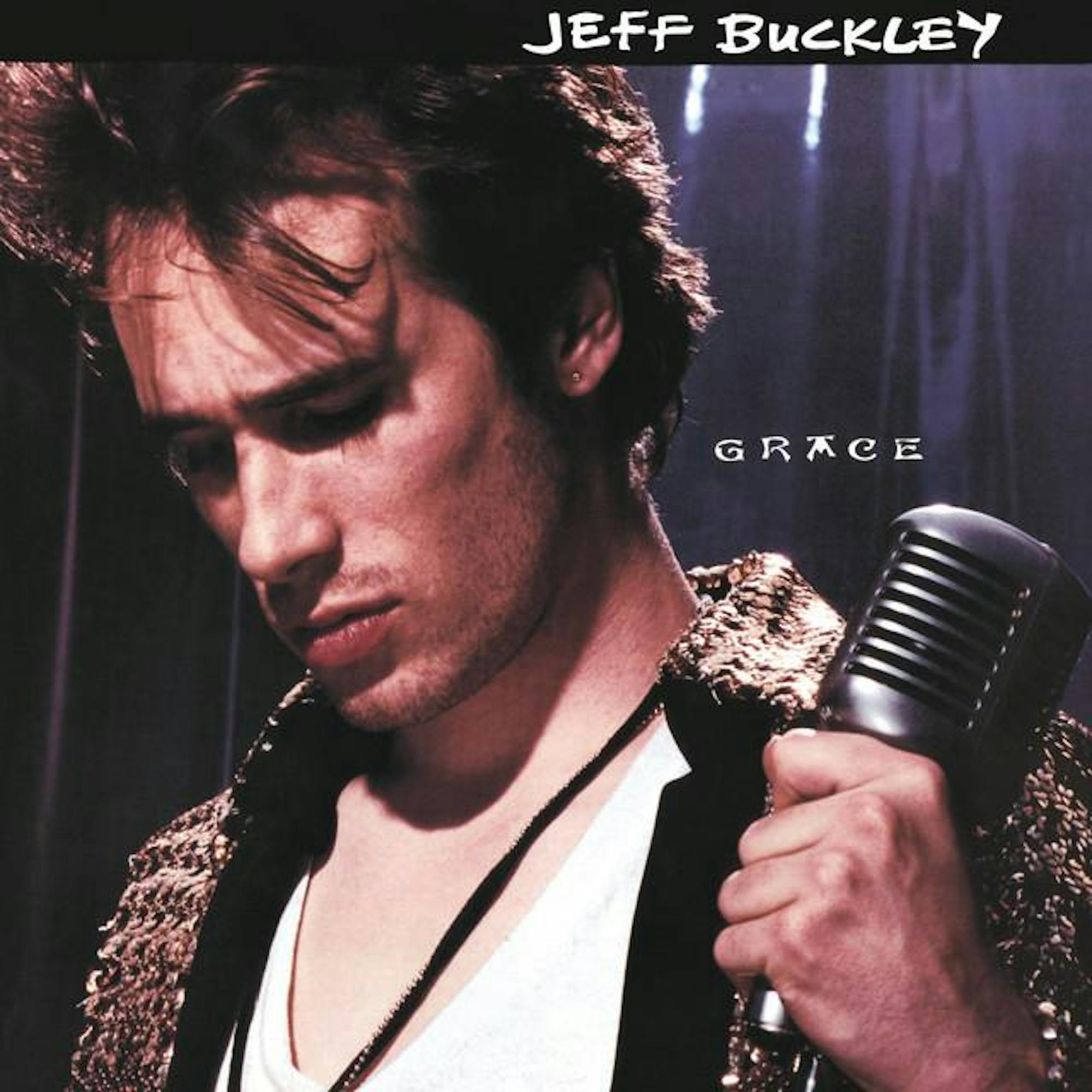
Unsurprisingly, my algorithm has ascertained that I like music. Somewhat more surprising is the fact that it has also curated an immense collection of Snoopy-related videos for me. Listen — Snoopy is America’s sweetheart; I am certainly not complaining about his sudden appearance on my feed. But he’s showing up everywhere, in every context, more than usual. I’m seeing videos of Charlie Brown adopting Snoopy, Snoopy-themed cakes, footage of the new Snoopy balloon for the Macy’s Thanksgiving Day Parade. One of my professors even assigned a Peanuts episode for homework last week. The most shocking Snoopy situation to come across my desk, however, has been a painting juxtaposing that sweet dog with the cover of Jeff Buckley’s monumental 1994 album Grace, the only record Buckley was able to complete before his tragic death in 1997. Picture it: instead of Buckley holding his microphone, eyes squeezed shut, it’s Snoopy, looking extremely out of his element. “No snoopy don’t yearn that hard you’ll die [broken heart emoji, broken heart emoji],” one conscientious observer wrote in the Instagram comments. Divorcing this album from the act of yearning is an impossible feat, though. It’s over from the very second one starts listening to “Lover, You Should’ve Come Over.” Thus, I was inspired to revisit Grace and contemplate how Buckley achieves that effect, to the point where even Snoopy can’t help but yearn (a sentence I never thought I’d say).
Grace opens with positively ethereal vocals in “Mojo Pin,” aptly setting the tone for the rest of the album. His voice gradually builds strength over the course of the track, and these lyrics detailing a dream he had about a woman make it extremely clear why he’s known for yearning right from the get-go. Both “Mojo Pin” and “Grace” were both co-written with guitarist Gary Lucas. The title track captures the ethos of the album as a whole; Buckley famously said, “Grace is what matters in anything — especially life, especially growth, tragedy, pain, love, death. That’s a quality that I admire very greatly. It keeps you from reaching out for the gun too quickly. It keeps you from destroying things too foolishly. It sort of keeps you alive.” “Last Goodbye” was one of Buckley’s most successful songs during his life, and its success was only bolstered when Scarlett Johansson performed it in the 2009 rom-com He’s Just Not That Into You. It’s an especially appropriate choice considering the lyrics: “Kiss me out of desire, baby, not consolation / Oh, you know it makes me so angry ‘cause I know that in time / I’ll only make you cry, this is our last goodbye.” Those quintessential Buckley vocalizations after that line sound visceral, almost like he can’t help it.
The more intense sound of “Last Goodbye” contrasts with and is complemented by “Lilac Wine,” a cover of the jazz song by James Shelton that was also covered by Nina Simone. Buckley’s voice was made for this kind of song. Although it’s definitely different from the more alternative rock sound of its predecessor, it’s undoubtedly a perfect addition that rounds out the record and one of my favorites on Grace. Buckley drinks to bring his love back to him, and at one heartbreaking point, he sings, “Listen to me, I cannot see clearly / Isn’t that she coming to me? / Nearly here.” It almost makes you want to tell him “yes.” Similarly, “So Real” compares dreams and reality. Buckley’s voice is pure magic in the chorus. It’s lyrically simple, but each iteration of the lyrics comes with a different enunciation that leaves you thinking. Buckley’s guitar solo can only be described as catastrophic, and while opinions differ on whether it’s a positive or negative component of the song, I think it’s self-referential in the way it disrupts the melody and brings the listener to consciousness. “Hallelujah” is a cover of Leonard Cohen’s song, and it was absolutely lauded by critics. He makes it all his own, and he sounds good doing it. John Legend even called it “as near perfect as you can get.”
Next is Buckley’s pièce de résistance, “Lover, You Should’ve Come Over.” There’s a reason everyone is obsessed with this song — it’s absolutely devastating. His voice is enchanting. The instrumentals are haunting. And that doesn’t even begin to cover the bridge to end all bridges: “It’s never over / My kingdom for a kiss upon her shoulder”? “It’s never over / All my blood for the sweetness of her laughter”? “It’s never over / She’s the tear that hangs inside my soul forever”? Are we kidding? When I told my friend that I was writing about this album, she asked me if I was okay (a natural response). I might have been okay before, but how can anyone be okay after listening to that? I need a minute, as you can probably gather from all the question marks. As I scrape myself off the floor, let me talk about “Corpus Christi Carol.” In this rendition of the hymn arranged by Benjamin Britten, Buckley takes on a crazy falsetto. If anyone’s looking for an insane rabbit hole to jump down, I highly recommend the “Corpus Christi Carol” Wikipedia page. “Eternal Life” feels abrupt after that. It’s appropriately rough around the edges: “This is a song about … it’s an angry song,” Buckley explained. The somber and heavily percussive “Dream Brother” was allegedly meant to warn Buckley’s friend not to leave his pregnant girlfriend like Tim Buckley did to Jeff’s mother: “Don’t be like the one who made me so old / Don’t be like the one who left behind his name / ‘Cause they’re waiting for you like I waited for mine / And nobody ever came.” The original edition of the record ended with “Dream Brother,” but the extended version includes “Forget Her,” an absolute must-listen. In yet another devastating track, Buckley sings “But don’t fool yourself / She was heartache from the moment that you met her / Ah, my heart feels so still as I try to find the will / To forget her somehow / Oh, I think I’ve forgotten her now,” becoming decreasingly sure of himself as he goes on.
I think the power of Grace lies in the fact that it’s so easy to feel what Buckley is feeling when he sings. You’re right there with him as he faces the many trials and tribulations of life and love. And apparently, Snoopy is right there with him too. Good grief!
Test Spins is a fortnightly throwback column reviewing and recommending classic and underrated albums from the past. It runs every other Friday.
Sydney Levinton is a member of the Class of 2027 in the College of Arts and Sciences. She is a senior editor specializing in music and was the arts and culture editor on the 142nd and 143rd Editorial Boards. She can be reached at slevinton@cornellsun.com.