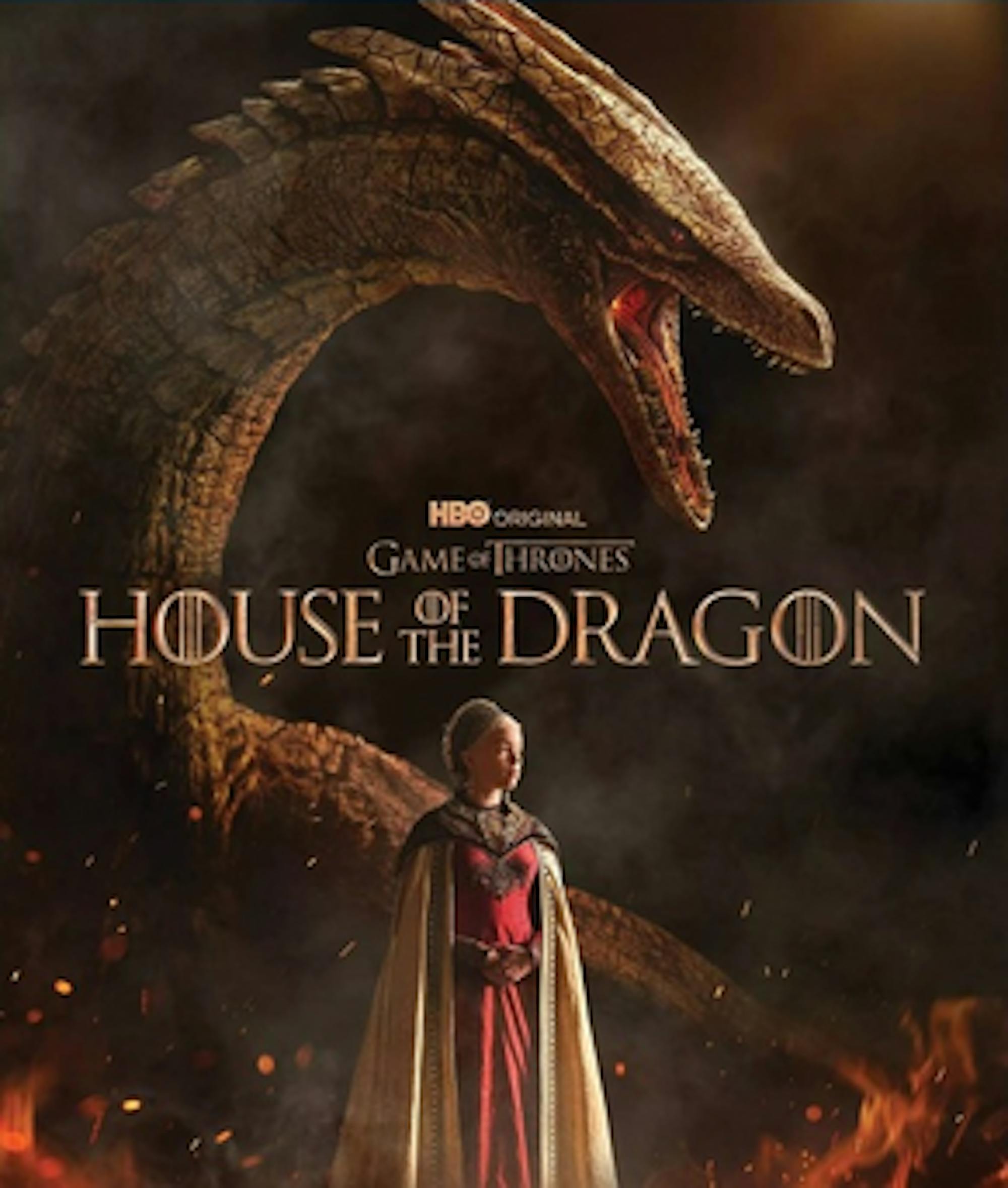
On June 21, House of the Dragon Season 3 premiered; those 76 minutes saw a main character's death, a half-hour-long battle, dragons killing each other and endless bloodshed. While this seems normal for a Game of Thrones adjacent show, it is not normal for the first episode of a season, nor HOTD in general. Season 2’s function was to build the story and anticipation, and there weren't as many flashy dramatic moments as GOT viewers were used to, especially in its last episode. That season was less enjoyable to watch, which is why it was so great that the first episode of Season 3 was exactly what it needed to be: energy level 100. That momentum didn’t hold as episodes three to seven slowed to a crawl, and then episode eight was surprisingly eventful. That whiplash started my thoughts on season-wide story pacing, and how structure has a significant effect on a story’s impact. HOTD, GOT and Supernatural each pace their seasons in very different, distinct ways, and comparing them can make clear what approach is favorable for a convincing story.
HOTD’s structure is the weakest of the three, and the mid-season stretch is where it falls apart. The problem with episodes three to seven is why they are slow: Rhaenyra, the main character, is trapped in a repeating loop. She’s handed a political problem by an advisor and works towards a resolution, and as soon as it is almost settled a new complication surfaces because the advisor lacked proper information or had a hidden agenda. The repetition means stakes don’t compound, they reset. That structure resembles a lower stakes show like Supernatural, not a war epic. Despite my preference against repetition, a series like Supernatural can get away with a rhythm where the status quo is restored every episode because it doesn’t promise to constantly intensify its consequences, but a show about a succession and civil war crisis absolutely does. When the audience senses the next episode will resolve in the same way this one did, tension collapses.
With the determination that gilded edges of a mundane mid-season don't work, I want to explore the slow burn of Supernatural.
Supernatural is a series about two brothers who track and remove harmful paranormal activity across the United States. The first season starts with their backstory, where their mother is killed by a mysterious fiery force, which sends their father into a lifetime hunt. When Sam’s girlfriend is also killed by the same force, his brother Dean drags him back into the family business of chasing demons, spirits and monsters.
Supernatural's Season 1 overarching plot is painfully stagnant. Every episode has the same structure: paranormal activity strikes a small town, then Sam and Dean investigate and fix the problem. The episodes start lighthearted, and the intensity increases towards the end when they confront the monster. The search for their father and the monster that killed their mother takes an entire season. In most episodes, no progress is made towards the completion of that storyline, and the other episodes make minimal progress. Without a doubt, by the end of every episode Sam and Dean will come to peace with the situation and be ready to save another small town the next day.
This structure succeeds at making Supernatural the show the writers wanted it to be: a consistent, easy watch that you can turn on after a long day and enjoy without exerting too much mental energy. This is nice, but it hurts the quality of the series, especially in the modern era. Now that many people watch four to five consecutive episodes of a series once the full season comes out, watching the same thing becomes tedious. In a show with legitimately well-written characters, pretty good acting, a great mystique and a cool story, it feels like a bit of a waste. A 10-episode season with hour-long episodes looks like the better choice when looking back on the series from 2026.
The final pace I want to look at is GOT’s, which is the gold standard. Every season (Season 8 will be excluded for this entire argument) has 10 episodes. Episode nine is always the climax, followed by episode 10 which keeps the momentum but brings in plot twists while opening new story lines, and closing old lines. Some of the greatest episodes in television history came from each season of GOT’s episode nine: The Rains of Castamere, The Watchers on The Wall and Battle of the Bastards are all unforgettable.
The consistent structure works because it builds anticipation, and viewers know that in those two final episodes the entertainment will be elite. You know that something big is going to happen, but you don't know what or how it's going to play out. Nothing makes viewers want to keep watching more, whether they are seeing the episodes as they come out or binging half of the season in one night.
The early and mid-season episodes become more stimulating at a moderate pace. Well-placed memorable moments throughout the episodes keep you watching and perfectly set up the final episodes for each storyline climax.
Pacing is vital to the quality of a television season. It needs to be supported by the right content, episode count, episode length and consumption medium to properly contribute to a more entertaining viewing experience. A new show should aim to be different in its composition, but consistent in its structure.
Yianni Metis is a member of the Class of 2028 in the Dyson School of Applied Economics and Management. He is a staff writer for the Lifestyle department and can be reached at ymetis@cornellsun.com.