Spoiler warning: This article contains details from the plot of Wicked (the movie, the musical and novel).
Before Wicked dazzled the big screen in 2024 or graced Broadway’s stages in 2003, it began as a book by Gregory Maguire. Maguire’s 1995 novel, a riff on L. Frank Baum’s The Wonderful Wizard of Oz, unmasks the illusion of the “Wicked Witch of the West” to reveal Elphaba: a firebrand of a young woman looking to do good in a world that suppresses magic. Meanwhile, opposite Elphaba’s rebellion primps and pouts the picture-perfect queen bee Galinda, yet to drop her pretentious “a” and become simply Glinda, the Good. The two meet at Shiz University, becoming natural rivals and paradoxical friends, fighting over everything from what is right for the good of Oz to the love of a pretty boy. So, after Maguire released the Wicked prequel novel Elphie in March, Galinda, of course, had to get a prequel of her own.
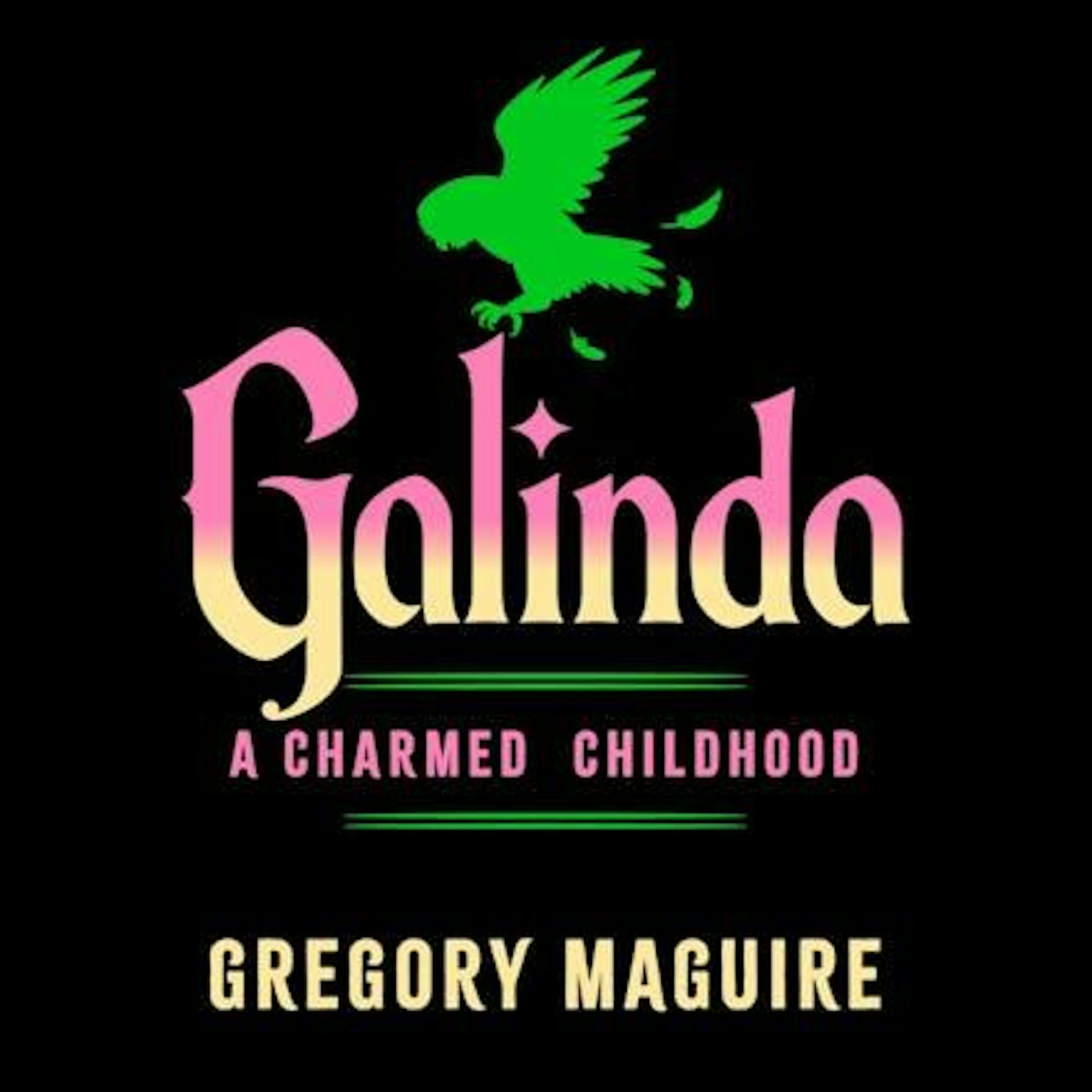
Galinda: A Charmed Childhood follows the future Good Witch and her upbringing in a rough-and-tumble environment very unlike the scholarly Shiz. Crammed into a defunct windmill out in the rural fringe, Galinda’s seven person Upland family struggles to recover their upper-crust status following a freakish volcano eruption that destroyed their land and manor, leaving the surrounding holdings untouched. Willing to risk life and limb, though perhaps not his own, Galinda’s father engages in shady business undercutting the price of raw materials for Oz’s expanding rail lines while Galinda’s mother sacrifices most of her time to the road, politicking with her friends of a higher station.
Maguire captures the eight-year-old Galinda’s contrasting innocent obliviousness with remarkable clarity. The bubbly girl flits and wheedles from scene to scene fretting over her imaginary friend, admonishing the house cats and jostling with other girls for her chance to make the local backwater dance team. Sheltered by her parent’s tolerance, Galinda is given and gets away with much more than she should be. Fortunately, as she grows, Galinda comes to express a genuine interest in education, but her childish curiosity is put at odds with the allure of prestige, helping to explain all the wrong reasons that led Galinda to Shiz.
Straddling the familial Upland ambition and common sense stands Galinda’s pragmatic, but razor-tongued, Grandmama. While Galinda’s father mucks around in profitable prospects, it is Grandmama who manages their budgets and sees that money is put aside or put to good use. While Galinda’s mother maintains the family’s station, Grandmama maintains their home — prepping meals, mending clothes and managing staff. Yet, in contrast to her more worldly ways, Grandmama’s perceptive, unapologetic and indiscriminating sass make her by far the funniest character in the book. Grandmama would love for her family to have a better life, but pursues that goal in a way that allows her to remain present, stoutly comfortable with who she is and what she has. She is the more comfortable, if more homely path, that Galinda, with her love of glitz and glamour could never settle for.
Galinda’s character development is subtle; one could easily blink and miss the trick. Over the course of her juvenile tragedy, Galinda slips so slowly from adorable innocence to cunning self-absorption that the reader is forced to contemplate where one begins and the other ends. However, because Galinda is deliberately shallow, many of her choices are small-minded with equally small impacts beyond the scenes in which they are made. While Galinda does exhibit the power to influence others, mainly her parents, through pestering, threats and charm, it is her methods rather than the scope of her control that change as she matures. This leaves very little for her to do in terms of driving action, and though this might be the point considering who she becomes, Galinda sometimes feels like a passenger in her own story, a character with all her most compelling decisions waiting to be made.
My greatest gripe was the minor dissonance between Macguire’s childish protagonist and the elevated diction of his narration. Maguire regularly uses words or brings up contexts that would not make sense for Galinda to know. Despite this, readers will have to wait alongside Galinda till she first gets a taste of high society through her tutors in the back end of the book to relish vocabularity of the exoticocious Ozian variety. Informal language would have felt faithful to the character, while looser language would have made for a more entertaining read.
However, as a whole, Galinda is an intriguing contemplation of how unoffensive, self-absorbed people like Wicked’s Galinda come to be. Galinda’s parents, for all of their dedication to doing right by their family, are constrained alongside the author by the creative threads already woven further down the line. As a prequel, the novel displays remarkable empathy for such a naïve character with little chance for positive development. While I cannot promise that you’ll be changed for good, those interested in peeking a little further behind the curtain of Oz will appreciate the context Galinda provides.
Thank you to William and Morrow for an ARC of Galinda!
Wyatt Tamamoto is a member of the Class of 2029 in the College of Arts and Sciences. He is a staff writer for the Arts & Culture department and can be reached at wkt22@cornell.edu.