


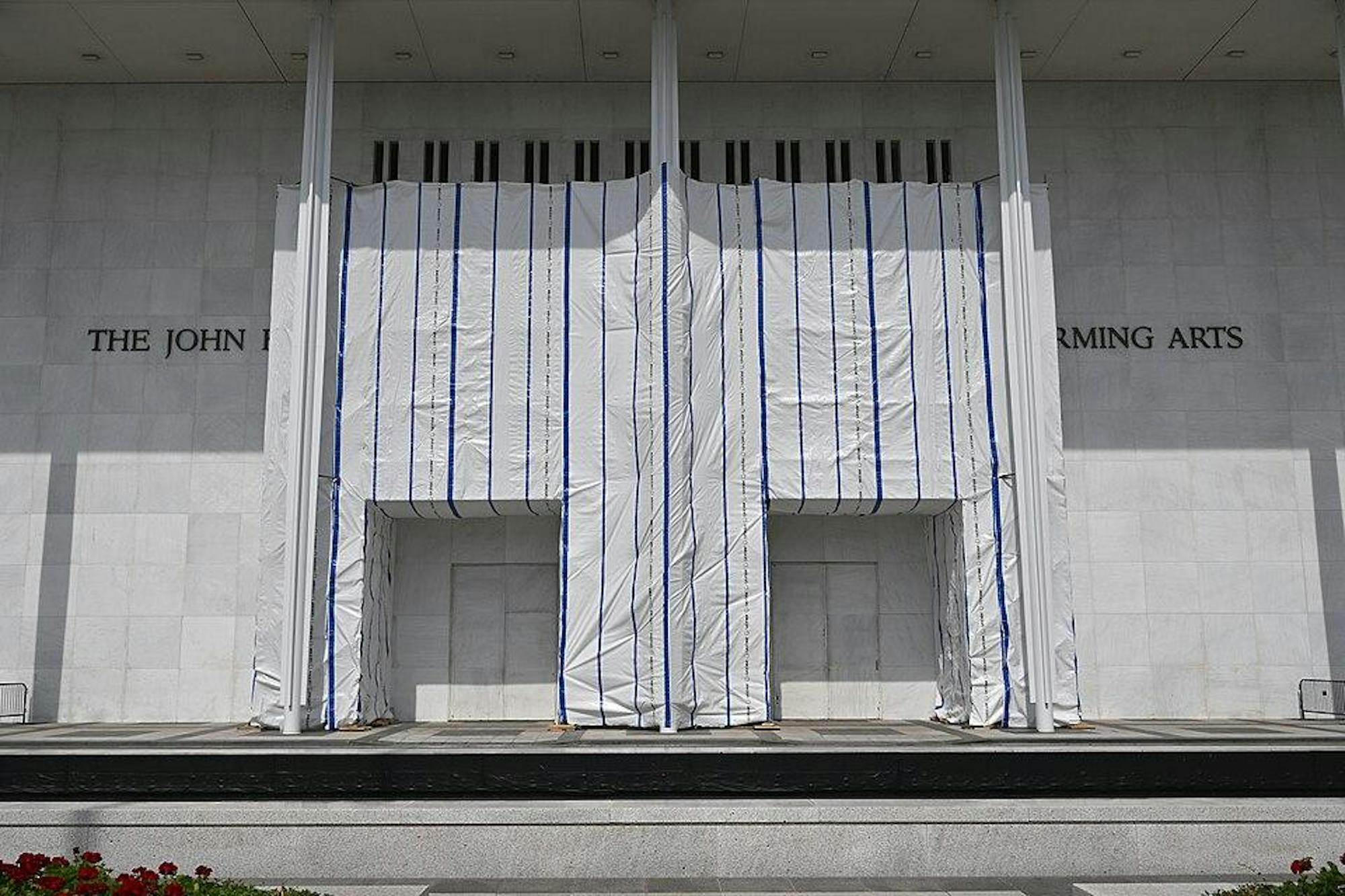
Born from the bipartisan National Cultural Center Act of 1958 calling for the creation of a cultural center in the capital, the Kennedy Center has showcased the cultural diversity of the United States for just over 55 years, beginning with its grand opening on Sep. 8, 1971. With two of the aims in its authorizing statute being to “[present] world-class art by the artists that define our culture today” and to “[deliver] powerful arts education opportunities nationwide,” this memorial to the 35th president has platformed a host of memorable performances. Among them, major pre-Broadway runs like that of Moulin Rouge!, visiting international opera and ballet troupes like Les Ballets de Monte-Carlo and legendary musical tributes like Beyoncé’s powerful rendition of “Proud Mary,” which dazzled even Tina Turner. The Kennedy Center regularly hosts the National Symphony Orchestra and even presents the annual Mark Twain Prize for American Humor, among many other American artistic staples. It has also been committed to offering summer intensives, workshops and training programs for all kinds of blossoming artists. It goes without saying that the Kennedy Center has cemented itself as one of the United States’ most prized cultural institutions.
However, akin to many other vital sources of American culture and pride, the Kennedy Center’s continued existence has been put in jeopardy by the Trump administration. On the afternoon of Sep. 15, the center’s Trump-appointed board voted to temporarily close down the building, pointing to financial issues and the need for structural repairs as justification. The next day, Trump made the following statement in a CNN interview: “I think that the Trump administration should certainly have recognition because, frankly, if we don’t do that, it’s going to close, it’ll end up being ripped down … ” He spoke in reference to a federal court ruling issued on Sep. 15 holding that the Kennedy Center cannot have memorials installed for anyone who is not former President John F. Kennedy — including Trump. The claim the President makes in this interview — that the Trump administration ought to receive a special memorial as a “thank you” for supposedly saving a deteriorating institution — is demonstrably false. There is no evidence that preceding administrations have neglected the upkeep of the Kennedy Center. On the contrary, federal funds have been allocated to the center’s upkeep every year since its opening. Not to mention that the basic maintenance and protection of arts institutions, especially those focused entirely on American culture, should be a presidential obligation, not an act of heroism deserving of a memorial.
In addition to these comments, a photo captured on Sept. 16 by photojournalist Brendan Smialowski for Agence France-Presse began to circulate rapidly, appearing to show Trump seated inside Air Force One reviewing a printout that contains bold, red text reading “Kennedy Center DEMOLISHED.” By the afternoon of Sep. 17, U.S. District Judge Christopher Cooper — the same judge responsible for the aforementioned ruling — ordered the Kennedy Center board to provide 30 days notice prior to making any demolition or construction efforts on the building. Unfortunately, even given this order, there’s no telling how the Trump administration will respond to this situation, given its known track record of overstepping constitutional boundaries.
Supporters of the Kennedy Center’s mission have not remained silent about Trump’s calamitous intentions. In fact, thousands of demonstrators gathered outside the building on the evening of Sep. 18, surrounding it in defiance of the president’s plans and linking hands to display their unity in defending a stronghold of the arts from destruction. Demonstrators carried signs displaying messages ranging from “Make America Intelligent Again” to “Wicked: Starring DJT” and “You’re No Jack Kennedy.” Amidst the continually developing events in this attempt to strike down one of the United States’ most cherished performing arts institutions, it’s clear that the National Cultural Center isn’t going down without a fight.
In times like these, it’s imperative for all to recognize the importance of the performing arts — not only as a form of entertainment (for which it certainly serves its purpose), but as an anchor of free speech and political awareness. A society that lacks a thriving performing arts scene lacks the ability to express itself, and this lack of expression permeates across all spheres — most notably, the cultural and the political. In order for a society to remain culturally and politically aware, its sources of discourse must extend beyond its newspapers and TV screens; they must be platformed on the biggest stages and all throughout the streets. Otherwise, awareness becomes merely an option, a chore for those who have the time and the care. On the contrary, cultural and political awareness ought to be omnipresent societal forces in which one is continually immersed by way of a thriving arts scene.

Jordan White is a member of the Class of 2029 in the College of Arts and Sciences. He is a columnist for the Arts & Culture department and can be reached at jiw39@cornell.edu.


