

Full of wanderlust, I found myself serenely roaming around the Arts Quad after dropping a class I had no interest in. Bless. I had some time to kill, so I wondered what I could do instead of spending the day utterly on autopilot and doomscrolling myself into oblivion.
I stumbled across the incredible edifice that is Cornell's Herbert F. Johnson Museum of Art. As always, I was awestruck. What a blessing it is to have such an incredible cultural hub in the middle of our campus. The museum is studded with absolute gems, transcending time periods and geographic boundaries. In particular, I spent too much time meandering in a carefully curated exhibit named “Blazing Light.”
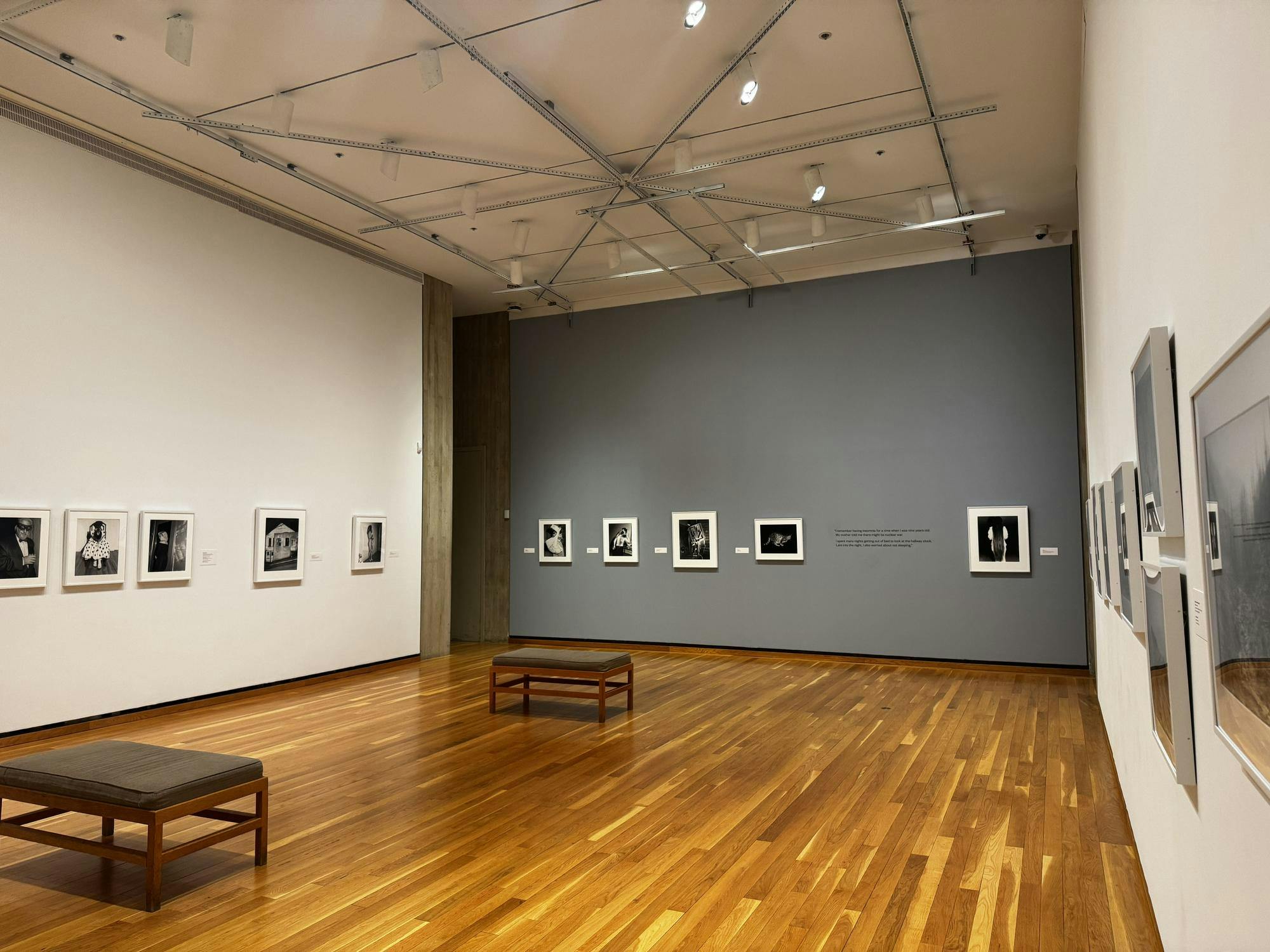
Highlighting the work of peerless photographer Mimi Plumb, “Blazing Light” features three vital bodies of work: “Landfall and The Golden City” (1984–2020), “The White Sky” (1972–78) and “The Reservoir” (2021–25). Plumb’s work uses anthropological landscapes to communicate enduring societal issues like climate change, military conflict and destructive capitalism.
As an artist based in sunny California, she dims the intensity of the sun's rays by exclusively capturing black-and-white images. Her gentle technique skillfully highlights the magnificence yet fragility of the American Western landscape while also distinctly depicting urban life.
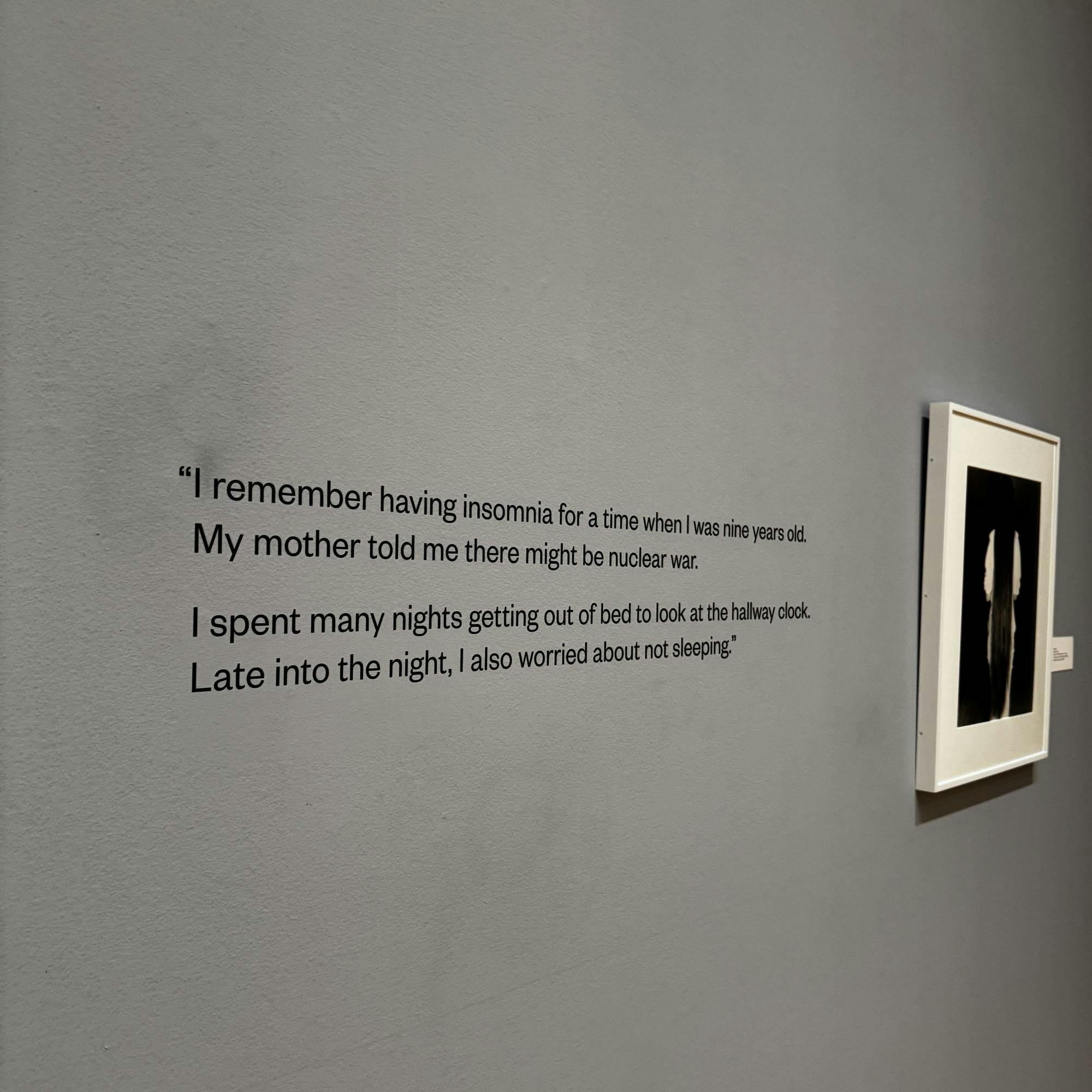
As a young teenager growing up amid the Cold War, she looked to the terrain around her to capture issues plaguing her lower-income community. She focused on the manufactured environment and the industrial forces humans have imposed on seamless landscapes. Plumb also highlights the excruciating effects the loss of biophilia has on the human condition. Given increasing scientific awareness of climate change, her work gracefully shows the relationship between economic policy, environmental degradation and mental health.
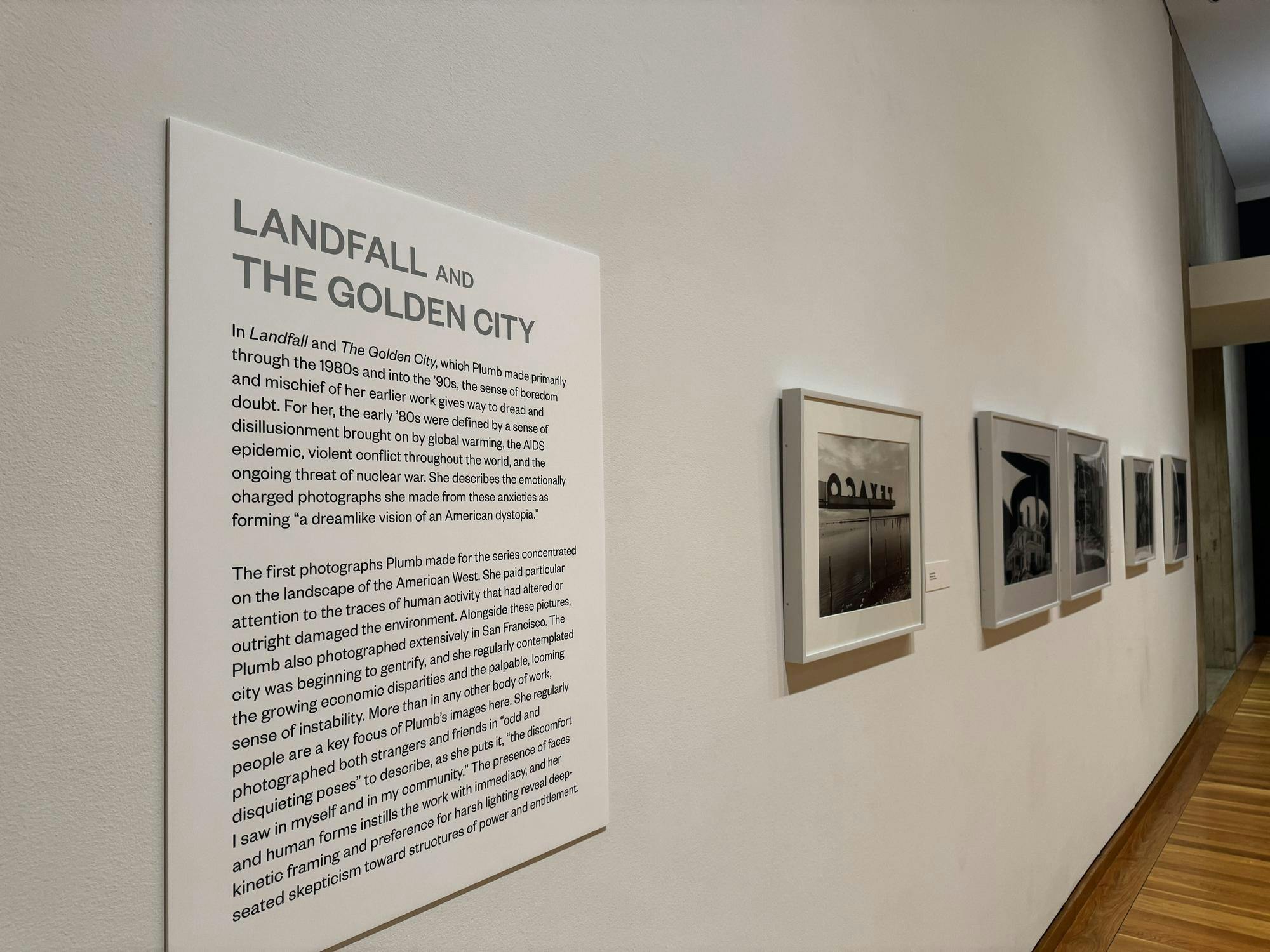
First, I walked into the collection of “Landfall and The Golden City,” which distinctly depicts urban life in San Francisco. Its dismal imagery allows the audience to experience the tension of the turbulent times she portrays, exuding an almost dystopian vibe.
While I wish I could write an in-depth analytical article on each photograph displayed in this body of work, I was particularly captivated by “17th & South Van Ness, San Francisco.” The intriguing piece puts the ‘Golden City’ on view. While Californian life was glamorized and marketed as utopian, the reality for many residents consisted of searing conditions and expected reticence of the lower class. She emphasizes this underbelly of capitalism, an issue so many are forced to grapple with in silence.
Besides solely capturing the harms of stringent laissez-faire economics on the physical landscape, Plumb powerfully exposes the human experience. In “Richard and Girl in the Polka Dot Dress,” the image’s focal points are everyday people sitting still in their anguish. While they seem like simplistic images, Plumb’s work speaks volumes for those unable to advocate for themselves.
In “The White Sky” portion of the exhibit, Plumb debunks the fickle facade of the American Dream during the Cold War. While nationwide propaganda promoted American exceptionalism, the groundbreaking work of many artists like Plumb allowed Americans to see through this diaphanous guise. In “Lake Nicasio 2,” a man is splayed on a barren desert ground, almost as if he is sunbathing at the beach. The image recalls the rapidly expanding cracks of the American Dream and the drastic differences experienced across socio-economic classes.
My favorite piece in this collection was “Boys and Tires, Sears Point,” in which four boys sit in an array of rubber tires, symbolic of the resilience expected of young children during the Cold War. Instead of smiling and playing, children were forced to put up a front and fear the worst from impending nuclear warfare.
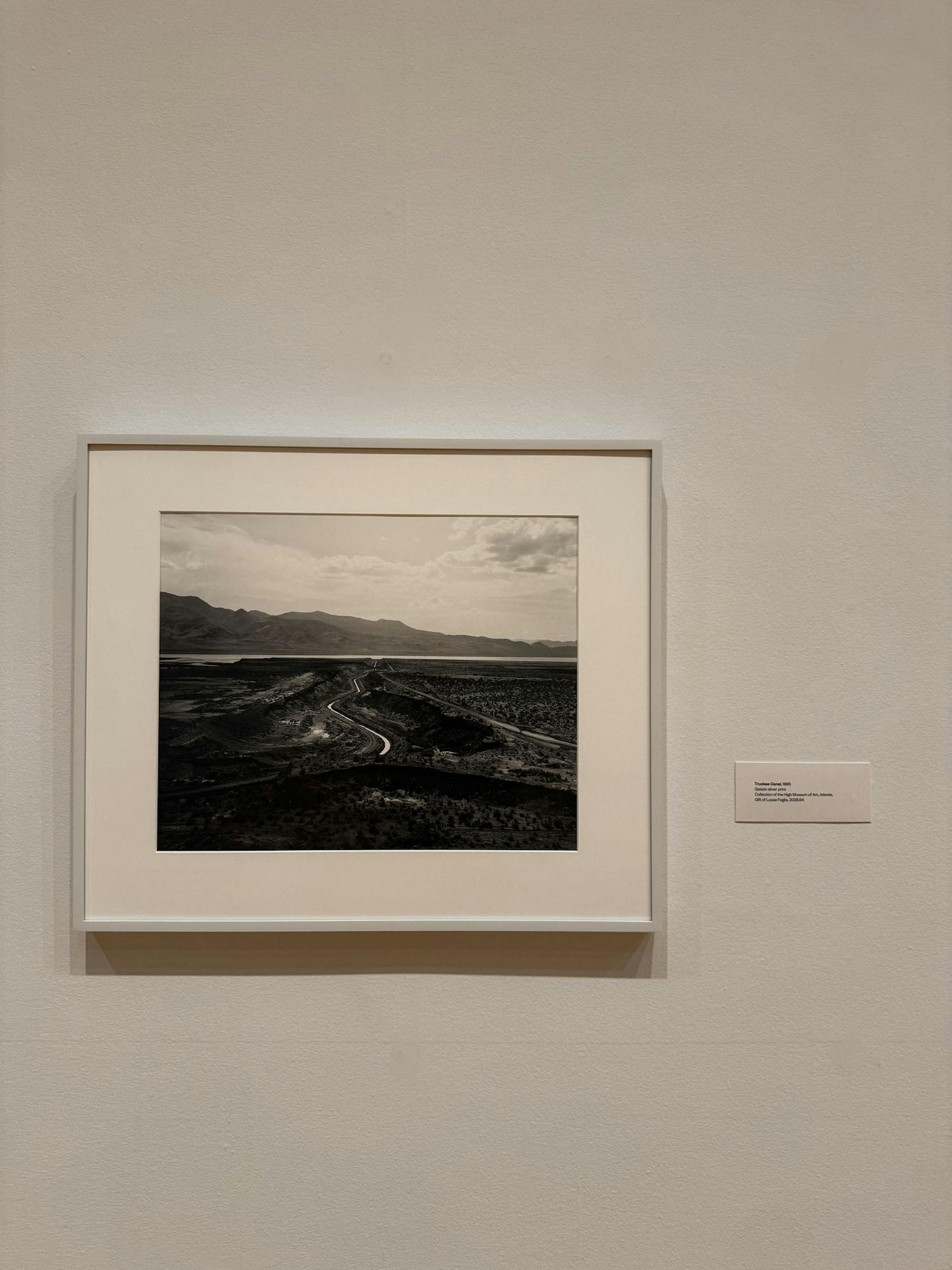
Finally, “The Reservoir” was the third and most timely collection featured in this exhibition. The displayed photographs plaintively portray the apocalyptic reality of climate change in California. By picturing the ominous changes in the landscape, Plumb shows how sites of leisure are rapidly dissipating. These stark changes are apparent in the series of images called “Tree 1,” “Tree 2” and “Tree 3,” taken across 2021 and 2025, emphasizing drastic waterline recession in a short timeframe.
Photography is truly worth more than a thousand words. Unfortunately, I am writing this article on a word limit, so it cannot come close to accurately describing the timeless beauty held in each of these unique pieces. So, please take a moment out of your busy schedule to visit this awe-inspiring exhibition in the Gold, Schaenen and Class of 1953 Galleries until Sept. 28, 2026. You may never want to leave.
Ava Tafreshi is a member of the Class of 2028 in the College of Arts and Sciences. She is a contributor for the Arts & Culture department and can be reached at ant63@cornell.edu.


