Cornell MFA candidate Lilian Shtereva ’27 describes “the moment at which an architectural structure becomes a living residence” as a key theme of her newest art exhibit, “taskscapes.” I was excited to see more of her work after my previous interview with her last semester. When I visited her new gallery on Sept. 4, her characteristic assortments of miscellaneous objects occupied a very different space. A high-ceilinged room in Olive Tjaden Hall had housed her exhibit “how to fix a leaking ceiling,” while “taskscapes” inhabits a larger, more modern and more compartmentalized space in Milstein Hall. This new space, divided by two movable walls into three main sections, allowed Shtereva to create several uniquely expressive spaces within the larger context of the gallery.
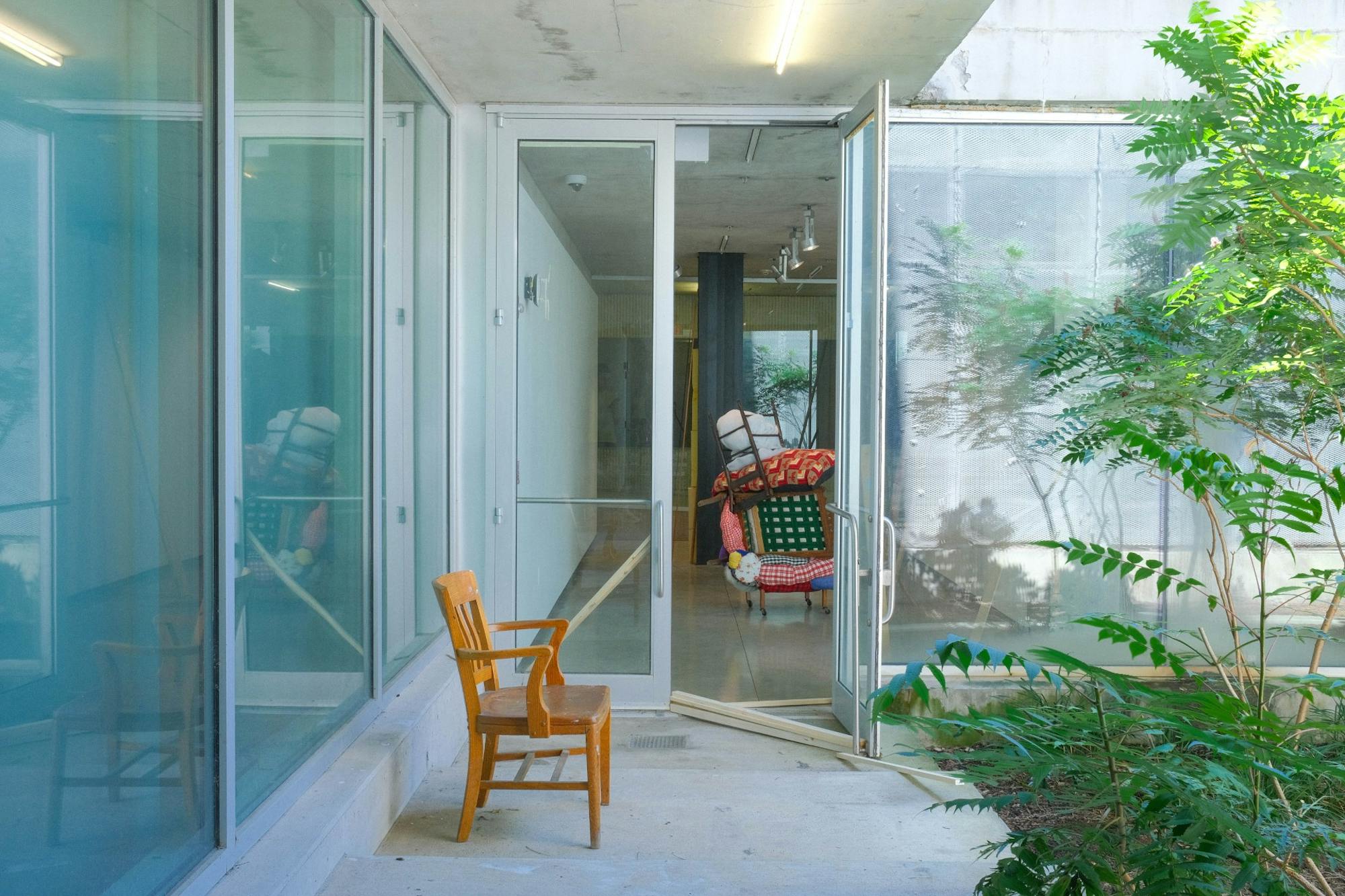
Before showing me the gallery itself, Shtereva led me to a small garden area directly outside the building. Wooden boards laid across the soil created a narrow pathway between the garden’s slender trees. Halfway to the other side, a pit in the ground interrupted the path, with one of Shtereva’s distinctive ceramic animals standing atop the excavated pile of earth. I leaped over the hole and followed Shtereva down the remainder of the path into a small concrete-floored area containing a single wooden chair. In this space, outside the gallery but still a vital part of it, we sat and began our conversation.
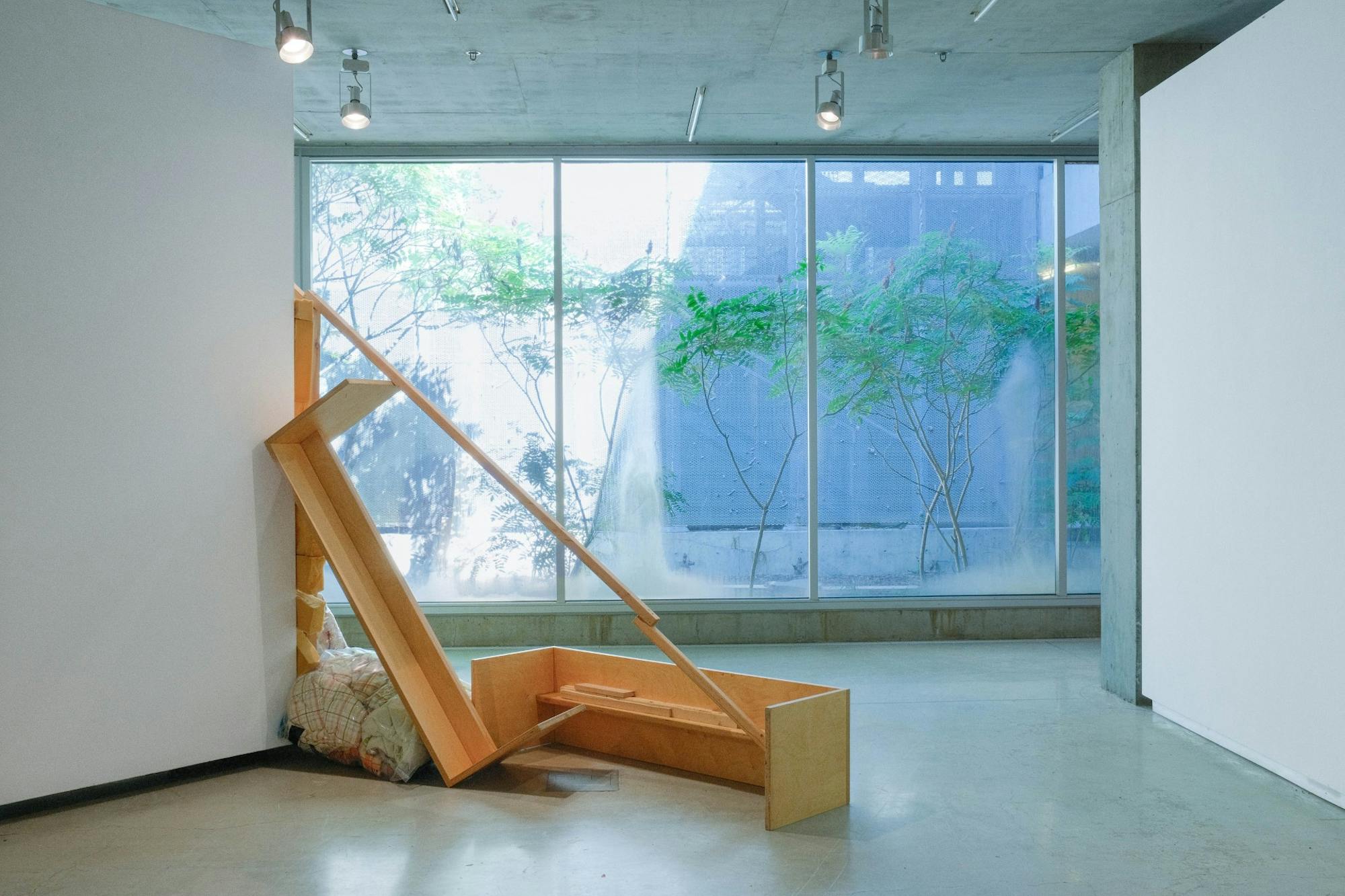
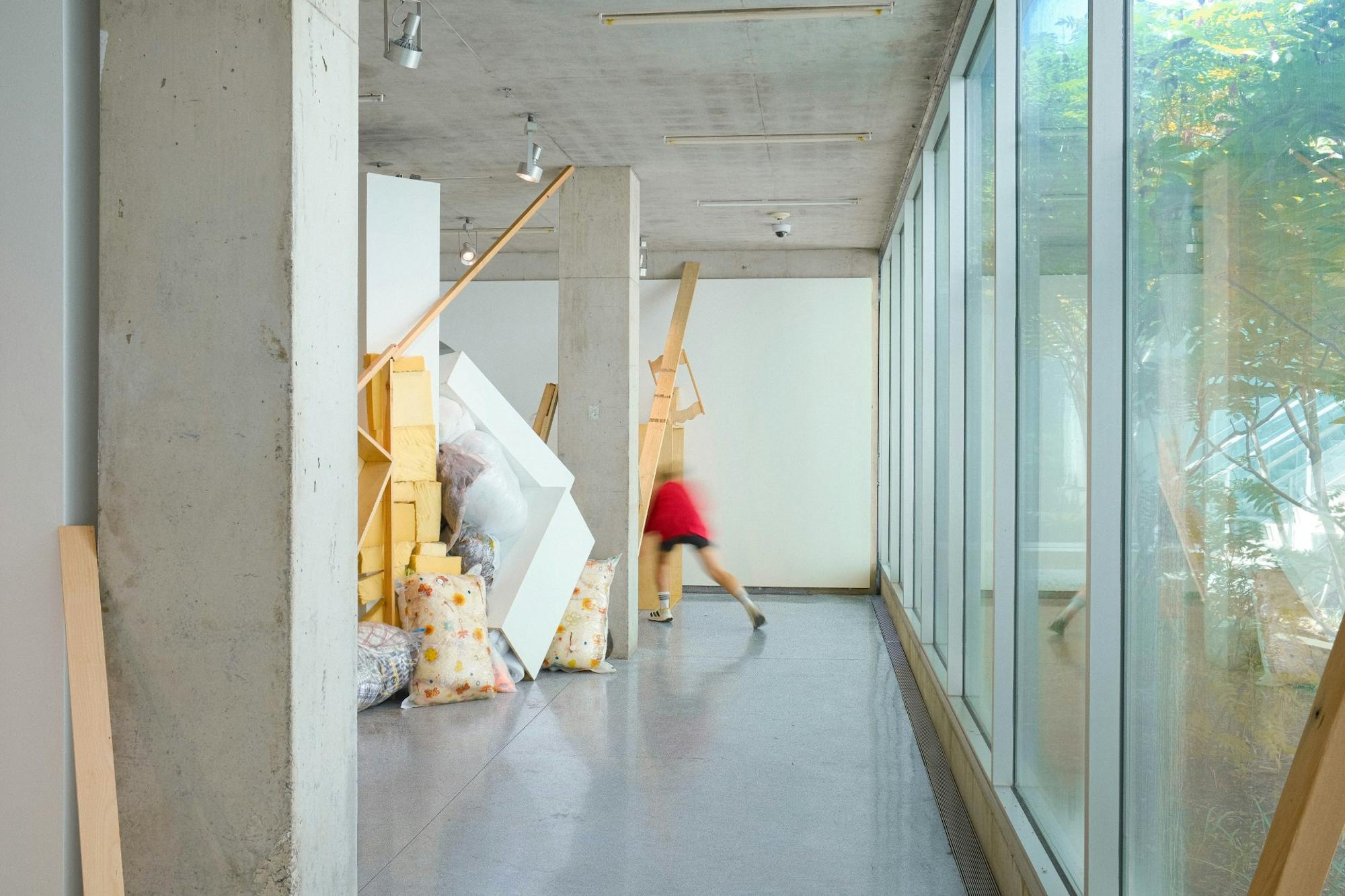
Once we returned through the garden and entered the main gallery, what first struck me was the room’s sense of incompleteness. Shtereva had begun this project only a week before, and much of the space was still bare. In the room’s far left section, long wooden planks leaned against walls and against each other, creating the impression of scaffolding yet to be fleshed out. Several clear plastic bins, full of colorful textiles I recognized from Shtereva’s previous work, were stacked against a wall in another area, not yet unpacked. One idea she had been deeply interested in while creating this exhibit, she told me, was the process of making a foreign environment into a home, and the gallery’s unfinished state reflected this idea. Since she had only recently “moved into” the gallery, it was perhaps not quite a home yet, but was well on its way there.
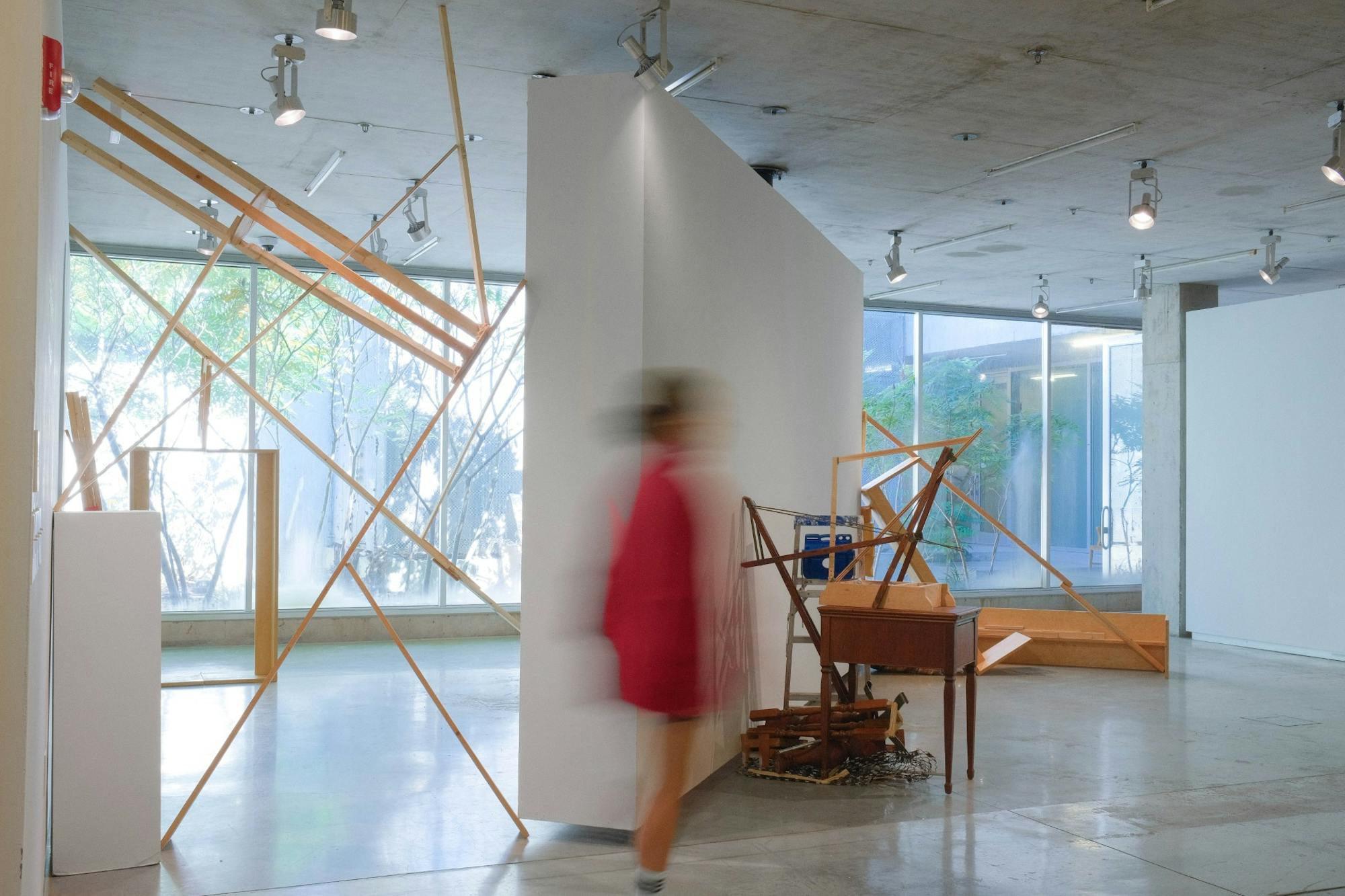
After taking in the gallery as a whole, Shtereva and I ducked under the first set of wooden boards into a space enclosed by an exterior wall on one side and one of the movable walls on the opposite side. The precariously balanced network of wooden planks further separated this area from the rest of the room. With the bins of colorful textiles no longer visible, the only hues in view were the white walls, gray floor and brown wood. The lack of color emphasized the bareness — the continued incompleteness — of the space. In contrast, behind the gallery’s second wall, I found its brightest pop of color: a stack of vibrant cushions (and two chairs) balancing on top of an ottoman. Some of the same items had formed a similar pillar in “how to fix a leaking ceiling,” but here it was given a new context. While we leaned against the gallery wall and looked at the colorful pillar, Shtereva told me that she likes to mimic the architecture of the room in a playful way, bringing out her objects’ mischievous sides. This “mischief” was particularly apparent here; the chaotic, brightly colored tower of pillows looked like a whimsical imitation of the large, gray, rigidly vertical concrete column standing in the middle of the room. To me, the juxtaposition between the colorful cushions and the brown wooden planks symbolized the coexistence of comfort and bareness during the early stages of making a new space into a home.
During our conversation, Shtereva and I kept returning to a discussion of the process of instinctual meaning-making that comes with being human. Each viewer who enters the gallery will bring a different personal context to the space and therefore find different meaning in the arrangements of materials. Shtereva and I did not talk about any specific message she may have intended while creating this gallery experience; instead, we discussed the ideas and concepts — humanity, home, labor, living space — that informed her artistic decisions. Once I started examining the gallery through these lenses, I began to find my own interpretations, which took the form of abstract feelings more than any clearly articulated thesis claim.
The rear wall of the gallery consisted of a large window facing the garden I’d seen at the beginning of my visit. Returning to the garden on my way out, I looked once again at the trees, the path of wooden planks, the pit in the ground and the blue ceramic animal standing beside it. This time I also saw a second animal standing a few feet behind the first, watching from the bushes. As was also the case in “how to fix a leaking ceiling,” the animals were the narrative core of the exhibit for me, maybe because they carried an impression of sentience that the other objects lack. When I saw the creature who had seemingly just finished digging a hole in the middle of the visitors’ footpath, my mind immediately jumped to curiosity: What was it doing? Instinctively, I imagined a story involving this creature as an active participant in the creation of the gallery experience. This instinct towards narrative is part of being human; we are hard-wired to tell stories, and any visitor to “taskscapes” will tell a slightly different one.
Shtereva’s “taskscapes” will be on display until Sept. 17, during which time she will continue the process of finding home, evoking humanity and making meaning in the space. More of Shtereva’s artwork can be found on her website and Instagram.
Raina Lockwood is a member of the Class of 2027 in the College of Arts and Sciences. She is a staff writer for the Arts & Culture department and can be reached at rl978@cornell.edu.