Irony is a randomly occurring form of art, pairing time and place to invoke symbolism and force thought — much like other, more traditional conceptions of art. A poignant case study is currently playing out along the Danube River, which runs through — or along the borders of — 10 countries in Central and Eastern Europe.
Drought has plagued Europe for much of this year, and the especially dry summer heat has only exacerbated it. The Danube has dried to its lowest point in recorded history, and with that have emerged sunken Nazi warships from World War II.
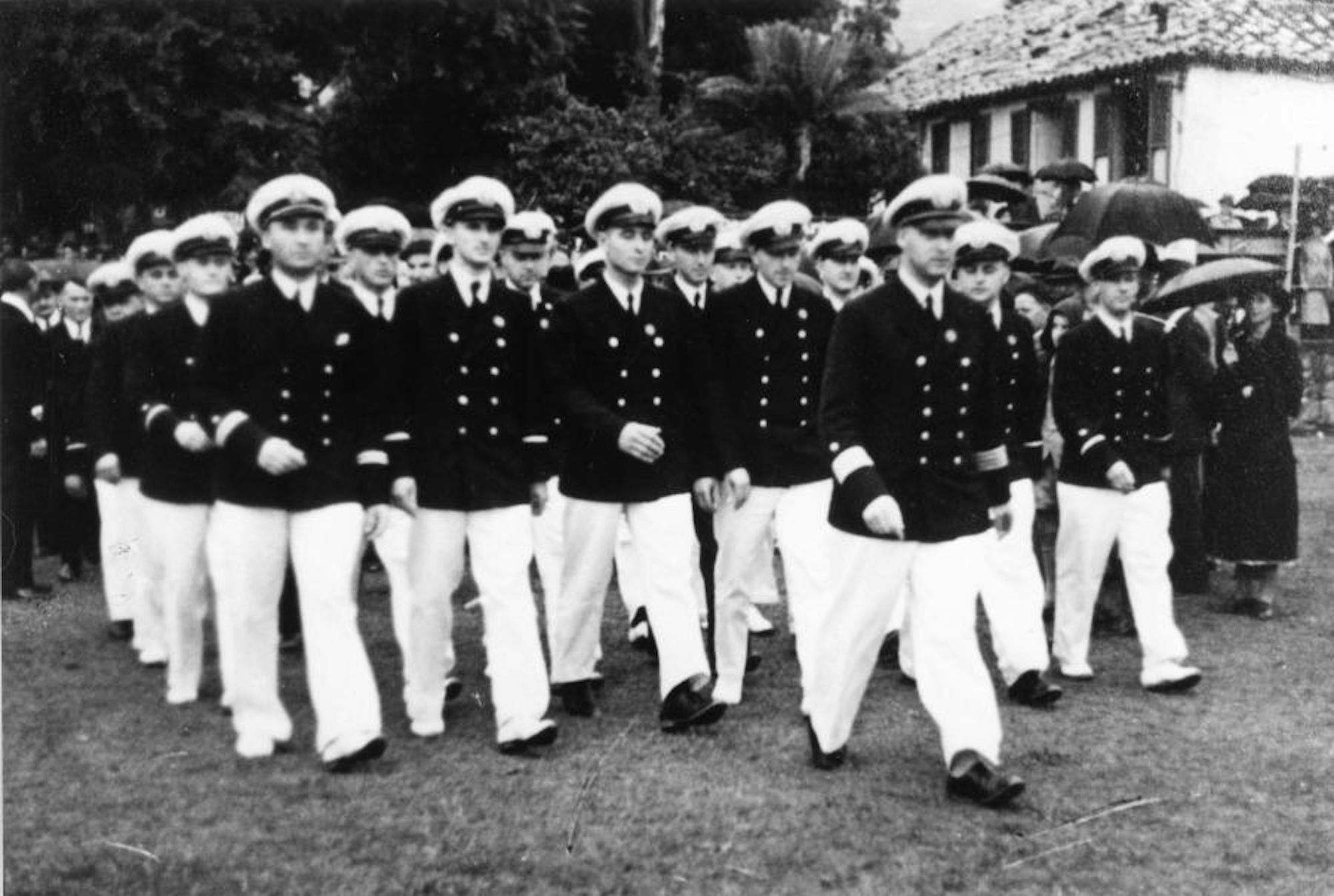
The Nazis launched Operation Barbarossa and invaded the Soviet Union in June of 1941, first pushing rapidly into Russia with unyielding brutality. By 1944, following the turning point Soviet victory at Stalingrad and a resurgent Red Army awakening, the Soviets were barreling west and pushing the Nazis back into Germany. With the goal of obstructing the Soviet advance and preventing their capture, Rear Admiral Paul Willy-Zieb of the Nazi Black Sea Fleet ordered the scuttling, or purposeful sinking, of over 200 vessels near Prahovo, a village in Serbia on the Danube. These included battleships, hospital ships and light torpedo-armed attack boats. Today, as the water level of the Danube falls, these scuttled Nazi warships are rising back to the surface.
So too have far-right politics. In Europe, this resurgence is especially concentrated. Right-wing political parties have become major opposition blocs in several countries, including Austria’s Freedom Party, France’s National Rally and Germany’s Alternative for Deutschland (AfD). Brothers of Italy sits at the head of the nation’s coalition government, led by Prime Minister Giorgia Meloni, who came to fame as a member of the Italian Social Movement, a neofascist political party resurrected by Mussolini’s followers. Not since the interwar years have right-wing politics so swiftly returned to the fore in Europe.
A central plank in many of these parties’ platforms is anti-immigration or anti-assimilation sentiment. In Poland, which has accepted approximately 1.5 million Ukrainian refugees since the beginning of Russia’s invasion in 2022, nationalist right-wing party Law and Justice has capitalized on domestic tensions over Ukrainians receiving welfare. Hate crimes against ethnic Ukrainians have spiked over the last six months. As National Rally brands it, immigration must be restricted to protect French “cultural identity.”
Austria’s Freedom Party extrapolates a similar point in its manifesto to the whole of Europe, stating that they “firmly reject any artificial synchronisation of the diverse European languages and cultures by means of forced multiculturalism.” Ousting open-minded attitudes toward diversity is the first step toward ousting plurality writ large, a scary prospect in a representative democratic society.
AfD has touted what it terms “remigration” policies, and prominent figures within have rallied party congresses to chants of “consistent deportations.” A common throughline in this ideology of anti-immigration and anti-assimilation is the preservation of homogeneity and a so-called national identity. The term “remigration” itself has a particularly troublesome history. In the late 1930s and early ’40s, during the days of the Nazi regime, a proposed policy for ridding Europe of Jews was to forcibly deport and resettle them in Madagascar — “remigration.” The plans were discussed at the Wannsee Conference outside Berlin, the same conference where the Final Solution was decided upon by high-up Nazi officials. German broadcast network DW reported that AfD uppers held a closed-door meeting at a hotel in Potsdam in 2024 to discuss their own remigration policy platform, which included the proposal of deportations to a “model state” in northern Africa — yet another unfortunate instance of Nazi relics haunting us in the present.
How poignant is it, that at the same time as scarily familiar political postures resurface across Europe, that scuttled Nazi warships do the same? There’s a symmetry between much of the coded rhetoric in Europe’s current far-right parties and those of the interwar years. The time and place of artistic irony strikes again; like the 80 year-old Kriegsmarine vessels rising up from the depths of the Danube, so too are the tired dogmas of mid-20th century fascistic regimes.
Another tragic plank in these parties’ platforms is their willingness to work with Russia. Staunch support for Ukraine since Russia’s land invasion began in early 2022 was a no-brainer across Europe. That position has waned; Jordan Bardella, leader of National Rally, proposed ending the unconditional support program for Ukraine and opting instead for a transactional one. According to Bardella, France is in no financial position to “make spending commitments and promises of financial support to a country without any guarantees.” AfD has made it clear that their aim is to not only end German aid to Ukraine, but to ensure its “neutrality” as neither a NATO or E.U. member, instead pivoting to resurrecting and strengthening ties with Russia. In Poland, the president of another far-right party, the Confederation of the Polish Crown, remarked that the “Kyiv regime is neither our ally nor our friend, it is our enemy.”
The potential shift away from unconditional support of Ukraine were these right-wing parties to take full control across Europe would not only be an explicit act of appeasement, but an embrace of the values Putin has touted to justify the largest land invasion in Europe since World War II. Putin has argued that the invasion was carried out to “protect Russian-speaking populations” inside Ukraine. This follows Russia’s state-sanctioned, ethnonationalist doctrine of “Russkiy Mir,” or “the Russian World.” It posits that speaking Russian automatically translates to a political loyalty to Russia.
In 1938, the Nazis occupied the Sudetenland on the pretense that they were protecting German-speakers by incorporating them into the Reich. How different is that logic from that of Russkiy Mir? Or from the Freedom Party’s manifesto denouncing “forced multiculturalism?” Or the deportation of “unassimilated” people?
Eerily familiar rhetoric promoting homogeneity and ultranationalism are joining with an acceptance of warmongering. Time and place are pairing on the dry-as-bones Danube River to force us to think about the ideologies that brought the ships there in the first place. It’s especially ironic that, in light of AfD’s dominant election victory in Sachsen-Anhalt earlier this week, warships manufactured for Germany’s last far-right government are creeping up to the surface. History might not repeat, but it is rhyming. Russian soldiers are moving west, and the Black Sea Fleet is visible on Serbian shores. The world is starting to look pretty similar to its 1938 self, much like the Danube is starting to look like its Nazi-blockaded self.
Alexander Walters is a member of the Class of 2028 in the College of Arts and Sciences. He is a staff writer for the Arts & Culture department and can be reached at apw65@cornell.edu.