I never believe in the characters of reality television. The need for distinct roles — people to root for or against, problem or peace-makers — is usually too evident, with caricature-like reactions and statements. It’s not difficult to remember that this is television for entertainment.
Documentaries, however, seem different. Despite knowing that they often run along the same sensationalized lines as reality television, I default to trusting them, expecting factual recountings from which I can understand and interpret a person or event. Yet, documentaries too aim to entertain, and they too are shaped to create cohesive content.
Occasionally, I stumble across a documentary in which the guiding hand of the director is abnormally evident or exceptionally interesting to consider. The most recent such find was Tiger King.
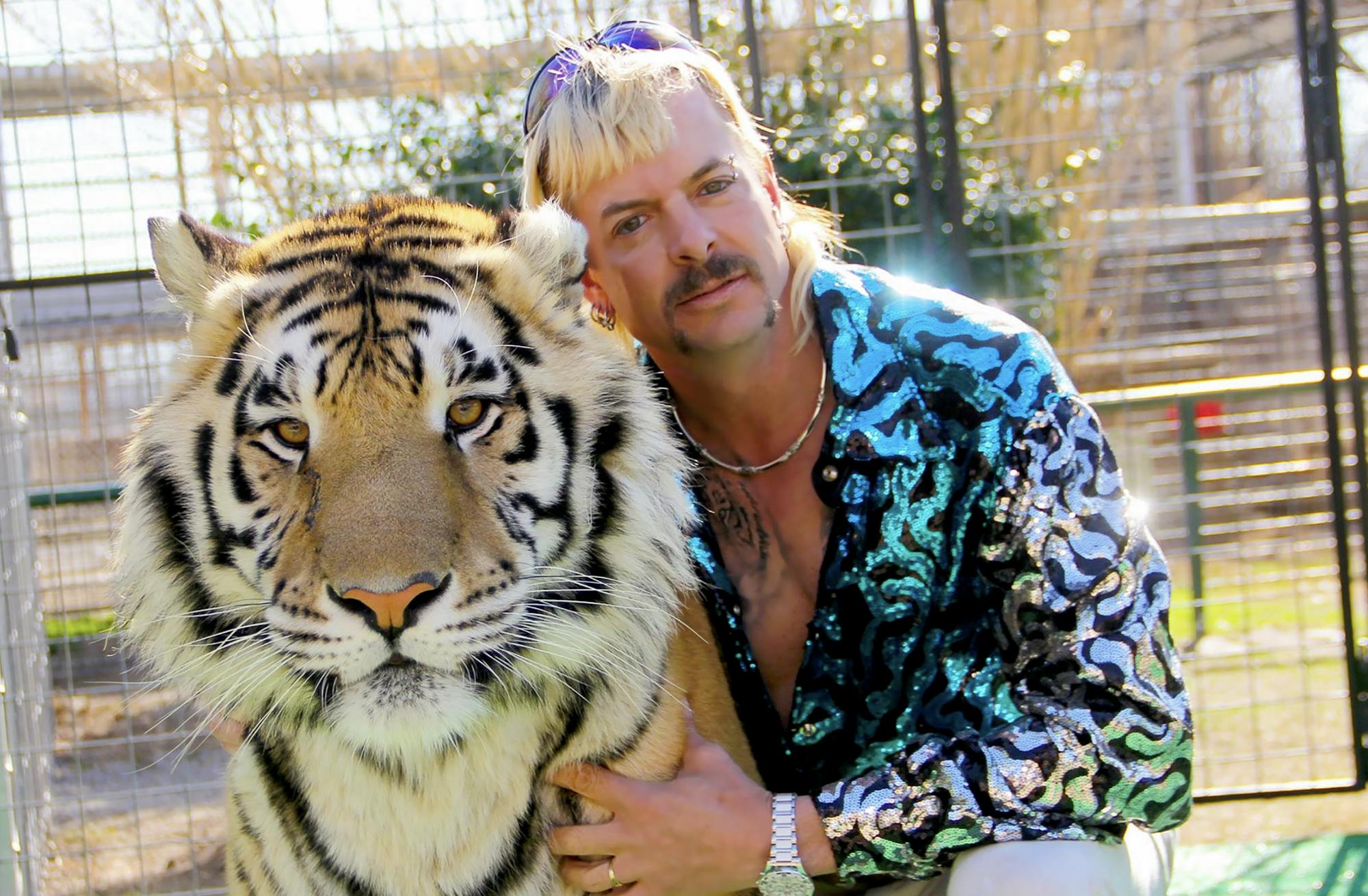
The show follows the stories of a wide array of fascinating people, including Doc Antle, a polygamist owner of a zoo that is rather persuasively likened to a cult. Joe Exotic is another polygamist zoo owner who had a brief attempt at a political career, currently in federal prison for hiring a hitman to kill Carole Baskin. Baskin owns a zoo sanctuary and champions the Big Cat Safety Act, intended to end private ownership of big cats and cub petting, which would prevent the establishment of zoos like Antle’s or Exotic’s.
A primary focus of the documentary is the ongoing feud between these characters, specifically Baskin against the zoo owners. After watching, I spoke to two friends about their reactions; both immediately named Baskin, specifically, as a crazy and suspicious character. I don’t intend to debate whether any person is ‘good’ or ‘bad,’ because there’s no way to know; rather, I’m interested in the intentional positioning of their stories to evoke certain responses.
The primary criminal accusation against Baskin, introduced in the documentary by Joe Exotic, is that she killed her husband, Don Lewis, who disappeared in the 1990s. Another frequent interviewee on this topic is the ex-wife and the children of Lewis, whom he left for Baskin. All despise Baskin for reasons unrelated to the disappearance.
Once the event is described, with no evidence ever found and her husband ultimately declared dead, the documentary jumps to Joe Exotic spewing conspiracy theories. He, at one point, promises the body can be found under a septic tank and at another says it was fed to tigers. The unsolved mystery begs for an answer, and Lewis’ ex-family and Joe Exotic provide compelling theories. Yet, the case went cold and the authorities found no evidence. It’s important to remember that these are people with personal vendettas against Baskin.
This is the first technique which I believe allowed Baskin to emerge as a memorable antagonist: her story is told so frequently through the mouths of those who hate her. By allowing Exotic and Antle to put forth their unsupported and biased opinions, the show allows viewers to be misled. Though we may know objectively we cannot trust their words, the ideas linger. And the show is all the more entertaining, if less reliable, for it.
The second such technique is most clearly seen in Tiger King’s second episode, “Cult of Personality.” Here, the volunteer and employee systems at the establishments of Antle, Exotic and Baskin are each portrayed as something uniquely wild. Exotic’s workers were paid very little and lived in terrible conditions — even eating the unsuitable-for-sale grocery store meat which was sent for the cats. Antle allegedly also provided virtually no pay and horrific living conditions for his workers, in addition to an environment where women and teenage girls were pressured to sleep with him in order to progress through the ranks of volunteers.
These are severe accusations. The documentary then moves to Baskin’s own “cult of personality” — her volunteers work crazy hours, are ranked based on experience level and Baskin doesn’t know all of their names until they’re high level volunteers. This strikes me as completely incomparable to the accusations leveled against the two men. Yet, I listened to some viewers react as if all three were equally cruel; by framing the stories in the same way, the audience is primed to interpret Baskin’s volunteer system as similarly cruel to those of Exotic and Antle.
By providing this narrative thread, a trio of cults and manipulation, in which Baskin is the lingering wealthy presence pushing Exotic to ruin, the show establishes cohesion. It makes for an excellent story, but it is worth remembering that these are real people. I’ve been aware of hate for Baskin since Tiger King’s release in 2020, but knew nothing of the other interviewees. The show gives Exotic the primary platform, and it has permitted his rumors to spread.
Rick Kirkham is the first voice heard in the show. He is a producer who shot a reality television show around Exotic, though it was never aired after the production studio and content were lost in a fire. He delights in the chaos at the zoo, with Exotic’s violent rants against Baskin and supremely unique personal life, anticipating a successful show. His response to wild behavior simply seems to be to roll the cameras. The documentary producers seem to have had much the same instinct, giving plenty of attention to Exotic’s cruelty. It all makes for a gripping spectacle, but analyzing where we might have been misled benefits the real people portrayed, whose stories are out of their hands and enveloped completely in the context curated by producers.
I would ultimately recommend Tiger King for its extraordinarily entertaining series of twists and vibrant characters. It is also an excellent show to examine and to linger on, with so many unresolved questions and appealing but unsupported answers dangled before its audience. It is a story of people who, if I can say nothing else with confidence about their characters, are remarkably memorable.

Rye Blizzard is a member of the Class of 2027 in the College of Arts and Sciences. She is a staff writer for the Arts & Culture department and can be reached at rab538@cornell.edu.