In the Cornell Chapter of The Society of Hispanic Professional Engineers, students might come for the tamales. They might stay for the people. And they might leave with a resume polished for their next job interview.
Through community building, professional development and academic support, SHPE is working to create a space that Hispanic and underrepresented students in engineering can call home.
“We plan to serve all of the Cornell community, not just Hispanics,” said Emilio Ceballos ’26, the SHPE advice chair. “[We want to] make a safe space for the congregation to meet new people [and] to spread the culture while giving our members the opportunity to grow professionally and academically.”
Creating a Place to Belong
For Hispanic students in engineering, finding belonging can be difficult.
“When I first got here, I noticed that in a lot of my engineering classes, pretty much no one was Hispanic. I felt very lonely and lacked community because I didn’t know it existed,” said Ruby Penafiel-Gutierrez ’27, internal vice president of SHPE. “We want to make it so that Hispanics trying to go into engineering don’t veer off just because they don’t see representation.”
For members of SHPE, fostering representation and belonging starts with general body meetings. The events are intentionally low-key, Penafiel-Gutierrez noted, giving members space to talk, socialize and get to know each other.
While these meetings tend to serve as the first point of contact for newcomers, the SHPE community building process goes deeper.
According to Valerie Ruiz ’28, a current events chair, programming selection is intentional.
“One thing we consider is past events, ones we had good feedback on and participation in,” Ruiz said. “We shape, especially the fall emester, around the [SHPE] national convention,” she said.
But SHPE’s largest event in Fall 2025 wasn’t professional in nature, Ruiz said — it was Friendsgiving.
Members connected in informal ways, and Ruiz hopes that they will “be excited and willing to come back for more events,” Ruiz said. Rooted in past success, Friendsgiving is expected to return in 2026.
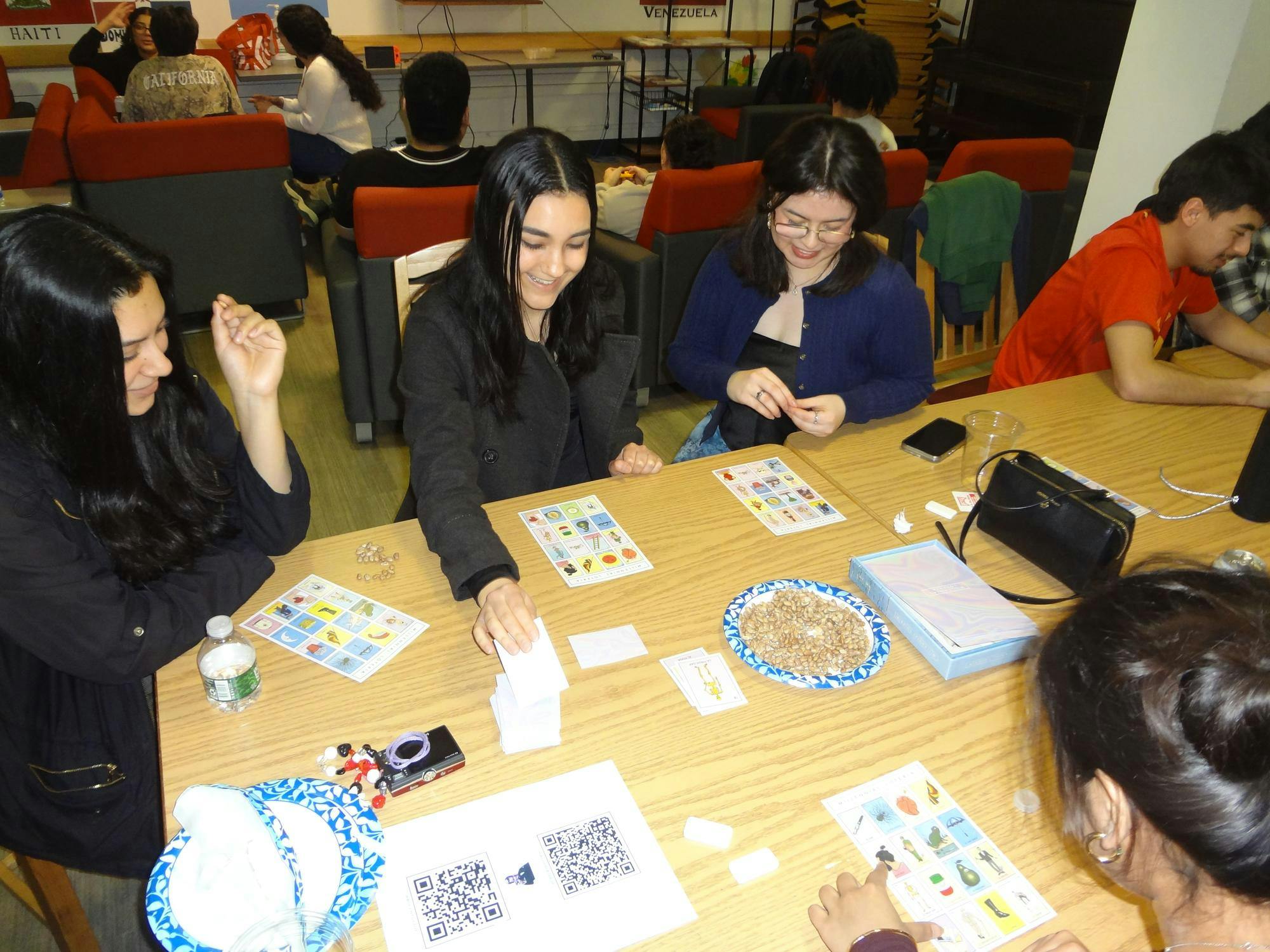
Even outside of large events like Friendsgiving, SHPE uses food to educate members on Hispanic culture.
“We held an event where we served tamales, and it was a history lesson on tamales,” Ceballos said. “We’ve made arroz con leche as part of our event, [and] we have been part of the café con leche series at the Latino Living Center.”
SHPE’s goal is “to provide professional opportunities as well as good food. A lot of our events have good food,” Penafiel-Gutierrez said.
SHPE is expanding community building efforts with the launch of an intramural soccer team this semester.
“With the World Cup being held, one of the key observations I saw was that it brought a lot of people together, watching the game,” said Daniel Guevara ’27, a current events chair. “I wanted to make an environment that was non-academic, non-professional, yet [members] could still get to know others from the organization.”
Similar to Friendsgiving, the soccer team is intended to help SHPE members build community while serving as a starting point to “direct them to other events and opportunities,” Guevara said.
The passion put into each of these initiatives is well encapsulated in one word.
“One of SHPE’s key values as a national organization and at Cornell is ‘Familia,’” Cindy Mosqueda, the senior associate director of the Office of Inclusive Excellence and SHPE faculty advisor, wrote to The Sun. “We draw strength from our supportive and welcoming community.”
Building Confidence in the Classroom
After post-pandemic membership decreased, SHPE is working to rebuild while ensuring that newcomers find a sense of belonging.
New members can join a peer mentorship program pairing underclassmen with upperclassmen. Ruiz noted in her experience that having someone in the organization to look up to and get advice from was beneficial, and SHPE hopes to keep this going.
“We’re trying to foster that connection [and engagement] very early on,” Guevara added.
SHPE also helps create an external academic support network through study jams, peer tutoring, and connecting with other engineering affinity organizations led by the Office of Inclusive Excellence.
Academic support involves “helping our community members with their tougher classes,” Ceballos said, reflecting on his time as academic chair.
Finding a Path Forward
SHPE’s emphasis on community and belonging shapes its professional development efforts. From corporate-sponsored events and information sessions to resume reviews and interview workshops, members build a foundation for their careers.
“It’s not full-on corporate, and I think that shows our mission of essentially creating community,” Penafiel-Gutierrez said, emphasizing the connection between SHPE’s professional and social missions.
Penafiel-Gutierrez noted that a corporate-sponsored event initiated her relationship with SHPE and reminded her she could be herself in professional settings.
“Seeing how passionate they [other members] were, and talking to those professionals, got me started working a little bit more, trying to get myself into the field,” she said.
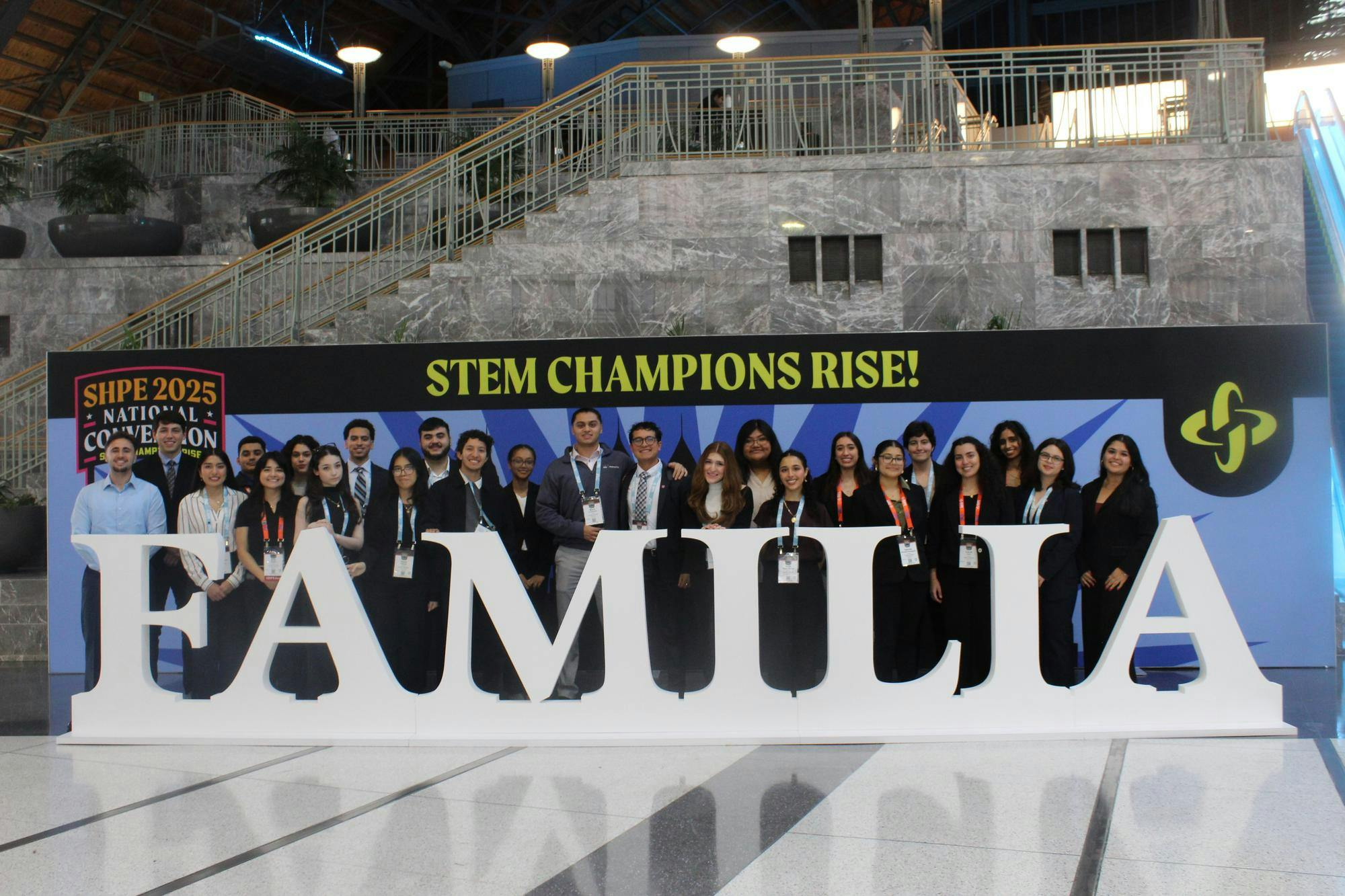
The Cornell chapter attends SHPE’s national convention each year, bringing together members from chapters across the nation. While the convention is full of recruiters and professional opportunities, once again, community and culture tend to reign supreme.
In preparation for the national convention, members get the chance to build their professional persona. According to Ruiz, convention preparation is based on peer work rather than a hierarchical structure.
“We had peer resume review, and we would practice and refine our elevator pitches for each other,” Ruiz said, recounting her experience attending last fall. “That’s something people don’t always get to do in their regular academic classes, and that [practice] made me more confident going into [the] convention.”
Ceballos noted that the convention offered both professional and cultural benefits. Beyond testing resumes and elevator pitches in real-world settings, he was struck by who he was surrounded by.
“It was also really cool seeing thousands of Hispanic engineers gathered at this huge convention center, and being like, ‘Whoa!’ I had never been surrounded by so many people that kind of look like me, but that are also being successful in this field,” he said.
To help as many students as possible get this experience, SHPE funds lodging and transportation for some members, according to Ruiz. However, these efforts are limited.
“Due to limited funding, SHPE must cap participation and turn away many students who would benefit from the opportunity,” Mosqueda wrote to The Sun.
Furthermore, the convention has an associated registration fee, which, according to Ceballos, has prevented students from attending in the past. Mosqueda, Ceballos, Ruiz and Penafiel-Gutierrez all regarded funding as a major barrier to the programming and support SHPE would like to offer.
“We [SHPE] are here,” Penafiel-Gutierrez said. “We are driven, and we hope to create a community where Hispanics feel very empowered.”
“To all the people that are Hispanic, whether they're international students, whether they're Hispanic Americans, whether they're non-Hispanics, come give it a try,” Ceballos said. “Come understand what we stand for, how we integrate our cultural events with engineering, with education.”
SHPE is here to serve the engineering community, Ceballos said, everyone is welcome if they can find the environment beneficial. “We're Hispanic-led, but at the end of the day, not exclusive,” he said.