


Editor’s Note: This article contains references to grooming and child sexual abuse.
“Lolita” is not the name of that 12-year-old girl; it is a perverse pet invented by the novel’s narrator. Her actual name is Dolores.
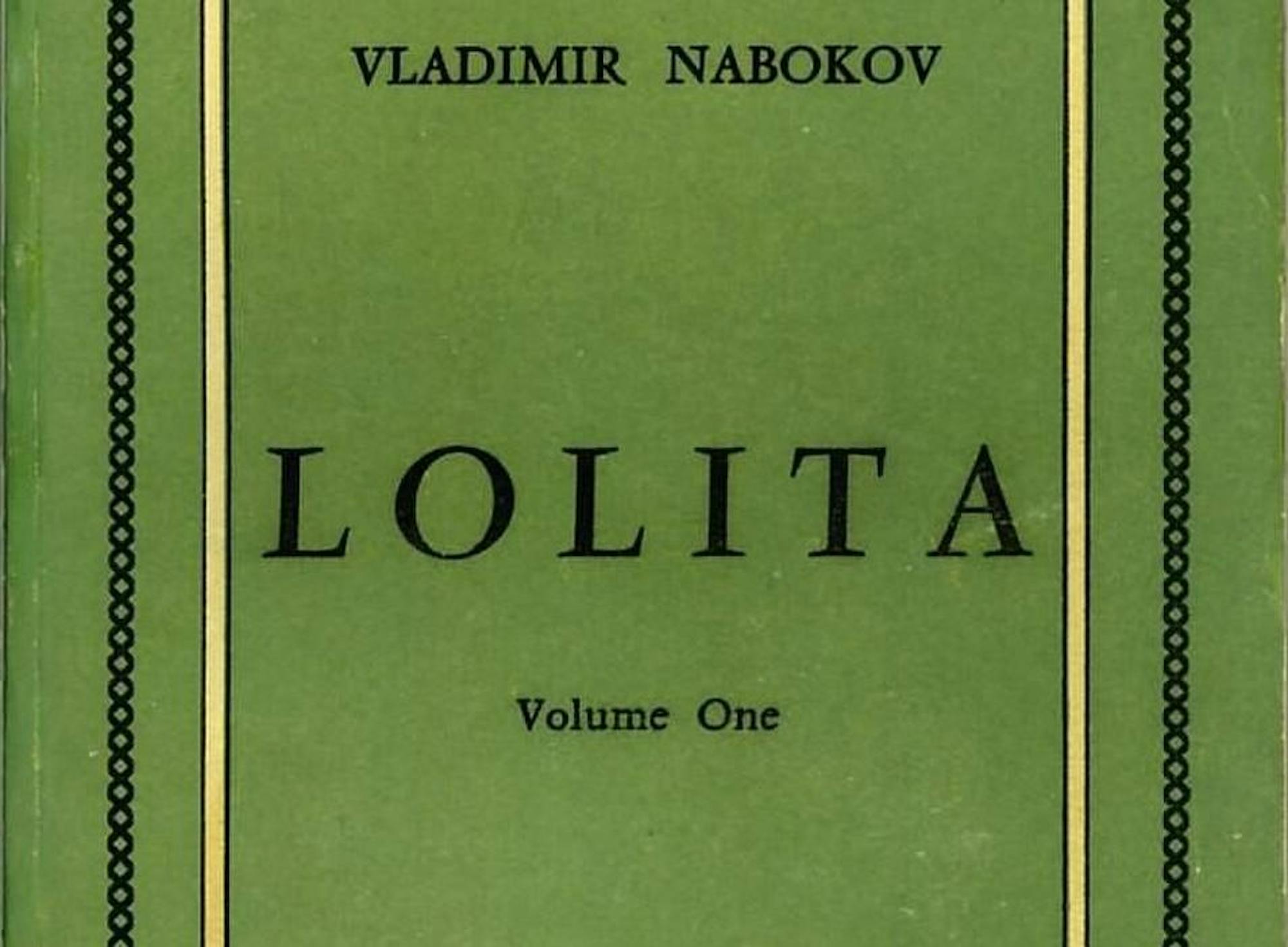
The first and main challenge when writing about Dolores is getting past the man who has already written over her. Vladimir Nabokov’s 1955 novel Lolita concerns Humbert Humbert, a Swiss-American academic, narrating the story of his obsession with 12-year-old Dolores Haze, a regular American schoolgirl living in the fictional New England town, Ramsdale. Her abuser is also her narrator, the chief teller of this tale and — apart from the foreword — the controller of almost every word. As Humbert gleefully reminds us throughout the novel: “I only have words to play with!” Plotwise, Humbert ostensibly writes this confession behind prison walls for murder — powerless and slowly dying from coronary thrombosis. Yet he has the last word. He has all the legroom to pontificate and justify, to use a verbal blitzkrieg of wordplay, puns, allusions and jokes in order to appear ‘touching’ to the reader.
Humbert Humbert is an overwhelming force in Lolita, but the novel is not exhausted by the plot he narrates, however exhaustively he narrates it. There is a whole different way of looking at this novel, a perspective we risk overlooking precisely because Humbert is so determined — and so extravagantly equipped — to occupy our attention. To understand this distinction, it is worth taking a brief detour to Nabokov’s first English-language novel, The Real Life of Sebastian Knight. Its unreliable narrator, V., attempts to write a biography of his half-brother, the novelist Sebastian Knight. Discussing Knight’s fiction, he offers a painter’s analogy that can also illuminates Nabokov’s own work:
“It is as if a painter said: look, here I’m going to show you not the painting of a landscape, but the painting of different ways of painting a certain landscape, and I trust their harmonious fusion will disclose the landscape as I intend you to see it.”
Humbert paints his portrait of his “Lolita,” and Nabokov depicts the shifting ways in which Humbert paints his landscape. The singular-portrait of Lolita becomes more like a novelistic chess problem. Nabokov — who composed numerous chess problems himself — wrote in his memoir Speak, Memory that chess problems are a competition “between the composer and the hypothetical solver” just as in literature, “the real clash is not between the characters but between the author and the world.” By playing Nabokov’s novelistic game, we can become more curious about the world, to notice the suffering of others and reckon with it. It forces us to notice what Humbert Humbert embellishes, what he dismisses, where he lavishes his extraordinary attention and where he abruptly withdraws it.
In this kind of reading, we begin to reveal the real Dolores, the principal hero of this novel. Even with a cursory glance, we see the horror of the torment she endures. A particularly sickening episode takes place when Humbert sets up an allowance system conditional on submitting to his sexual demands. He even has the temerity to describe her bargaining for more as “a definite drop in Lolita’s morals.” But she is saving to escape. She closes her fist around the coins; he pries it open. She hides money in a book and behind a picture; he finds and steals it. Humbert eventually realizes: she found “a safer hoarding place which I never discovered.” She is not yet free; he reduces her payments as punishment. But beneath his portrayal of her supposed greed is a child still planning a life without him. Only once she finally escapes — when she grows up, attempting to rebuild her life with a loving husband — does Humbert start to reflect on an earlier, unexamined realization: “I simply did not know a thing about my darling’s mind.” This example of her resistance, one of many, belongs among the bravest acts in all of literature.
Marianne Moore once described poetry as “imaginary gardens with real toads in them.” In the introduction to The Annotated Lolita, Alfred Appel Jr., a literary critic who once took a class taught by Nabokov, twists this phrase to summarize Lolita: “a parody of death with real suffering in it.” Nabokov himself did not care for the obsession with realism in novels, stating in his lecture “Good Readers and Good Writers” that “to call a story a true story is an insult to both art and truth.” As the suave John Ray Jr., narrator of the Foreword, attests, Lolita deliberately subverts the wishes of “old-fashioned readers” who want to “follow the destinies of the “real” people beyond the “true” story.” Lolita is highly self-aware of its own artifice, full of parody, coincidences and patterns that undermine the illusion that its characters and events exist independently of their telling. We often forget that “Humbert Humbert” is just a cognomen; we don’t actually know his “real” name. The same goes for Dolores Haze’s surname: “Haze” only rhymes with her “real” surname. Yet what is real is Dolores. John Ray Jr. states that “her first name is too closely interwound with the inmost fiber of the book to allow one to alter it; nor (as the reader will perceive for himself) is there any practical necessity to do so.” “Dolores” is derived from the Latin, dolor: sorrow, pain. The suffering, the pathos that comes with no irony or parody behind it is this: A young 12-year-old girl named Dolores was sexually abused by an older man she trusted to be her step-father.
It is the basic and correct reaction for us to feel disgusted by Humbert Humbert’s criminality, his perversity, his attempt at charm. But we must not let that turn our eyes away from Dolores, to be “deaf to her sobs,” as Véra Nabokov would say. There is more to this novel, as there is more to the world, than the person who commands our attention. Those who deserve our attention do not always have the means to tell their own stories; sometimes we must notice them in the struggle to escape someone else’s. It is not enough to see through Humbert. We must see Dolores.

Basil Bob is a member of the Class of 2027 in the College of Arts and Sciences. He is a staff writer for the Arts & Culture department and can be reached at bbob@cornellsun.com.


