

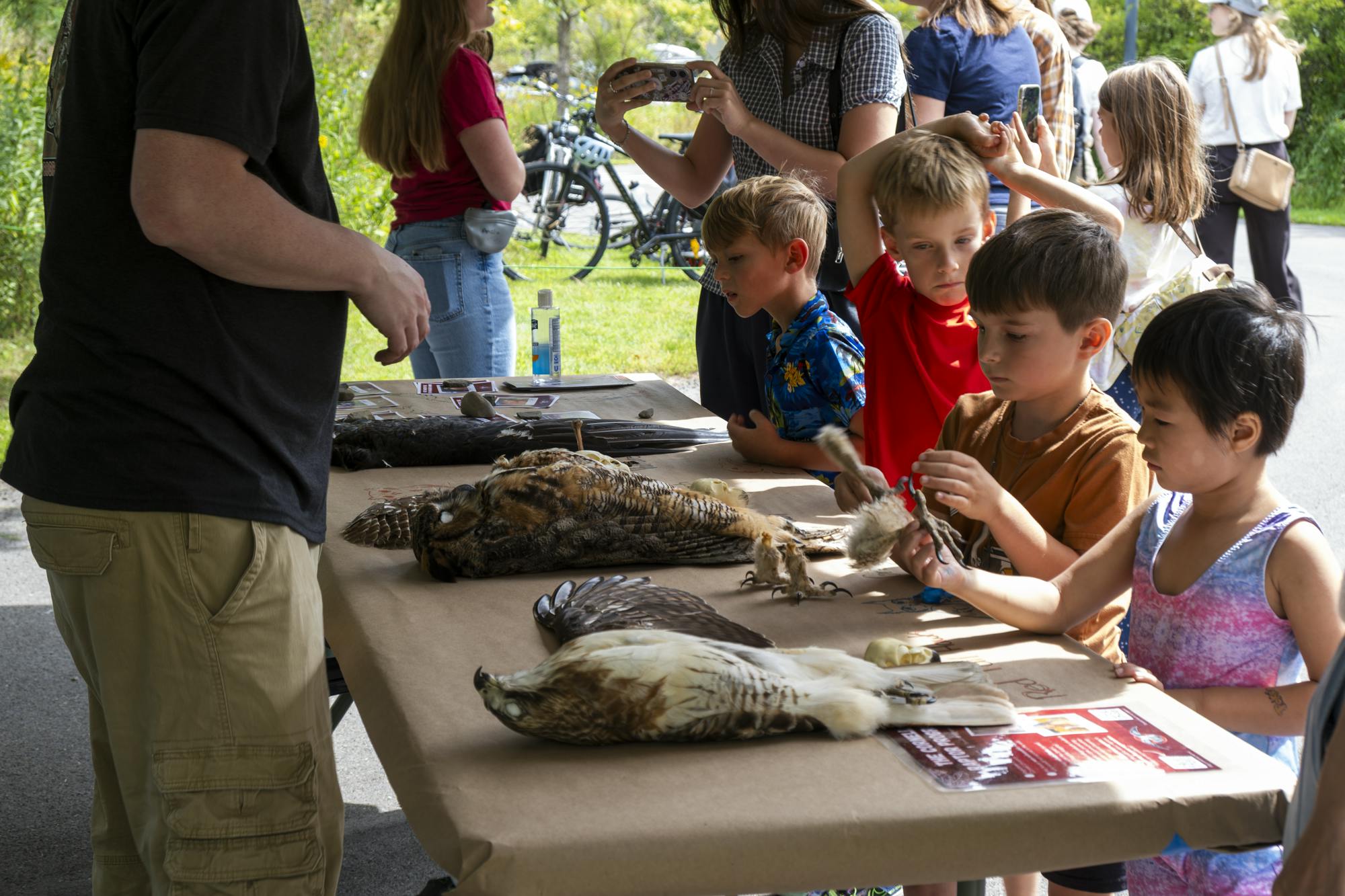
The Cornell Lab of Ornithology welcomed an estimated 2,000 members of the Ithaca community on Saturday for its annual Migration Celebration, a free event celebrating the fall bird migration and an opportunity for the public to glimpse some of the research being done at the lab.
“It’s a really great chance for people around the lab who are doing all this incredible work behind the scenes ... to bring it out and connect with the public and our community,” said Peter Leipzig, public programs coordinator at the lab. “The event is designed to have something for all sorts of levels of expertise and interest.”
The first Migration Celebration was held in 2007. The first event included activities such as bird banding, where live birds are harmlessly trapped and fitted with uniquely identifying numbered bands, and sound recording, where dishes are used to record and identify bird songs, which have since become mainstays.
“The details of how you do that have changed, but the broad themes have really stayed the same,” Leipzig observed of the event’s evolution over the last 20 years.
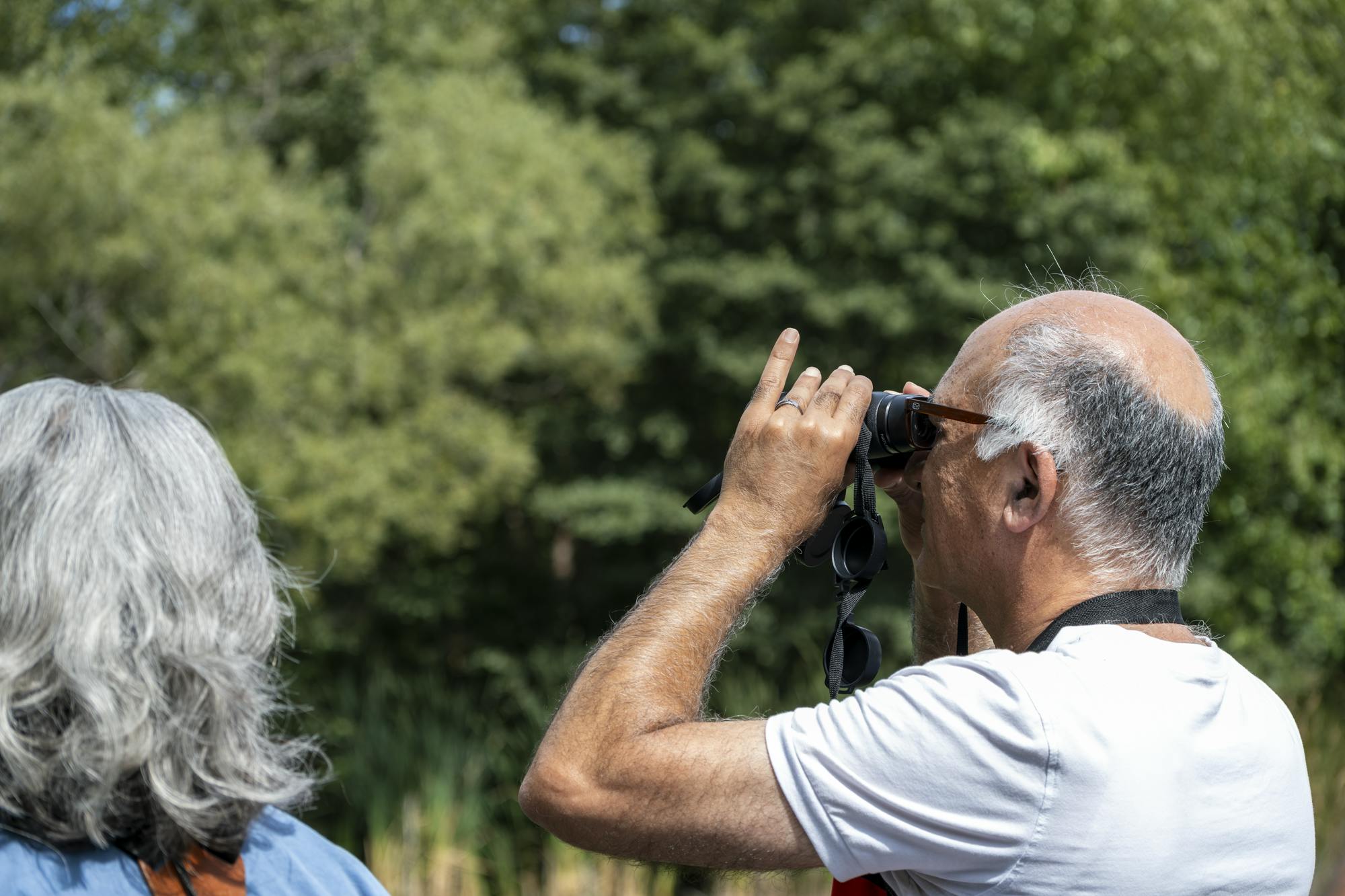
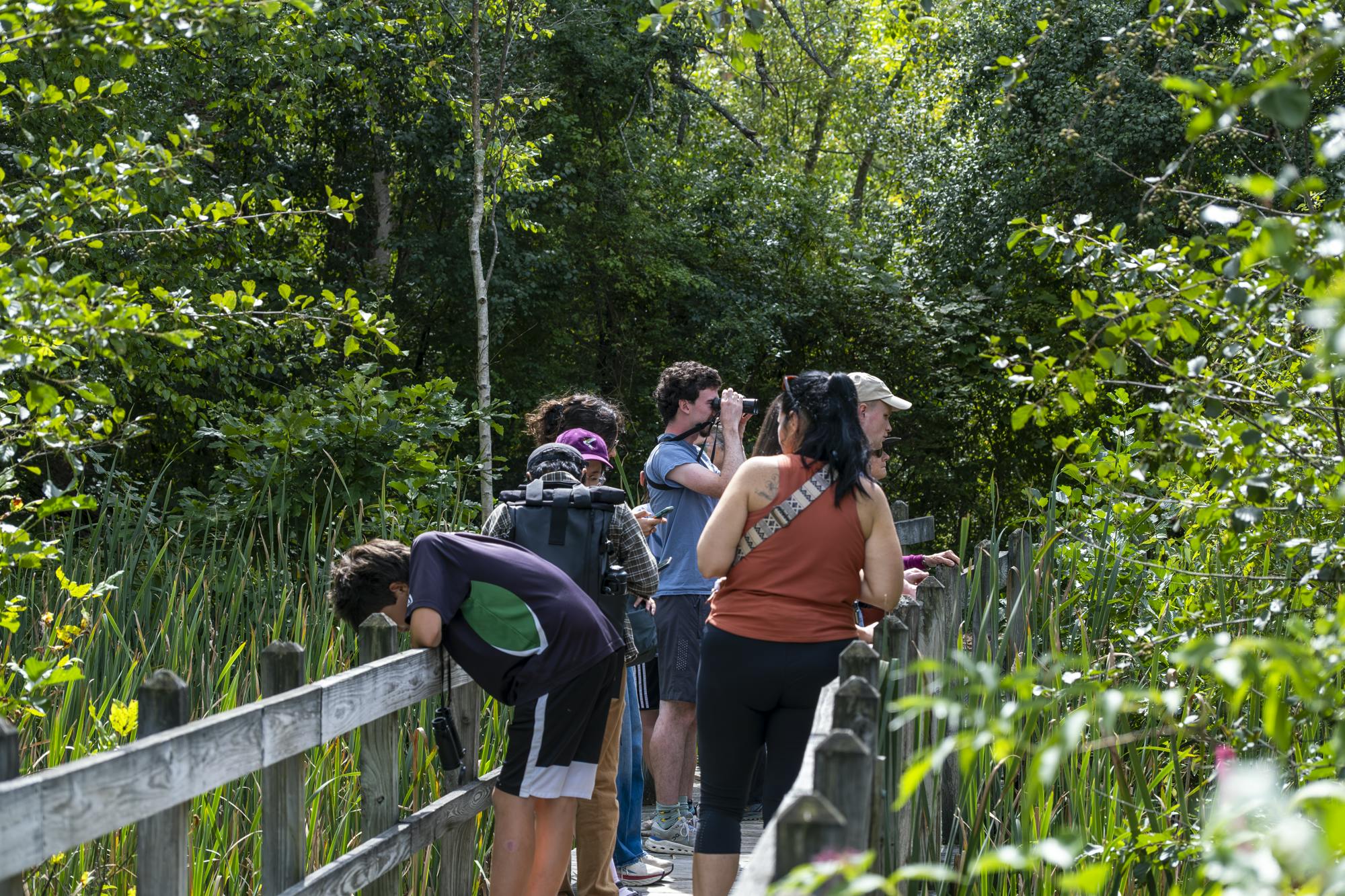
A Bird Walk participant at the Cornell Lab Migration Celebration looks off a boardwalk to see a Green Heron at Sapsucker Woods on Sept. 12, 2026.
This year, the event featured poster presentations, live demonstrations and interactive workshops, including a participatory art project led by Holly Greenberg, an artist and printmaking professor at Syracuse University.
Greenberg, with the help of the public, is handcrafting 10,836 bird sculptures at workshops like this throughout the country to memorialize the number of birds killed in window strikes in Chicago in 2023.
“It creates a different connection with these birds versus just seeing statistics,” Leipzig noted.
Many exhibits and tables were set up under tents outside of the Lab of Ornithology’s visitor center. In one of the event’s most popular attractions, the Cornell Raptor Program showcased non-releasable ambassador raptors to educate the public about the importance of birds of prey and raise awareness about their conservation.
“The birds are so amazing to see, and the undergraduate members are really knowledgeable,” said Harry Samuels ’24 DVM ’30, an attendee at this year’s Migration Celebration and former member of the Cornell Raptor Program. “I feel like I learned something new from them even though I also have learned all of it before.”
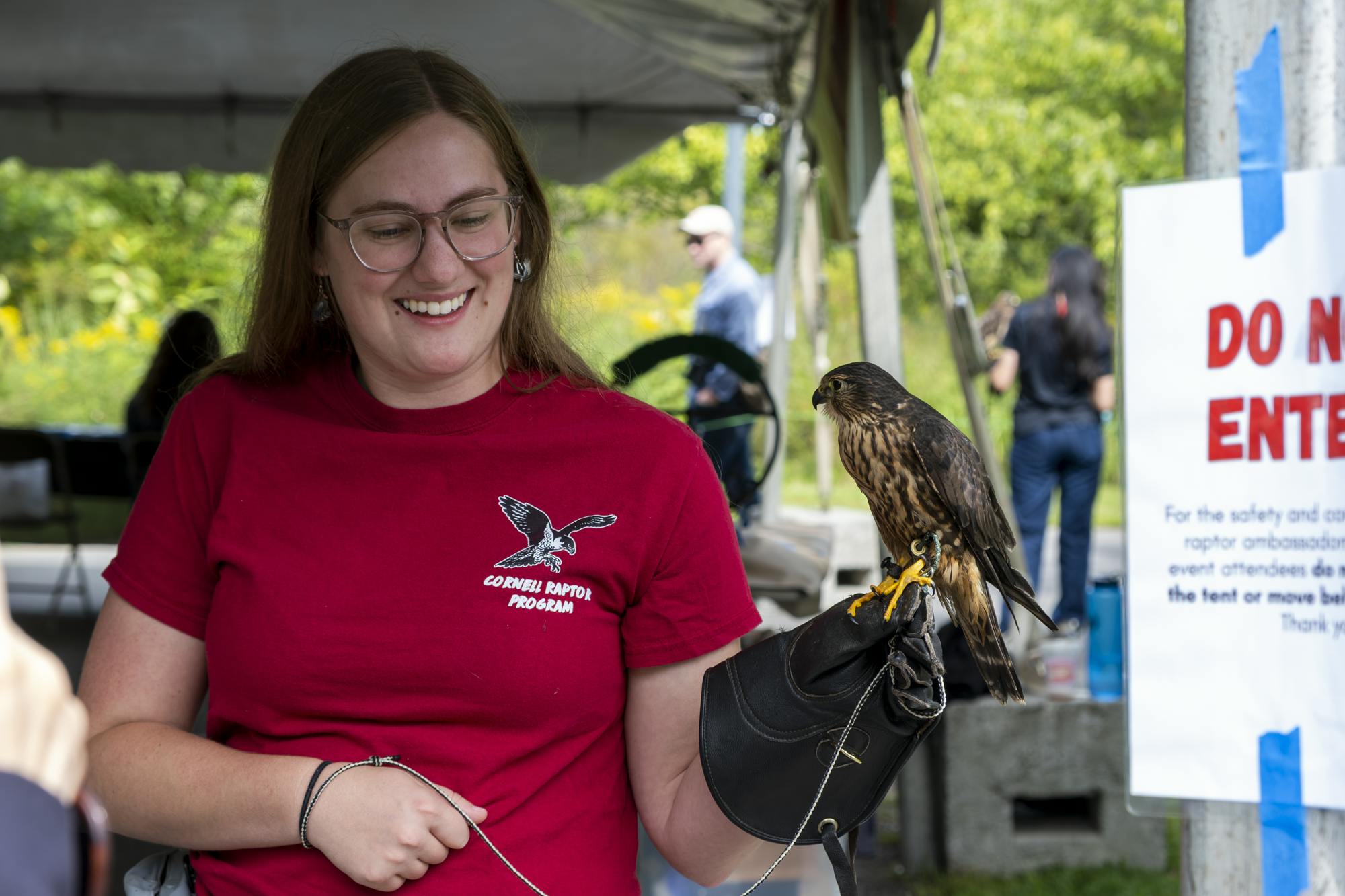
A member of the Cornell Raptor Program presents a bird at the Cornell Lab Migration Celebration on Sept. 12, 2026.
Bird banding was almost equally popular. Scientists at the lab demonstrated the process of harmlessly trapping birds, measuring their overall health and fitting them with numbered bands before releasing them.
“We’re trying to showcase all kinds of bird research to the public here in Ithaca,” said Aimee Van Tatenhove ’14, a postdoctoral fellow at the Lab of Ornithology, referring to both the bird banding demonstration and Migration Celebration as a whole.
At one of the tables, visitors were given a QR code to try out the Merlin Bird ID app, which listens and identifies birds based on their songs.
“It’s a fun and easy way to just jump in and get started learning about birds in your neighborhood,” said Alli Smith, project coordinator for Merlin at the lab.
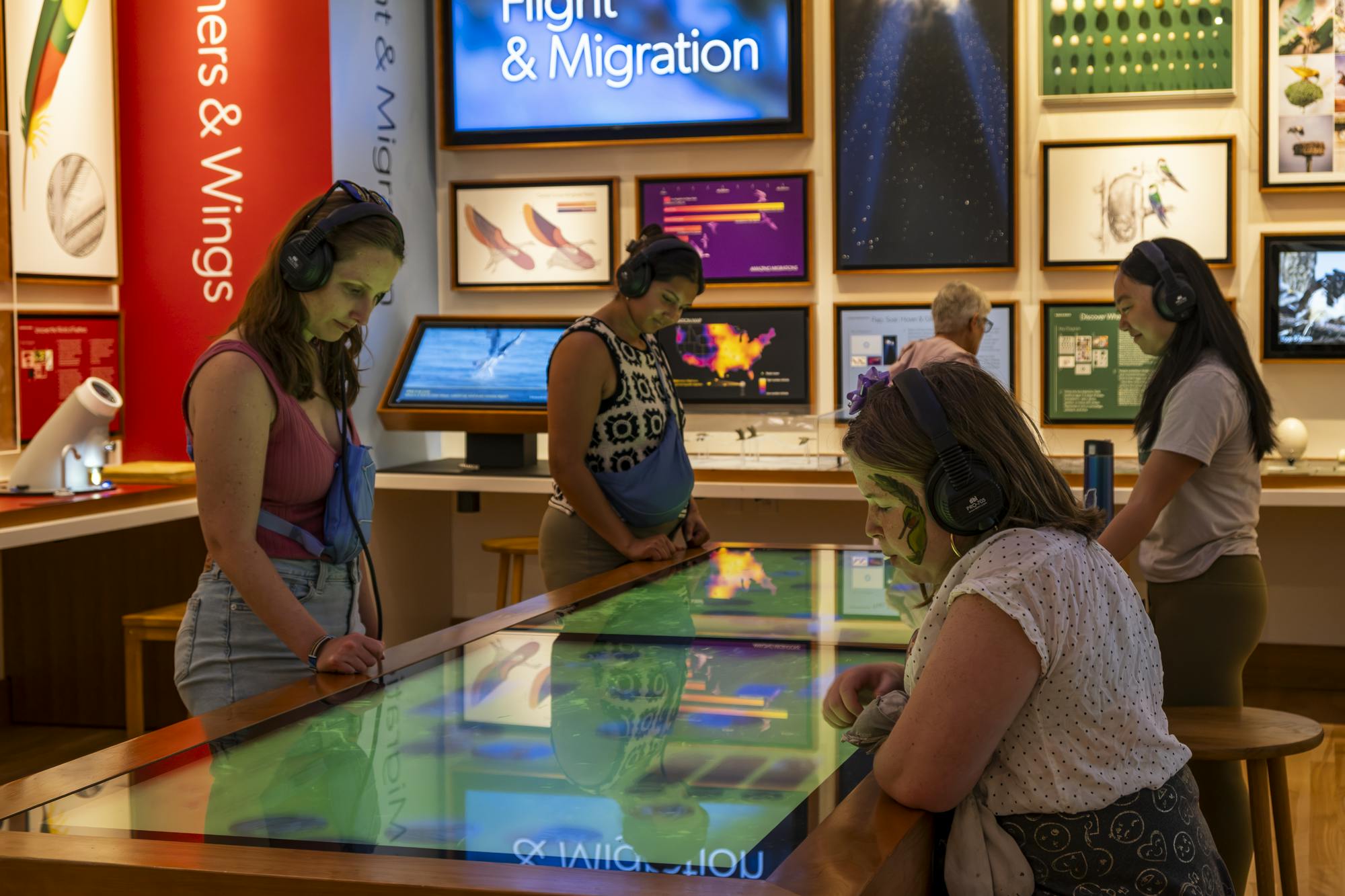
Inside the visitor center, BirdCast and the Vitousek Lab were among those tabling to illustrate the multidisciplinary nature of the research being done at the lab. The BirdCast project uses data from weather radars to forecast and estimate bird migration on every night during the migration periods in the spring and the fall, and the Vitousek Lab is currently studying the effects of cold snaps and climate change on the developmental physiology of tree swallow nestlings.
Before the start of the event at 10 a.m., members of the Cayuga Bird Club led a bird walk in Sapsucker Woods. The club was founded in 1913, two years before the founding of the Lab of Ornithology itself in 1915. Members of the lab led bird walks throughout the event’s duration as well, and ornithologist Kevin McGowan even led a stationary birding session at the visitor center entrance.
In the auditorium, Perry Ground ’91, a member of the Onondaga Nation, delighted audiences with animated retellings of traditional Haudenosaunee stories, including those of the creation of Turtle Island — the Haudenosaunee name for North America — and the origin of the sport of lacrosse.
“We try to incorporate Indigenous voices wherever we can,” Leipzig said. “[It] adds in perspectives that the rest of our team wouldn’t be able to provide.”
For some students, the event provided additional benefits of networking.
“I’ve gotten to meet some professors that I’ve been waiting to meet for a very long time,” said attendee Anshul Gupta ’30.
Others enjoyed getting away from the stress of school and being outside for the day.
“I thought it was a great way to explore Ithaca nature in a new way while it’s still nice out,” said Nick Graves ’24 DVM ’28 of the nature journaling workshop in particular.
“I think this is a great event,” Gupta said. “I will definitely try to come [back next year].”


