I was a freshman in high school when I first started writing about music. My English teacher assigned me my first ever research paper — gosh, the innocence — and I didn’t have the slightest idea of what to write about. I brainstormed for days, but all that I could determine was that I wanted my topic to involve people.
My teacher recommended that we use ProQuest to figure out our topics (baby’s first database search!) which is how I stumbled upon a little band known as The Rolling Stones. Now, of course I had heard of them before, and I was familiar enough with “Beast of Burden,” but I really didn’t know anything about The Rolling Stones, the people. This research paper ended up being the rabbit hole I never knew I needed. It made me realize not just how important the people behind the music are in the life of an album, but also how vital the listeners can be.
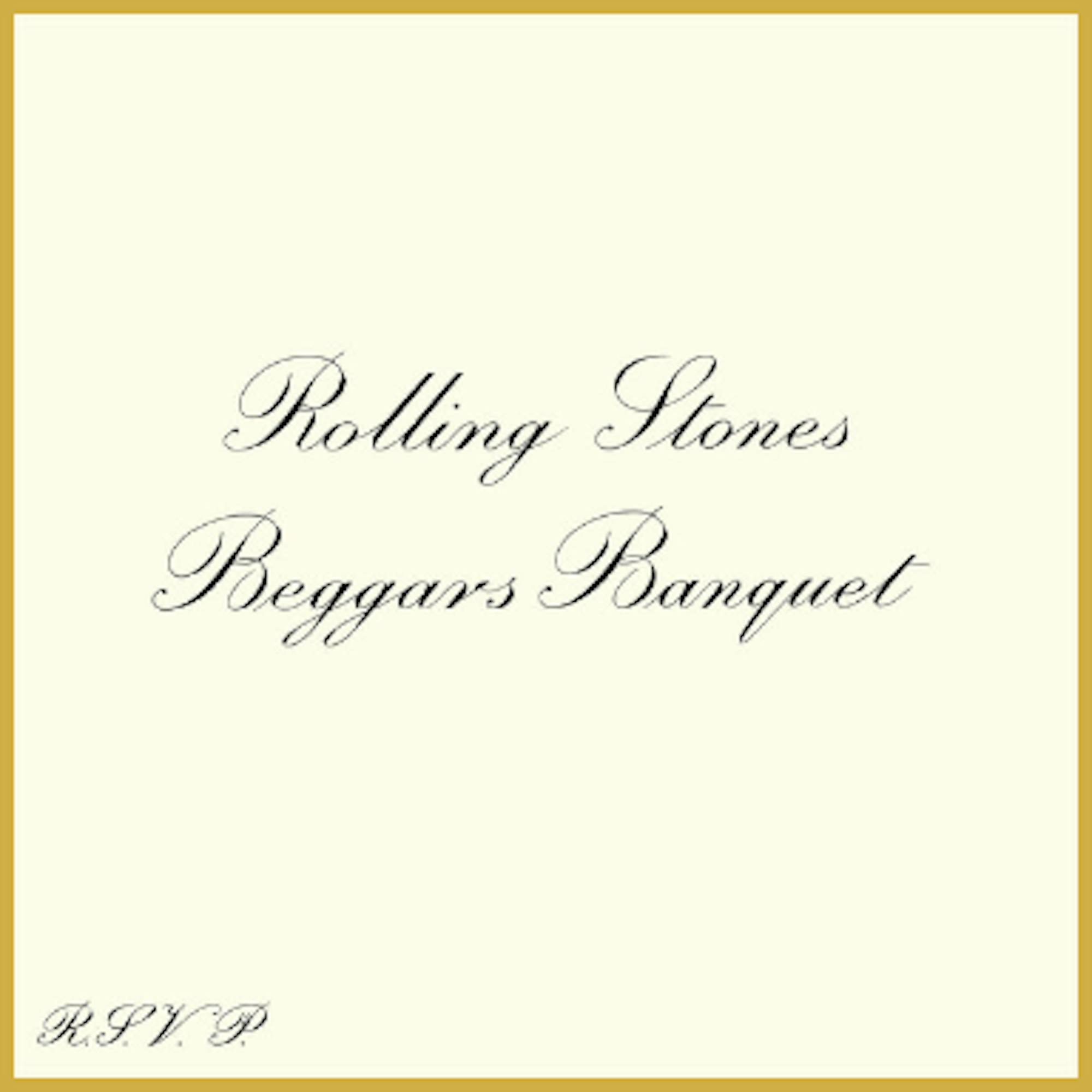
Along the way, I learned about the Stones’ 1968 record Beggars Banquet, largely regarded as one of their best albums and a return to regularly scheduled programming after their foray into psychedelia with their dumpster fire-esque 1967 release, Their Satanic Majesties Request. Aside from the obvious jokes that can be made about this record’s title in association with Robert Pattinson’s performance in The Odyssey (See: “Somebody get these beggars out of here!”), Beggars Banquet stands out to me as a plea for forgiveness from the Stones to their fans. It encapsulates the humanity in music, the give-and-take between an artist or group and their fans when music is released — the desire for both parties to be satisfied with the work. Beggars Banquet is a return to the Stones’ roots, the blues rock that spurred the creation of the Stones in the first place, and that established the Stones’ appeal to their fans. And in a way, this is a return to my roots as well; this was the group that originally made me want to write about music, so there is no better way to kick off my final year of writing Test Spins for The Sun than to return to the band that started it all.
Beggars Banquet starts off with “Sympathy For The Devil” — a title that overtly reminds the audience of the name of Satanic Majesties — yet this track shares nothing with that record beyond that. Mick Jagger sings from the devil’s perspective here — a choice that garnered a lot of backlash. With lyrics inspired by Mikhail Bulgakov’s novel The Master and Margarita, “Sympathy For The Devil” combines commentary on society with a samba-infused sound, placing the psychedelia of Satanic Majesties firmly in the Stones’ past. Similarly, “No Expectations” is deeply embedded in the blues that inspired the Stones to make music. It is uncharacteristically peaceful; Jagger’s voice takes on a simple, lulling ebb and flow, while Brian Jones uses the acoustic slide guitar to create a softer sound. In “Dear Doctor,” Jagger sings about a man being left at the altar and whips out a faux American accent as Jones wields the harmonica to drive home a more folksy, country-blues sound. “Parachute Woman” is another blues-heavy track, but it’s more notable for its extremely suggestive lyrics than anything else.
“Jigsaw Puzzle” marks a slight shift within the record; Jagger exchanges his grittier vocals from the earlier tracks for a softer sound. In fact, some claim “Jigsaw Puzzle” is derivative of Bob Dylan’s work in the 1960s. The song becomes autobiographical by the third verse, offering a bit of insight into the people behind the band: “Oh the singer, he looks angry / At being thrown to the lions / And the bass player, he looks nervous / About the girls outside / And the drummer, he’s so shattered / Trying to keep on time / And the guitar players look damaged / They’ve been outcasts all their lives.” Notably, the members’ names are not used here — their identities are boiled down to their roles within the band, making the two seem inextricably tied. Meanwhile, “Street Fighting Man” compares the contemporary political state of England with the situations in the United States and France. The song was recorded on Keith Richards’ cassette, giving it a chalky quality and drawing out Jones’ contribution on the sitar. “Prodigal Son” is a cover of Reverend Robert Wilkins’ original song, and it reminds the listener of the Stones’ earlier influences of gospel and other religious music. “Stray Cat Blues” fuses hard rock with blues rock more than any of the other songs on the record, providing a bit of diversity while also hinting at just how far the Stones’ have traveled from their early days. “Factory Girl” leans more folk and sees Jagger waiting for his factory girl to get out of work. That tawdry accent is back — for better or for worse — in an attempt to convince the listeners that the Stones are just like us. They take it a step further with the final song on the album, “Salt Of The Earth,” in which Richards and Jagger share lead vocals. The song is an acknowledgement of the working class, and it puts a face to the down-and-out American persona Jagger inhabits in the Stones’ return to blues.
So yes, Beggars Banquet is both a promise for a return to normalcy and an apology for the breach of the fans’ trust with Their Satanic Majesties Request. There’s a reason the Stones have had such longevity, even releasing music as recently as this past July — they’ve learned (after a few bumps in the road) what brings their listeners back. We all know the saying “Go back to the basics,” and that’s exactly what the Stones did with Beggars Banquet. The Stones may have lost the plot in 1967 and turned off some listeners in the process, but they found it again in 1968 and reeled them right back in. Not only was that great for the Stones, but it was a magnificent element of drama for my first-ever research paper, and for that, I can’t thank them enough.
Test Spins is a fortnightly throwback column reviewing and recommending classic and underrated albums from the past. It runs every other Friday.
Sydney Levinton is a member of the Class of 2027 in the College of Arts and Sciences. She is a senior editor specializing in music and was the arts and culture editor on the 142nd and 143rd Editorial Boards. She can be reached at slevinton@cornellsun.com.