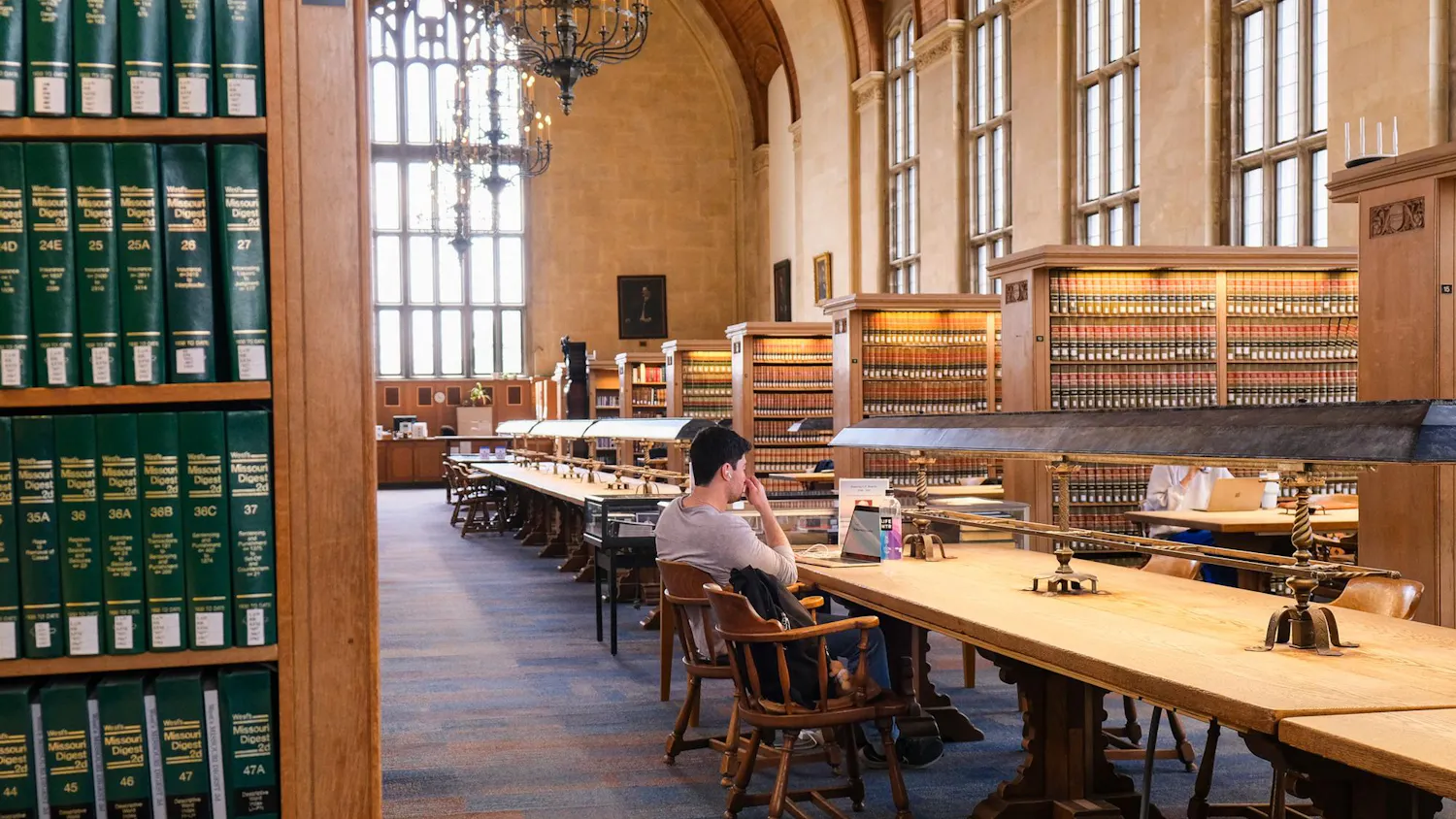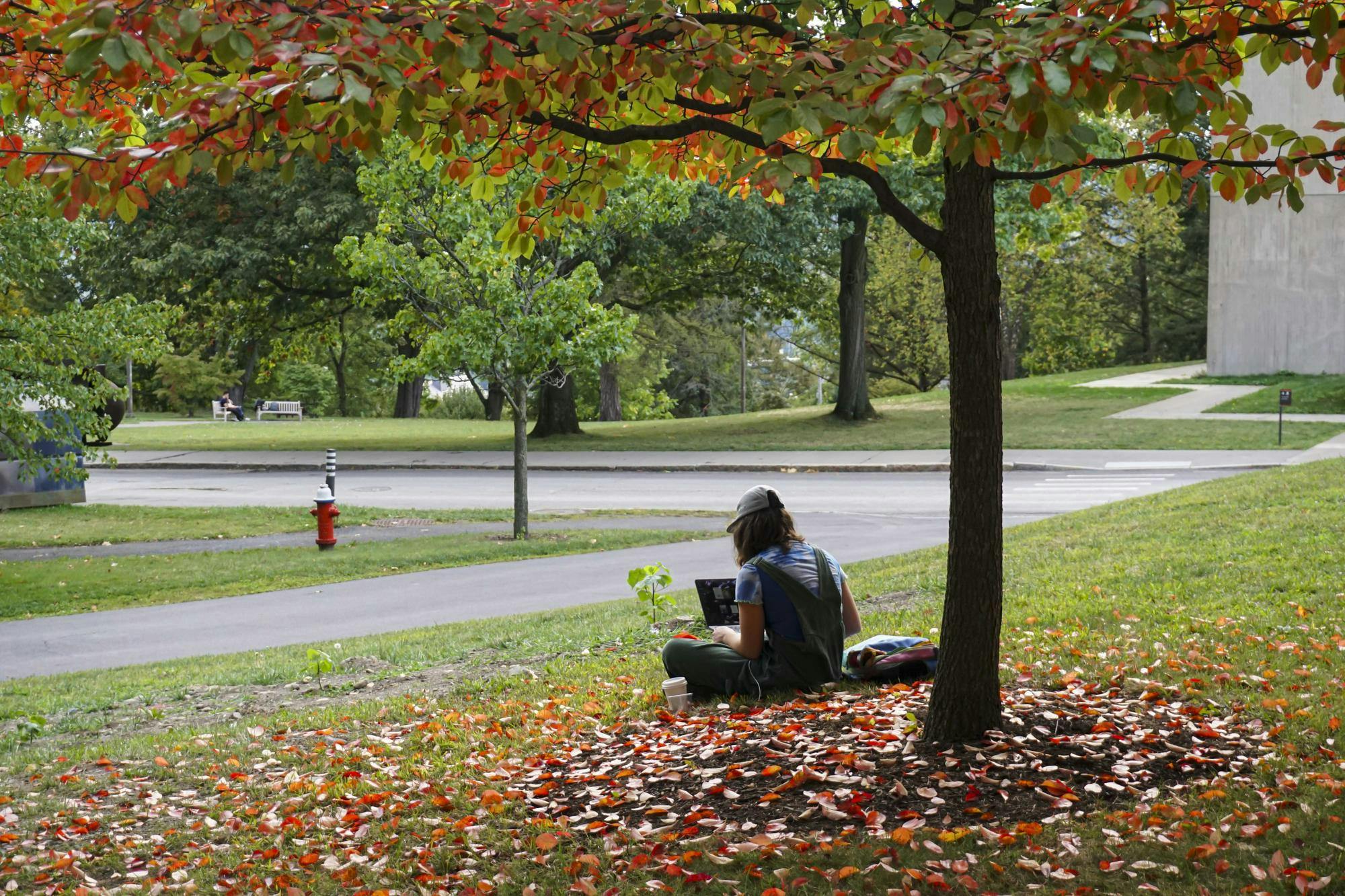
A Pinterest board for a college fall semester can tell you the tale of study dates at a café, beautiful cardigans and the shades of autumn paving your way to class. Cornell’s campus knows a similar story: coffee chats, Apple Fest in the Commons and sunsets on Libe Slope. However, college students understand the fall semester also brings change, discomfort and growth.
Fall falls in love with bildungsroman, or our favorite genre, coming-of-age. Whether you are a freshman exploring novelty with each step on North Campus or a senior retracing your past four years across Collegetown and down Eddy Street, we are always becoming.
Sure, a mood board or a video on fall aesthetics with an overlay of “Lovers” by Anna of the North can capture this feeling, but that’s only an aesthetic. The more specific we get, the more universal the idea can become. So it’s only fitting that a few movies and stories should reflect this transformative period: our bildungsroman.
Good Will Hunting captures the guilt and fear that comes with adolescence and outgrowing your environment. As Will Hunting (Matt Damon) and his therapist Sean Maguire (Robin Williams) grow closer, they learn how their pasts have unequivocally shaped their present relationships. Will is both the protagonist and antagonist of his own life, like any other young adult. His character development centers on his internal struggles — he must choose between the comfort of his routine, at the expense of throwing away his potential, or finally confronting his fears, even if that means leaving his world behind “to go see about a girl.”
Will Hunting and Nadine from The Edge of Seventeen would probably not be friends, or maybe they would; I’m not sure. Either way, they both grow as characters from their relationships with their mentors. For Nadine, her teacher Max Bruner (Woody Harrelson) provides guidance during lunch while she reconciles with her best friend and brother’s newly romantic relationship. The Edge of Seventeen rejects the path of least resistance, with Nadine presenting a deeply flawed protagonist who often regrets her actions and struggles with her relationships, both old and new. This film hits terribly close to the experiences at 17, which mirror the odd age of 19 and again the troubles of being in your 20s. Nothing and everything changes.
O Captain! My Captain! You must watch Dead Poets Society. At Welton Academy, conformity and prestige prevail, but when teacher John Keating (Robin Williams) arrives, he introduces the boys to the wonders of poetry and prose. When Mr. Keating places his hand over Todd Anderson’s (Ethan Hawke) eyes, self-consciousness becomes discovery; hesitation to produce a full “Barbaric Yawp” is replaced by a vivid description of the scene behind Todd’s eyes. Dead Poets Society is a vignette of embracing your own voice and path, where the tragedy of the whole film reminds us that the place we are meant to outgrow may very well destroy us if we stay.
These three works have a common thread: the mentor. When it comes to coming of age, guidance is required, and the mentor archetype provides that encouragement. At college, mentors are often found in professors. We’re all here to learn, and it’s important to build relationships with the very people who are the most invested in your growth.
Now, one thing about me: I love John Hughes. His films portray teenage life in such an idealistic way that you cannot help but aspire toward it. While they may not take place in college, Ferris Bueller’s Day Off and The Breakfast Club possess the boldness and arrogance that propel young adults forward and beyond obstacles that would turn away any rational person. It is this age period that allows for the highest form of self-pursuit without any responsibilities. Just like Ferris says, “Life moves pretty fast. If you don’t stop and look around once in a while, you could miss it.”
Stepping away from the screen, you should read “The Egg” by Andy Weir. This short story follows the absurd theory that, in life, you will live every life that has and will ever exist. You will be every person ever at least once. While this may not be true, the sentiment holds firm for a large part of adolescence — putting others before yourself and remembering that we’re all living life for the first time together.
Finally, there are two paintings I think of when it comes to change, autumn and self-discovery. “Where Do We Come From? What Are We? Where Are We Going?” by Paul Gauguin (oil on canvas) is blue hour in its essence — the brief period of twilight just after sunset. Questions are the name of the game. Certainty is outdated. These questions are essential to understanding ourselves instead of forcing reductionist understandings of youth. We ask these questions when we are young, when we are old and especially when we are reminded of the consequences of age.
The second painting is from a scene in Ferris Bueller’s Day Off. Cameron Fry, Ferris’s close friend, stands still in front of George Seurat’s “A Sunday on La Grande Jatte” while the camera flips between himself and the painted child. The camera zooms in each frame on the strokes constituting the girl’s face and Cameron is contemplating everything and nothing. Because coming of age means still being someone’s child while creating your own adult life and wondering where the paths diverge.
With the fall semester upon us, consider how we all come of age and how that impacts our existing and future relationships. Growth is inevitable, but acceptance is still demanded. We can at least turn toward art for some guidance, and maybe a mentor or two.

Sophia Romanov Imber is a member of the Class of 2028 in the College of Arts and Sciences. She is the associate editor for the 144th Editorial Board and was an assistant arts editor for the 143rd Editorial Board. She can be reached at sromanovimber@cornellsun.com.