

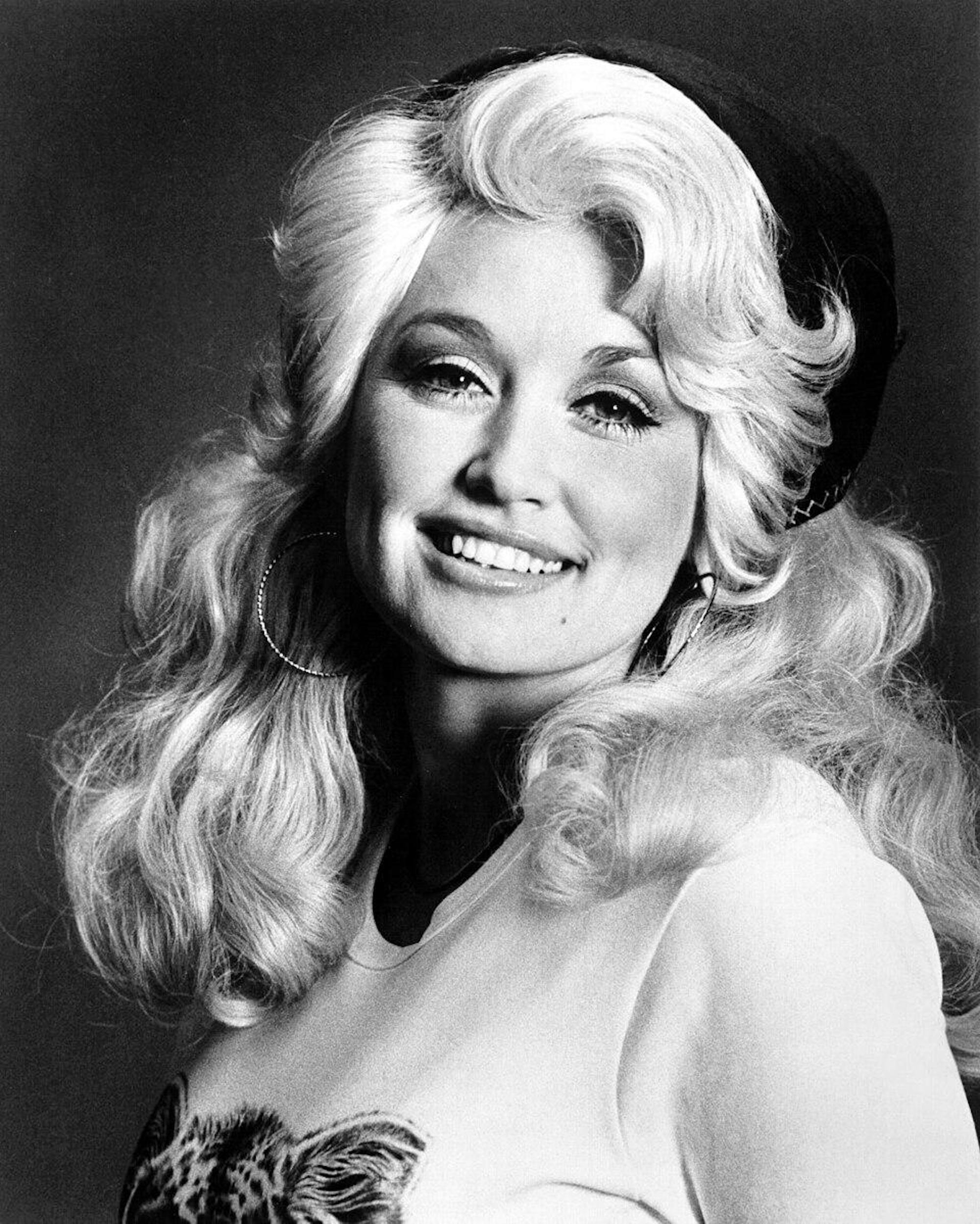
This week the world mourns Dolly Parton, the legendary, rhinestone-studded country artist who heralded in a new era for female singers and performers by exemplifying what it means to build yourself from the ground up. As shock ripples across the world, hers is the name on everybody’s tongue, and everyone is suddenly discovering which of their friends are into country music. Parton passed away on Aug. 25 after a brief battle with cancer, the details of which her family has elected not to share. Instead, her nephew, Bryan Seaver, posted a short, somber video on Instagram announcing her death and reflecting on her fortitude and humility. “Dolly was a farmer, just like her daddy,” he said. “He farmed the soil, she farmed songs and happiness.” Flags will fly at half-mast this week in her honor as the world pays tribute to the Queen of Country whose spirit lingers as delicately as the last chord of a bluegrass ballad.
Parton was born and raised in a two-room log cabin in Tennessee, the fourth of 12 children. She honors her humble upbringings in Appalachia in many of her songs, including “Coat of Many Colors” and “My Tennessee Mountain Home.” After receiving her first guitar from her uncle Bill Owens, Parton made her television debut at just 10 years old in Knoxville, and by the age of 13 she was catching the public eye at the Grand Ole Opry in Nashville. Every little girl who puts on informal performances in the living room for their parents imagines such a launch into fame (guilty). In 1966, her song “Dumb Blonde” became her first Top 40 hit when she was only 20 years old, marking the outset of an exceptional career.
Throughout her life, Dolly Parton had 25 songs reach #1 on the Billboard country music charts, setting a record for the only female artist to do so, starred in over a dozen films, including the cult classic 9 to 5, and even published a trilogy of The New York Times bestselling novels. Yet, her career also included years of significant philanthropic contributions towards education, medical infrastructure, research and disaster relief. She focused her work through her two nonprofit organizations, The Dollywood Foundation and The Imagination Library, which are dedicated to providing educational opportunities for children like her who grew up without the resources necessary to pursue knowledge to the greatest extent. Parton also donated millions of dollars to research on the COVID-19 vaccine, relief efforts after Hurricane Helene in 2024 and scholarships to graduating seniors who have a dream and the drive to pursue it. Her efforts in philanthropy earned her the Carnegie Medal of Philanthropy, a prestigious award recognizing those who embody “the philosophy of giving.”
Though I consider it remarkable enough that one woman was such a paragon of talent and charity, she didn’t stop there. Beyond the money and the awards, Dolly Parton was a role model and an inspiration for working women around the world. Effectively the Elle Woods of country music, Parton used her platform to illuminate gender inequities in the workplace and empower women to demand respect and stand up for their independence.
Her brazen ambition and glamorous style served as inspiration for many of the top female country artists of today, including Ella Langley, Carrie Underwood and Shania Twain. Twain posted this response to Parton’s death alongside a video from 2003 of the pair performing together on The Oprah Winfrey Show: “Dolly was pure light sent from heaven. My mentor is gone. My songwriting teacher and hero of grace and humility. There is a hole in my heart but the joy of just the thought of her smile will continue to fill me with inspiration for as long as I live.” Langley, who recently broke a Billboard Top 100 record previously held by Dolly Parton, wrote in her own response: “You paved the way for so many to be brave. Thank you for being unafraid to show your most authentic self. The world needed Dolly.”
“People relate to me because I grew up poor and in a big family. They know I understand all the hardships,” Parton said in a Billboard interview in 2014, “I’m more successful now than I was [in 1964], but I still feel like the same girl. I’m just a working girl.” And, not to mention, one of the most successful female artists of all time. Humility and selflessness were trademark Dolly. Later in the same interview, when commenting on the diversity of her followers, she shared, “I’ve struggled enough in my life to be appreciated and understood. … I try to love everybody.” This sincere altruism is what set Dolly Parton apart from other artists and celebrities of our time. It wasn’t just the rankings of her music or her signature glitz and glam, but rather her genuine humanity and authentic soul.
This is an incredibly polarizing time for the United States, and it is almost impossible to find something that you, your neighbors and your online friends can all agree on. Yet, this week our country is united over one ambitious, fiery country girl from Tennessee. With the voice of an angel and a spirit as precious as the stones she wore, Dolly Parton left behind her an indelible mark on all those who heard her music and found themselves within it. There is a special island waiting down the stream for you, Dolly. We will always love you.

Gia Lish is a member of the Class of 2029 in the College of Arts and Sciences. She is a staff writer for the Arts & Culture department and can be reached at glish@cornellsun.com.


