Michelangelo had his mallet, Daft Punk had their synthesizers and Stanley Kubrick had his ZEISS lenses. The humble TikTok editor has CapCut: an impressive tool — if only they didn’t feel the need to use it on literally everyone and everything.
Like most Cornell students, I (unfortunately) scroll. Whether it be Instagram Reels or TikTok, platforms have honed their short-form craft well enough to keep us satiated for hours on end. You might enjoy watching cat videos, fragmented clips of movies and TV shows or brainrot in all its forms. I can get behind most of these, as harmful as this sort of content is for us, but the one thing I simply cannot stand is the current state of the “edit.”
But first, what exactly is an edit? Put simply, it is a short video that takes footage of a person, character, celebrity, athlete or some other culturally significant object and slaps music, transitions, effects and text over it until it becomes almost entirely unrecognizable from the original. The goal, presumably, is to make the subject look cool. Sometimes it succeeds. More often, it looks like someone discovered the keyframes tab and immediately lost control of their motor functions.
My problem is not that edits exist. In fact, a genuinely good edit can be pretty impressive. There is something satisfying about well-timed cuts, clever use of a trendy song and visual effects that actually serve a purpose. The problem is that social media has collectively decided that everything needs to be edited as if it is the final trailer for a $300 million action movie.
Cristiano Ronaldo could simply turn around. Suddenly, the screen shakes. The footage slows to 0.3x speed. A bass-heavy phonk song begins to crescendo. His eyes are sharpened to an almost medically concerning degree. Text appears, typically an obnoxiously large watermark or maybe the usual “AURA” in bold. The frame flashes white. He turns around again, this time in reverse. Somehow, there are now six copies of him.
And for what?
He was looking for his water bottle.
The editing itself often follows a predictable formula. First comes the dramatic zoom. Then the screen shakes. Then some sort of chromatic aberration that makes everything look like it was filmed through a concussion. Finally, there is an explosion of particles. None of these effects are typically bad individually, but together, they communicate the unmistakable message that something happened. What actually happened is less important.
Perhaps this is why edits bother me so much: They are less interested in the subject than in manufacturing a reaction to the subject. A basketball player makes a good play, a character delivers a line or some celebrity walks into a room, and the edit insists that is one of the great, grand events of our time. While the edit does not explicate such an idea, how else are you supposed to feel when said individual has been framed by swelling music and accompanied by the visual grammar ordinarily reserved for coronations, battles and the crossing of the Rubicon? There is no room for subtlety. There is no room for simply thinking someone is cool or attractive. Everything must be INSANE, COLD, HOT or AURA FARMING.
The irony is that the best edits are usually the ones that know when to stop. Editing should enhance a moment, not hold it hostage. If I need to watch a 14-second clip six times to feed my dopamine receptors or just to understand what happened, then maybe there are too many transitions. Congratulations, you have successfully edited the entertainment out of your entertainment.
So, to the editors all across Instagram, TikTok and even the scant few exclusively reserving their talents for the cultural juggernaut that is YouTube Shorts, please put down CapCut. Let the man turn around. Let the footballer score. Let the fictional character say their line. Not every moment needs to be the hardest thing anyone has ever seen.
Sometimes a guy is just walking.
He does not have aura.
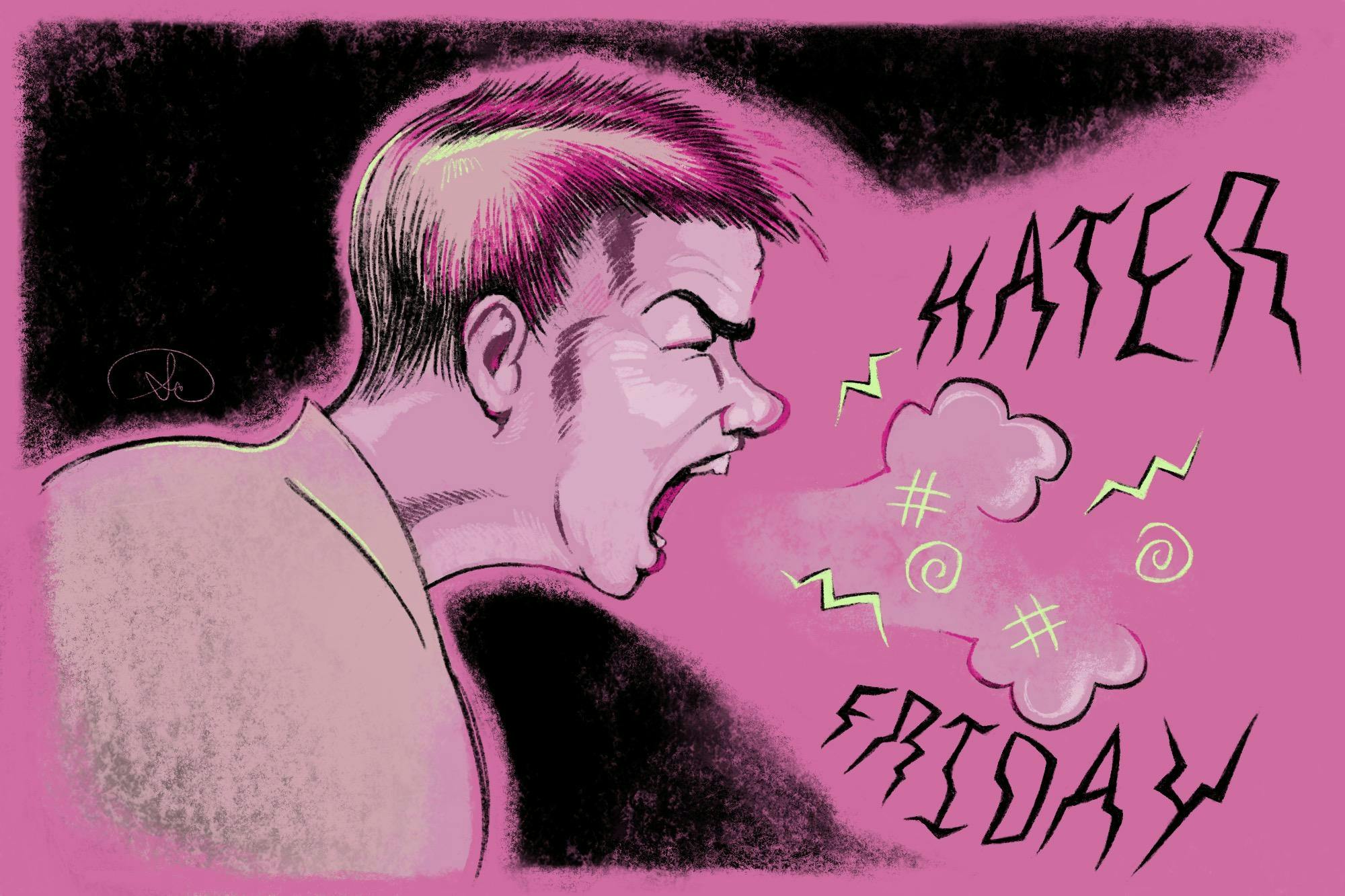
‘Hater Friday’ runs on Fridays and centers around critiquing media or culture.
Ali AlSaif is a member of the Class of 2029 in the College of Industrial & Labor Relations. He is a contributor for the Arts & Culture department and can be reached at aea252@cornell.edu.