

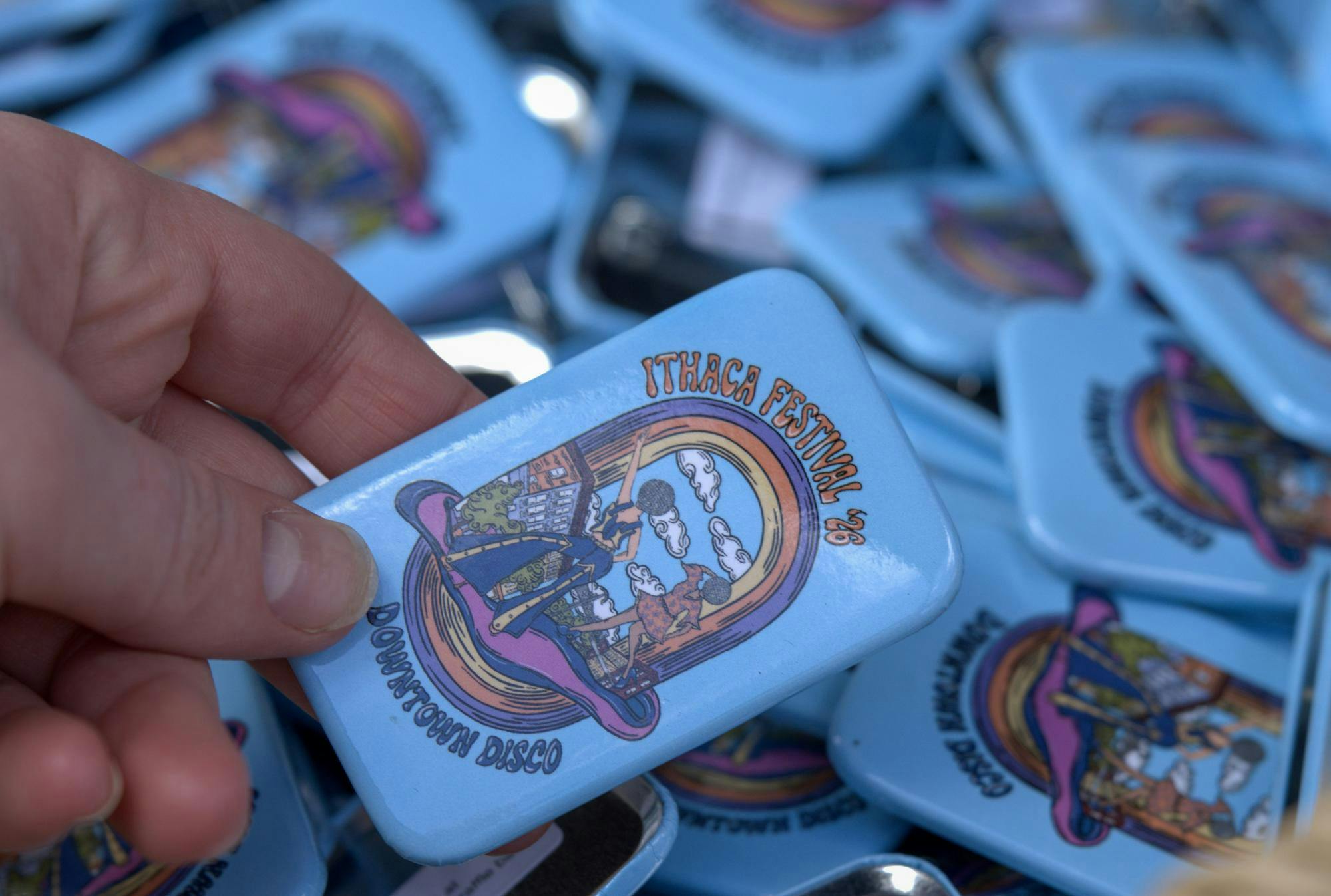
When the students leave town, the Ithaca community comes together. Over the past weekend, the 49th annual Ithaca Festival was held in the Ithaca Commons and throughout the downtown area, featuring live music, over 150 crafts vendors and cuisine from around the world.
The festival kicked off with a parade on Thursday where participants made floats and decorations inspired by this year's theme: Downtown Disco. The design for Downtown Disco was made by local artist Leonora Petronzio.
Food and craft vendors then set up their booths from Friday through Sunday, working from morning until night.
Vendors and participants described the event as an opportunity to reunite with friends and community members while also celebrating the start of summer. Approximately 45,000 people attend the festival each year, according to its website.
For Allison DeDominick, president of the Ithaca Festival Board of Directors since 2023 and board member since 2019, the festival is a meaningful way to showcase local art. The event originated in 1977 as a way to “celebrate the creative culture of Ithaca,” she wrote to The Sun.
“I really love just organizing people to embrace art in some way, shape or form,” DeDominick said. “So that's what drew me, and I think that's what this festival embraces too, giving people a platform to come and share their crafts, share their performances.”
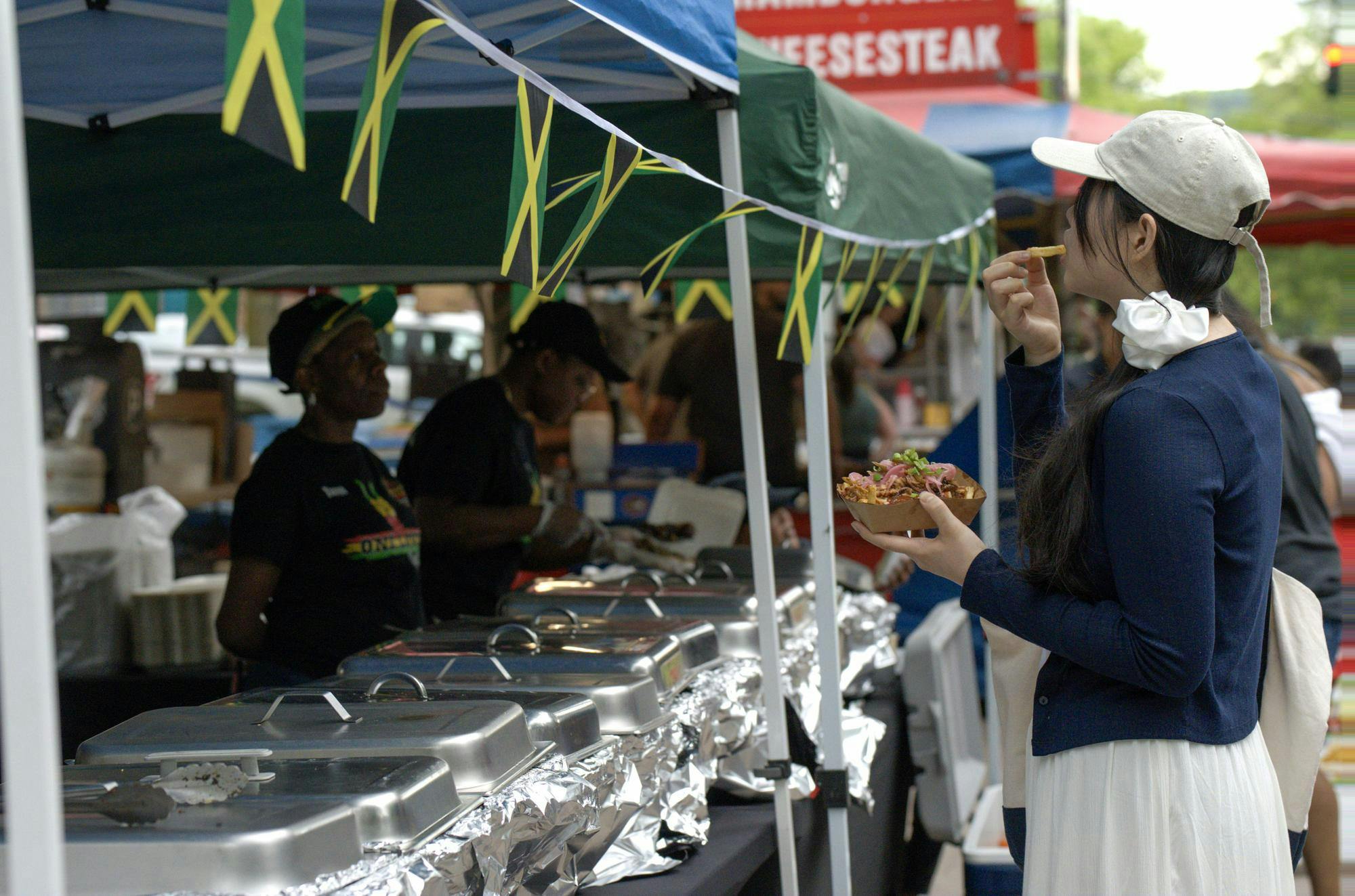
Food vendors were mainly located on West State Street with picnic tables for people to eat their food. Festivalgoers could try a wide mix of options – jerk chicken, bánh mi, arepas, Cuban sandwiches, pitas and more.
“Food is art,” added DeDominick.
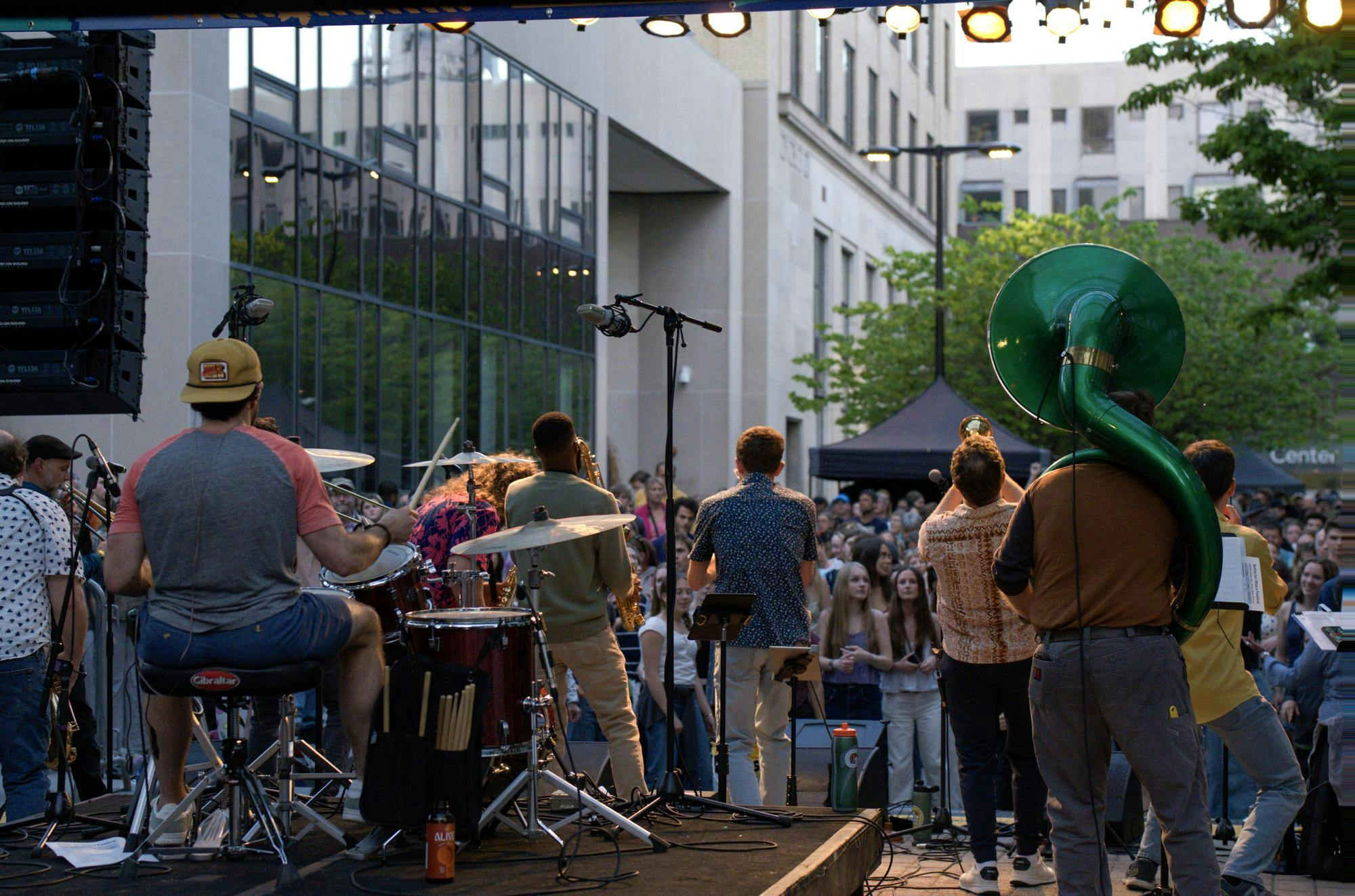
Live music also filled the streets. Local musicians and dance groups performed at every corner, making music at Bernie Milton Pavilion, Cayuga Circle and Dewitt Park.
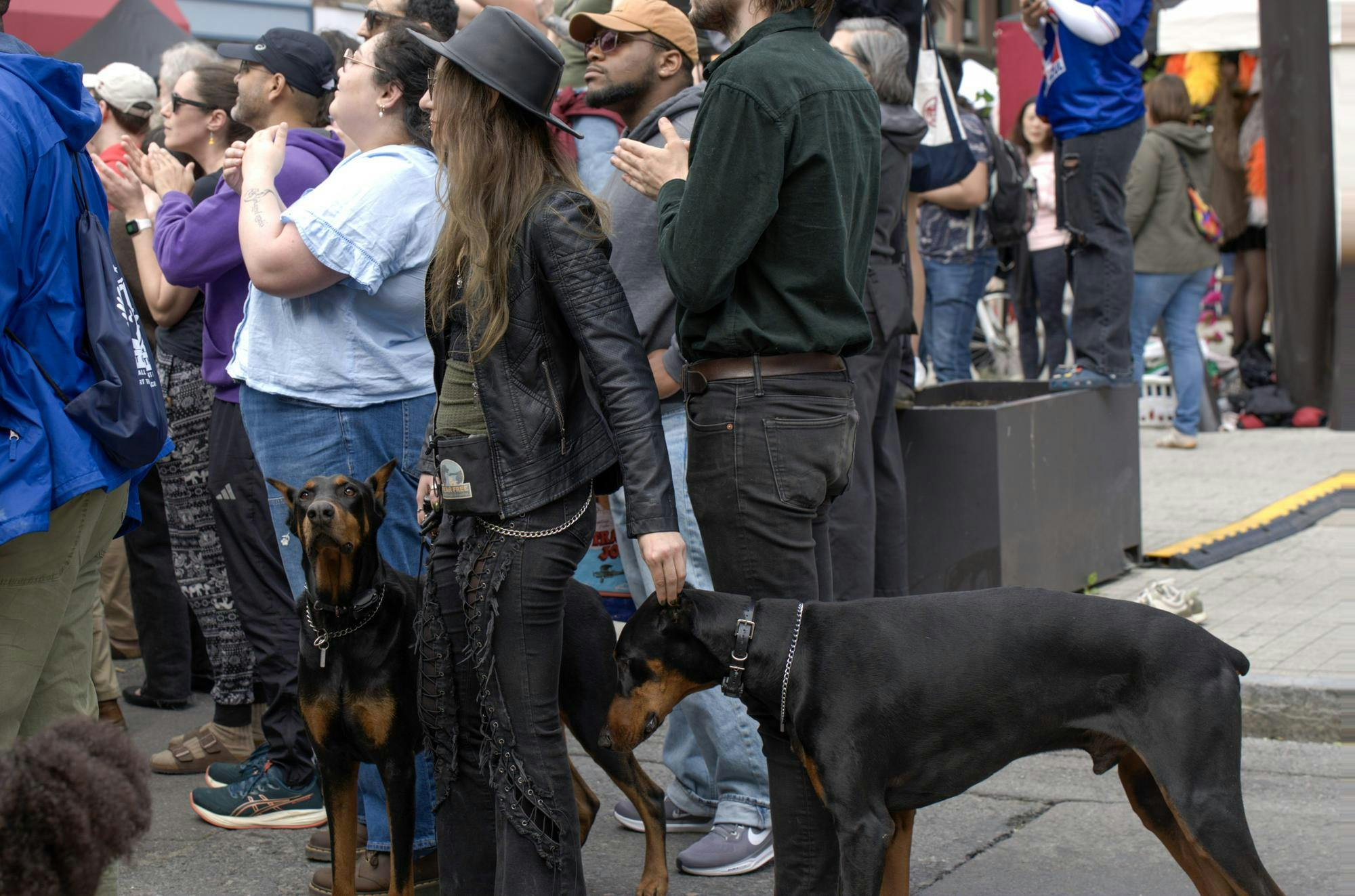
The Ithaca Festival was dog-friendly, with many craft booths offering dog treats and dog accessories for purchase. Many well-behaved dogs could be seen walking around with their owners as well.
Colleen Burke, a traveling nurse who drove three hours from Buffalo to attend the festival, appreciated its welcoming atmosphere.
“There's arts and crafts all the time, there's food all the time,” Burke said. “It's a cool combo, [and it’s] very family friendly [and] dog-friendly, which is awesome.”
Eve Duff, a senior at Ithaca High School, has attended Ithaca Festival every year since ninth grade. When asked about if she has observed a change over the years, she said that the festival “always has the same backbone.”
Cole Kubrick, another senior from Ithaca High School, has attended the festival since he was a child. He observed a push for community-oriented events post-COVID.
“[When I was younger, the festival] felt more like ‘here's what everyone in the community has to offer…’ and I think nowadays it's more like, ‘here's what we can do together.’”
DeDominick reported a “positive momentum” coming out of COVID, which she hopes to continue into the festival’s 50th anniversary next year.
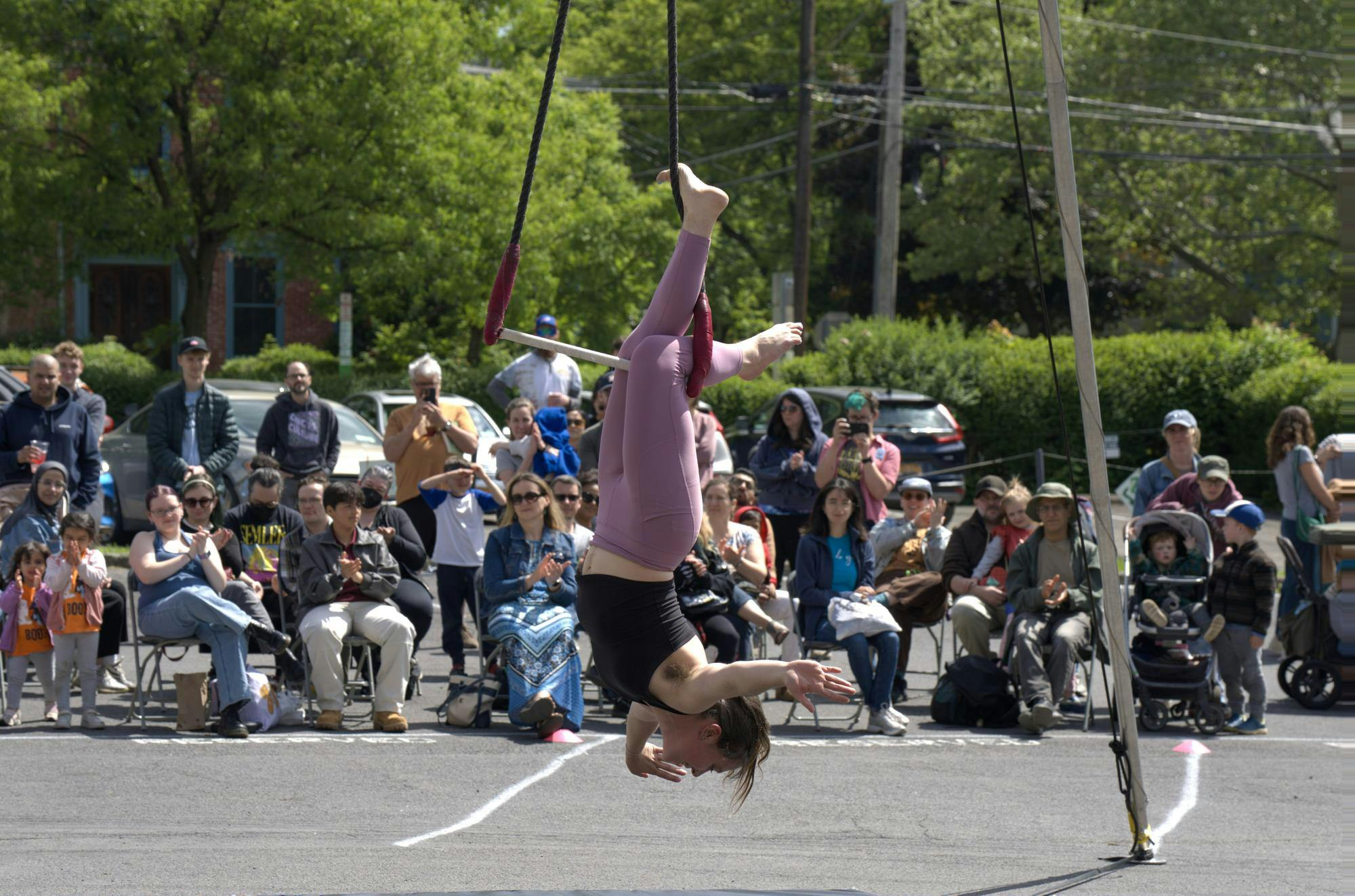
Other community members viewed the festival as a celebration of summer, providing a space for community members to reconnect.
“I think our fest is a lot of socialization, catching up, reunion with folks. … Oh my goodness, I've seen probably 15 people I know,” said Ithaca resident Robbie Finch said in a Friday interview. Throughout the interview, Finch stopped to greet people he recognized.
Russ Friedel, director of Ithaca Grassroots Festival and an Ithaca resident working at his wife’s food truck, Yxi's Arepas, described the festival as a “summer homecoming.”
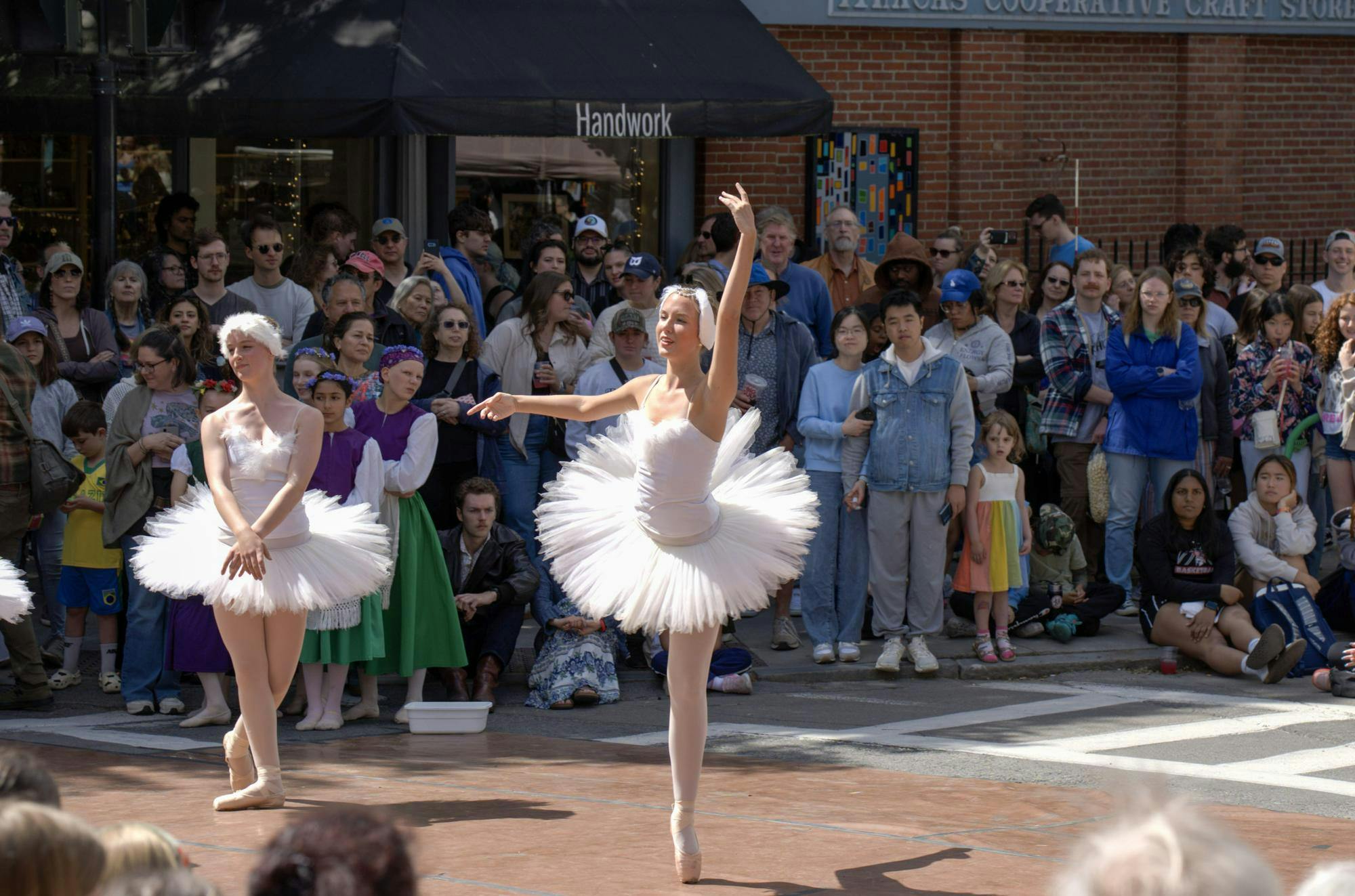
“Winter's tough, and [if] you follow politics — it's pretty bleak. ... What's awesome about Ithaca Festival is that it's free, so anybody can just walk in and show up, which is awesome, and so needed right now, in terms of having us connect with each other and recognize we're neighbors — we don't need to hate each other,” Friedel said.
To some, the festival is also a celebration of students leaving.
Caleb Thomas, director of Ithaca Murals called it a “huge, beautiful celebration of having the town back,” since it happens the weekend after Cornell’s graduation ceremony and two weekends after Ithaca College’s ceremony.
Friedel viewed the festival similarly.
“When I first moved here, someone said, ‘Oh no, it's the party the locals throw the weekend after all the students leave…’” Friedel said. “And now, having lived here for 19 years, I can attest that it is kind of like a festival where the locals… just come to get together… Lots of us work in affiliated industries, working around students or being involved with the colleges, or school districts, so Ithaca Festival is the first event of the summer where lots of us see each other for the first time since Apple Harvest Festival.”
This year, Isa Cooper ’27 attended the festival for the first time.
“I love that it's like that the timing is right after all the students leave,” Cooper said. “It really does feel like a celebration of [the students] all being gone.”
Cooper compared the festival to the Ithaca Farmer’s Market and observed community members speaking about the festival with a “sense of pride and joy.”
Cooper also criticized Cornell students’ and the University’s business relations with the community.
“Cornell is kind of a bubble too, and so campus and college town, they have a very different vibe than the rest of the town… I've heard so many students.. call it ‘Shithaca,’ and they don't have the same appreciation for everything the town can offer,” Cooper said. “Universities have so much financial power, like there's so many different initiatives and like clinics and stuff that can happen, or just outreach and just supporting town matters for the sake of supporting town, rather than wanting to have some stake in something like their own profit.”
Currently, Cornell University contributes $4 million to the City of Ithaca and $425,000 to the Town of Ithaca annually. In 2026 they contributed $700,000 to Ithaca City Schools and at a January Ithaca City School District board meeting announced plans to increase their contribution by 34% over the next five years.
For Cooper, spending the summer in Ithaca is the best way to experience its culture.
“Taking the time to enjoy summer in Ithaca is something that every student should do, and I think it would change the perspective on the town a lot, too, you get to really appreciate the town for itself, and not just for your connection to the University,” Cooper said.
Everett Chambala is an assistant news editor for the 144th board. He is working as the primary summer reporter for The Cornell Daily Sun through The Sun’s summer fellowship program.
Correction, June 5, 11:55 a.m.: This article has been updated to correct the University's financial contribution to the city of Ithaca.

Everett Chambala is a member of the Class of 2027 in the School of Industrial and Labor Relations. He is an assistant news editor for the 144th Editorial Board and can be reached at echambala@cornellsun.com.


