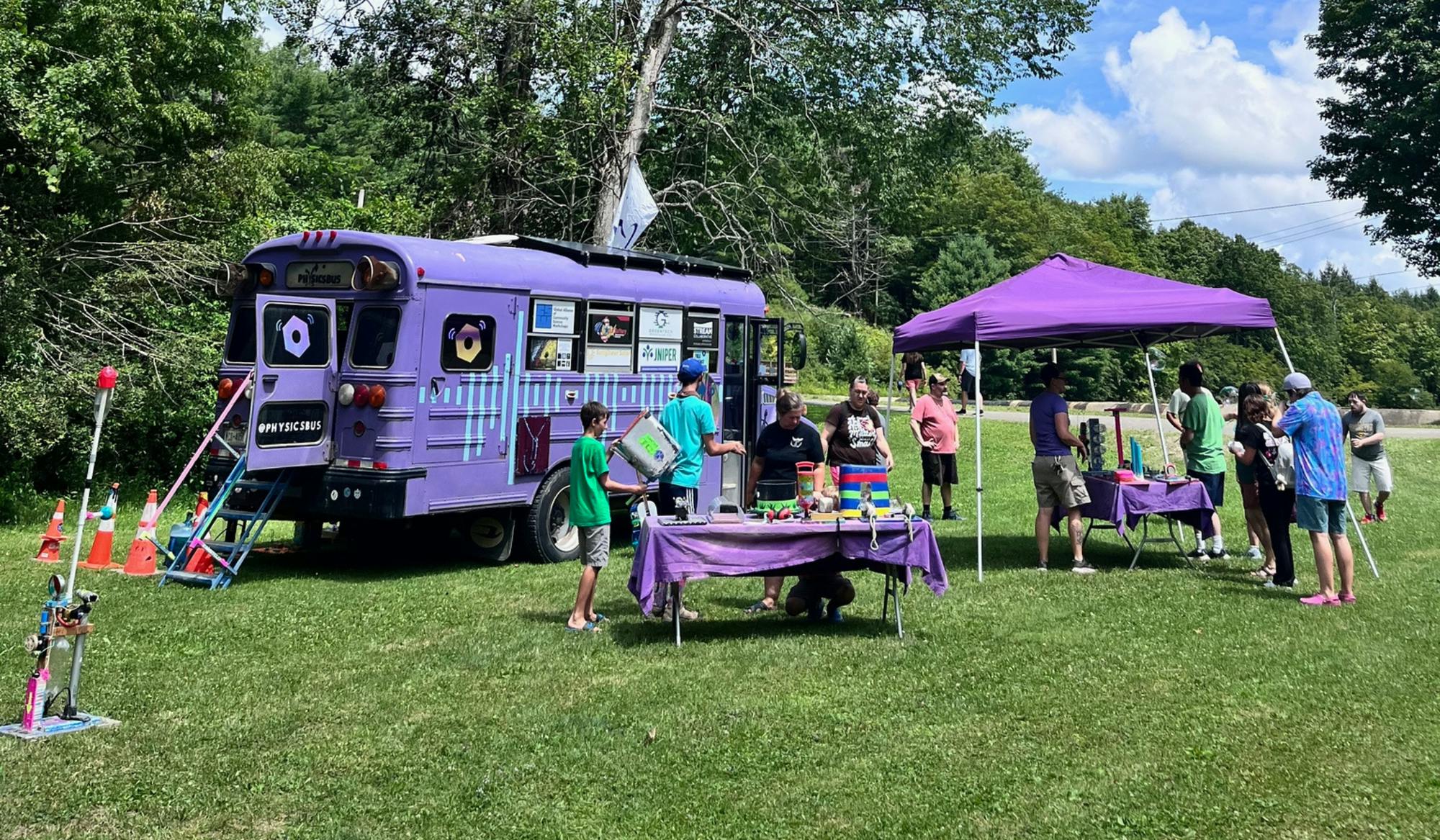
A school bus rolls down the streets of Ithaca. It’s bright purple, and there are no passengers.
A closer look reveals no rows of leather seats, no school backpacks. Instead, the interior resembles something of a magician’s workshop.
By the windows, a microwave glows with LED lights, its tray replaced by a spinning disco plate. A cardboard helmet flips the wearer’s vision upside down. A mesh metal trash can plays radio music when a hand reaches inside. Here, items like wine corks, old car wheels and discarded batteries have been reworked into a collection of scientific “exhiblets.”
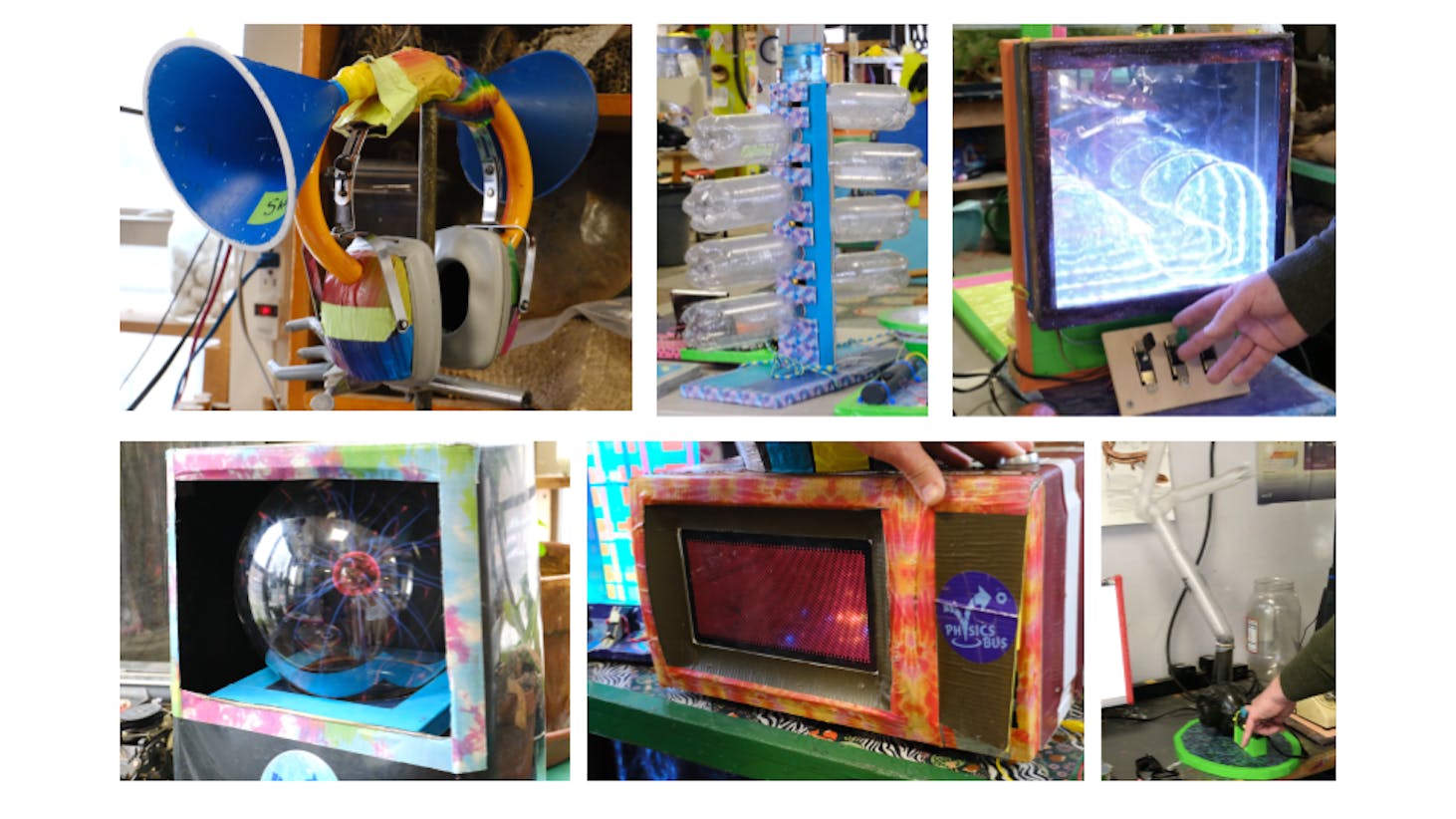
Some exhiblets featured on the Ithaca Physics Bus.
This is the Ithaca Physics Bus, an on-wheel laboratory that rewrites the traditional model of science education. Rather than asking the public to come to designated museums and classrooms, it brings the experiments to them — welcoming all ages to explore physics through playful, hands-on displays built from repurposed, everyday objects.
Its origins trace back to 2004, when program director and former Cornell professor Erik Herman visited Colorado State University’s “Little Shop of Physics,” an open-house exhibition built around hands-on experiments made from low-cost everyday materials.
Seeing these exhibits transported Herman back to his childhood, he said. As an undergraduate student at the University of Arizona, Herman had pursued physics to become a professor, but traditional instruction, dense with formulas and abstraction, had never come easily.
“That’s why I started building these things, because I knew learning was easier from direct experience,” Herman said. “And I thought, wouldn’t it be neat if this were on a bus?”
After a decade of successfully running a physics bus in Tucson, Arizona, Herman brought the idea to Ithaca in 2014 when he joined Cornell University as a physics professor until 2023.
Like the experiments it carries, the physics bus itself is repurposed. The first bus was donated unexpectedly by a Cornell graduate student who had to “leave his party bus behind” to take a neuroscience job in San Francisco, Herman said. The current version, acquired years later, is a former fishing skoolie donated by two brothers.
Since arriving in Ithaca, the Ithaca Physics Bus has traveled across 16 states and reached more than 45,000 participants. It carries with it not just “exhiblets,” but a different way of encountering science: one where children are invited onto the bus to play around and design experiments rooted in curiosity and accessibility beyond the classroom, according to Herman.
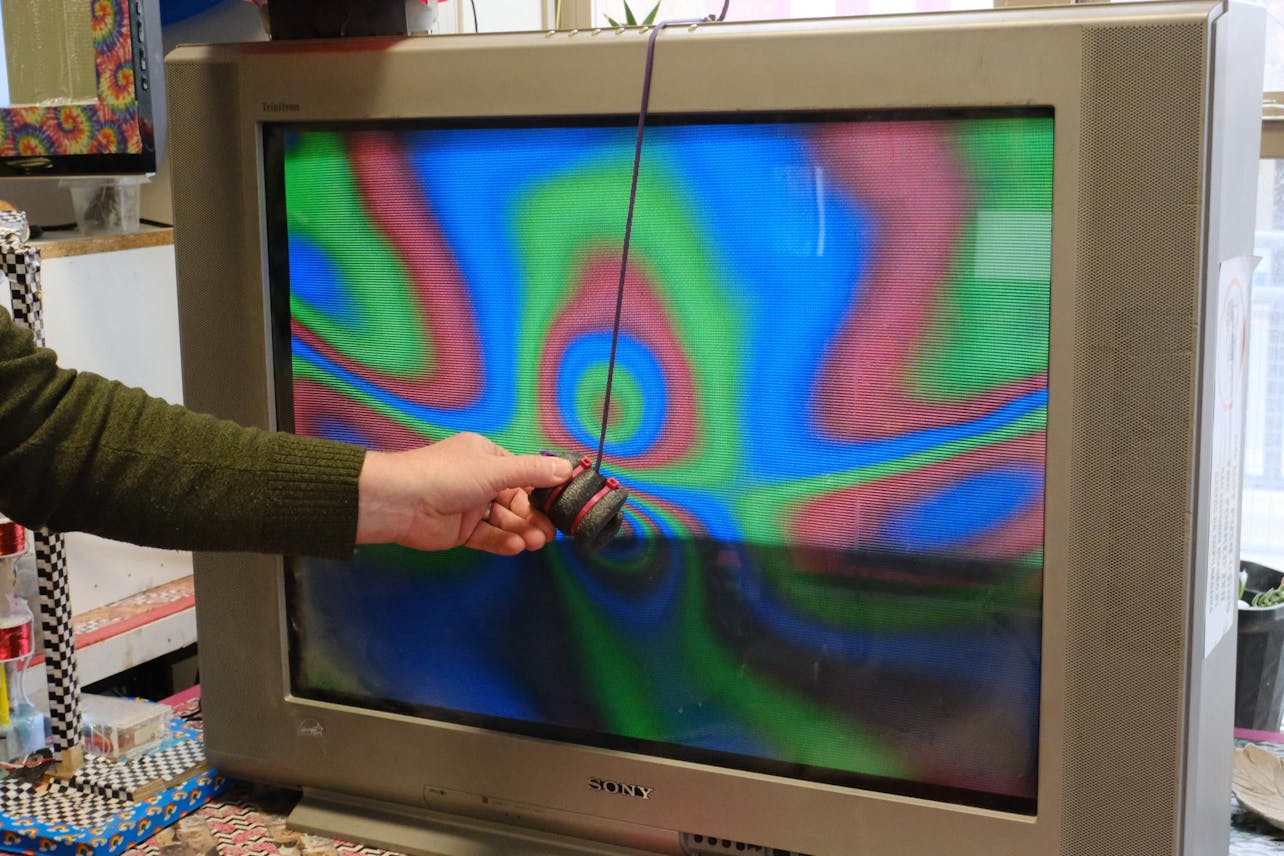
For example, children learn about magnetic attraction by watching rainbow-colored field lines appear as they glide a magnet across a Cathode Ray Tube color TV.
They can also explore electric currents by twisting a knob connected to a stepper motor and hearing the speaker pitch rise and fall in direct response to their motion.
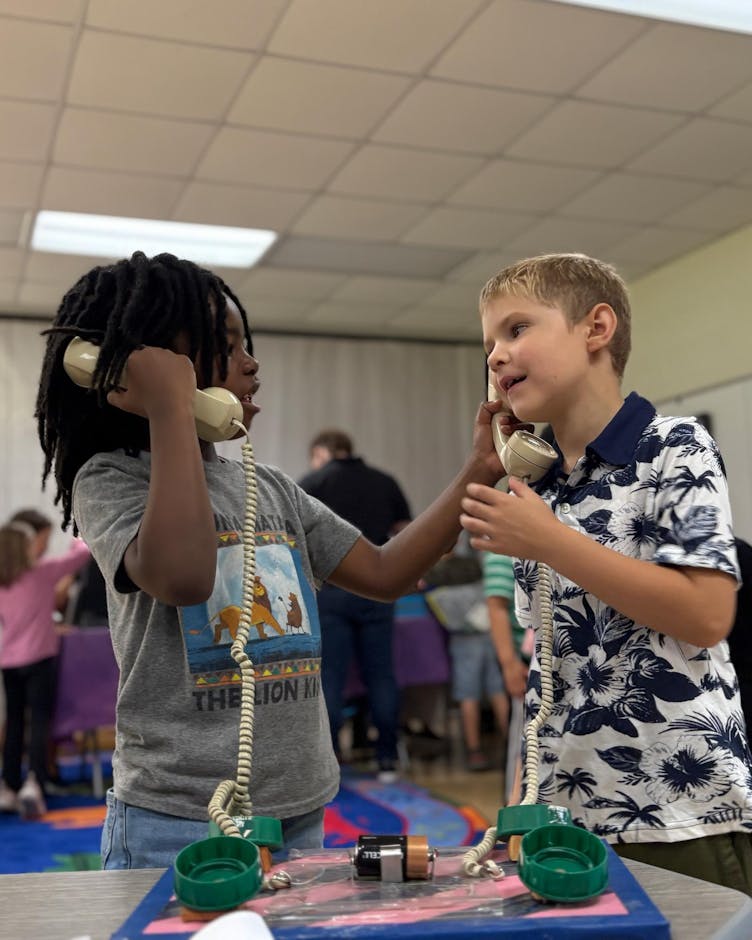
Much of the magic lies not only in showing science to children, but in letting them build “exhiblets” with their own hands. In the Free Science Workshop tucked away on Hancock Street, local children gather three afternoons a week to unleash their imaginations using a wide range of locally donated materials without the pressure of grades or a set curriculum.
One child might build a bed for an American Girl doll, while another fixes a broken clock or tries to replicate a soap experiment seen on TikTok. Others yet may enjoy Herman’s favorite — a driveable go-kart made entirely from wood panels!
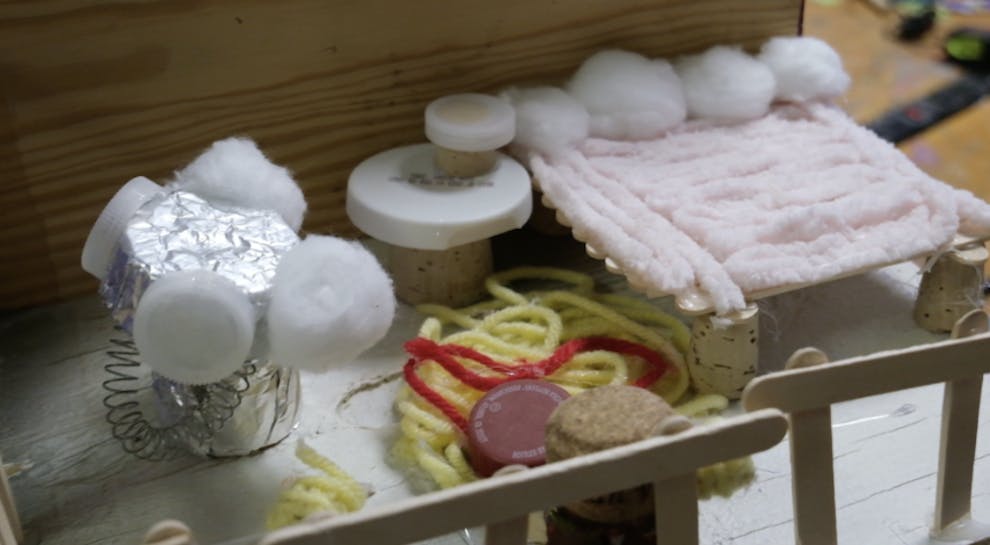
To the workshop staff, these aren’t just crafts, but a way for children to realize that science isn’t something reserved for strict laboratory protocols, high school classrooms or abstract equations.
“You don’t really know what the term ‘Bernoulli effect’ does, right?” said Liv Vincent, the program’s co-director. “But if you know that you can float a ping-pong ball on a hair dryer, then you can start to do experiments. Will the ping-pong ball stay afloat if I put my hand on top? What if I put my hand underneath? And that kid inherently understands the Bernoulli effect way better than somebody who can just say the word and not know what it means.”
Vincent believes that kind of intuitive understanding is often missing from how science is taught and is why so many people are turned away from it in the first place. Abstract scientific terms, she noted, can feel intimidating, often framing science as a high-stakes career rather than a part of everyday life and causing many children to shut that door before they even open it.
“I don’t want them to just learn science from someone who used to be a professor or because they want to become scientists,” Vincent said. “I want them to learn science from each other and through having fun. If a few kids learn how to use something new, then it becomes their job to show the others. And I’m there, watching them teach each other.”
This hands-on, peer-to-peer approach contrasts with the traditional school sequence of biology, chemistry and physics, with courses often structured around preparation for STEM careers.
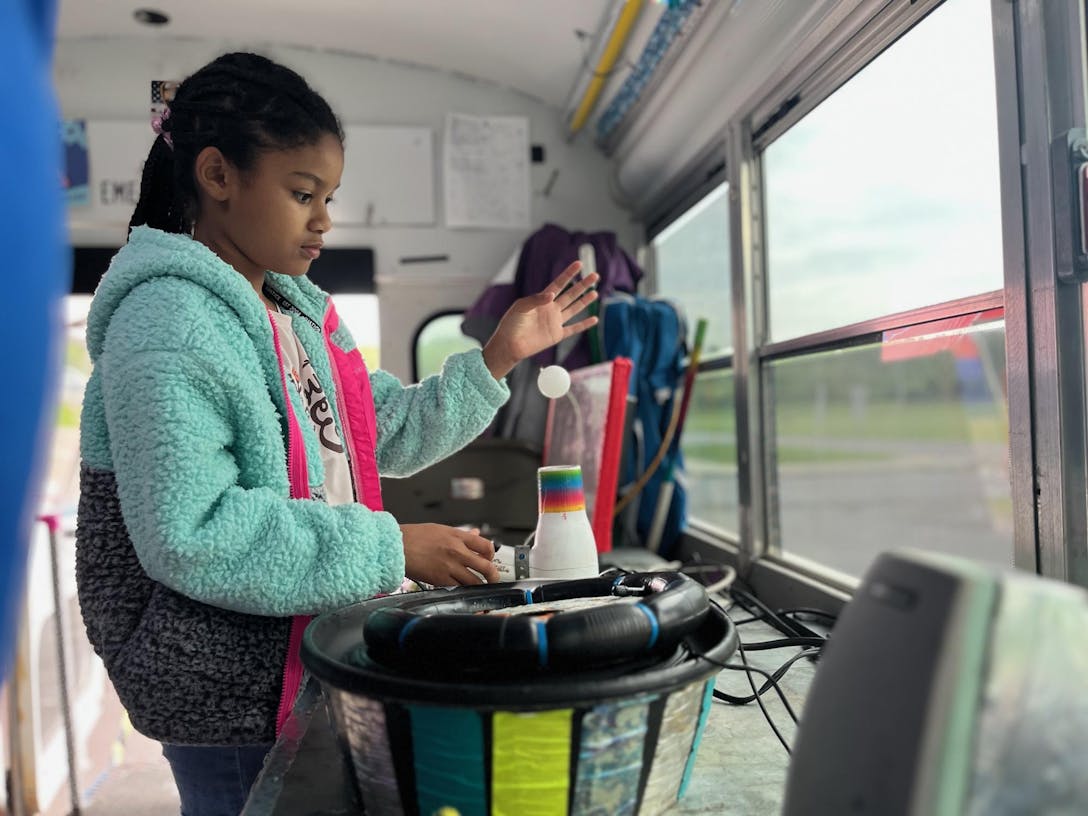
In the Free Science Workshop, the focus shifts away from getting the “right” answer through advanced mathematics toward figuring things out through trial and error, without the need for abstract formulas or meticulous algebraic calculation, according to Vincent.
“I’ve never met anyone who started teaching their kid to ride a bike by giving a lecture about rotational inertia,” Vincent said. “You give them the bike. They figure out that moving faster makes balancing easier because they don’t want to fall off. When they eventually see the textbook version, they already care about it.”
Research supports this kind of learning. A large review conducted by University College London, analyzing hundreds of studies, found that hands-on approaches improve both conceptual understanding and problem-solving, particularly when students can connect ideas across different contexts rather than memorize them in isolation.
For children who cannot visit the workshop, the Ithaca Physics Bus brings that same philosophy, curiosity and opportunity to them by traveling to open events, schools, libraries and community gatherings, bringing science labs directly to their doorsteps.
As the Ithaca Physics Bus wakes from its winter hibernation this spring, not every child who steps aboard will leave a physicist. But then again, that is never the point.
What matters isn’t whether someone is “smart enough” for science, Vincent said, but whether they see themselves as capable of making something, testing it and figuring out why it works.
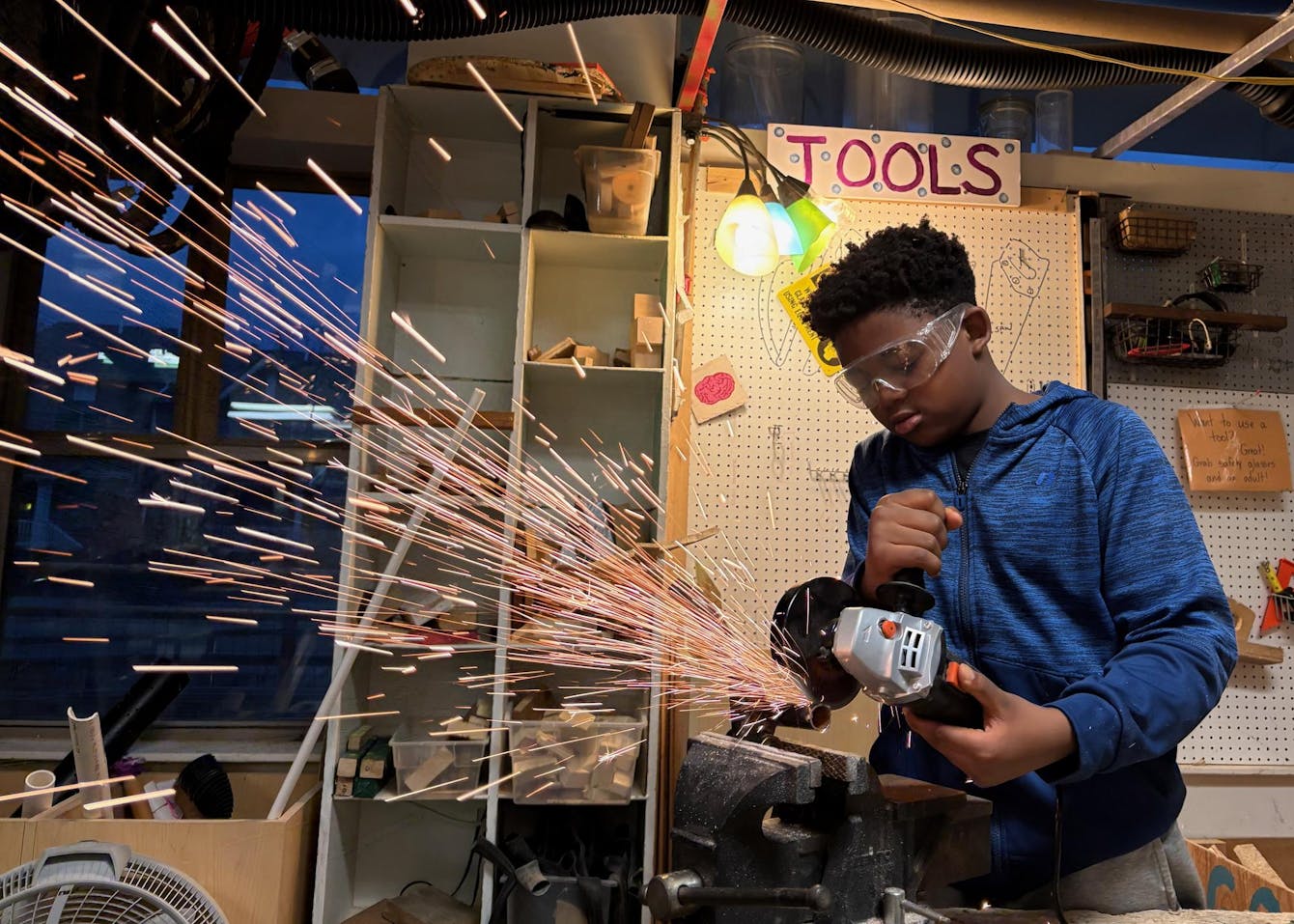
In that sense, the bus and the workshop behind it begin to break the rigid traditional paradigm of physics as something confined to classrooms, equations and curricula.
“Kids that come here have an excuse to talk about science in a way that’s not ‘how are you doing in this graded class,’” said Vincent. “But for them to come home and say, ‘I made this today. I thought of this idea. I’m super proud of this project!’”