The Student Assembly submitted 33 resolutions to the Office of the President during the 2025-2026 term. Of these, 15% have been rejected by President Michael Kotlikoff — a marked increase from previous years.
42% of submitted resolutions have been acknowledged and 27% have been returned to the Assembly. One resolution was deferred.
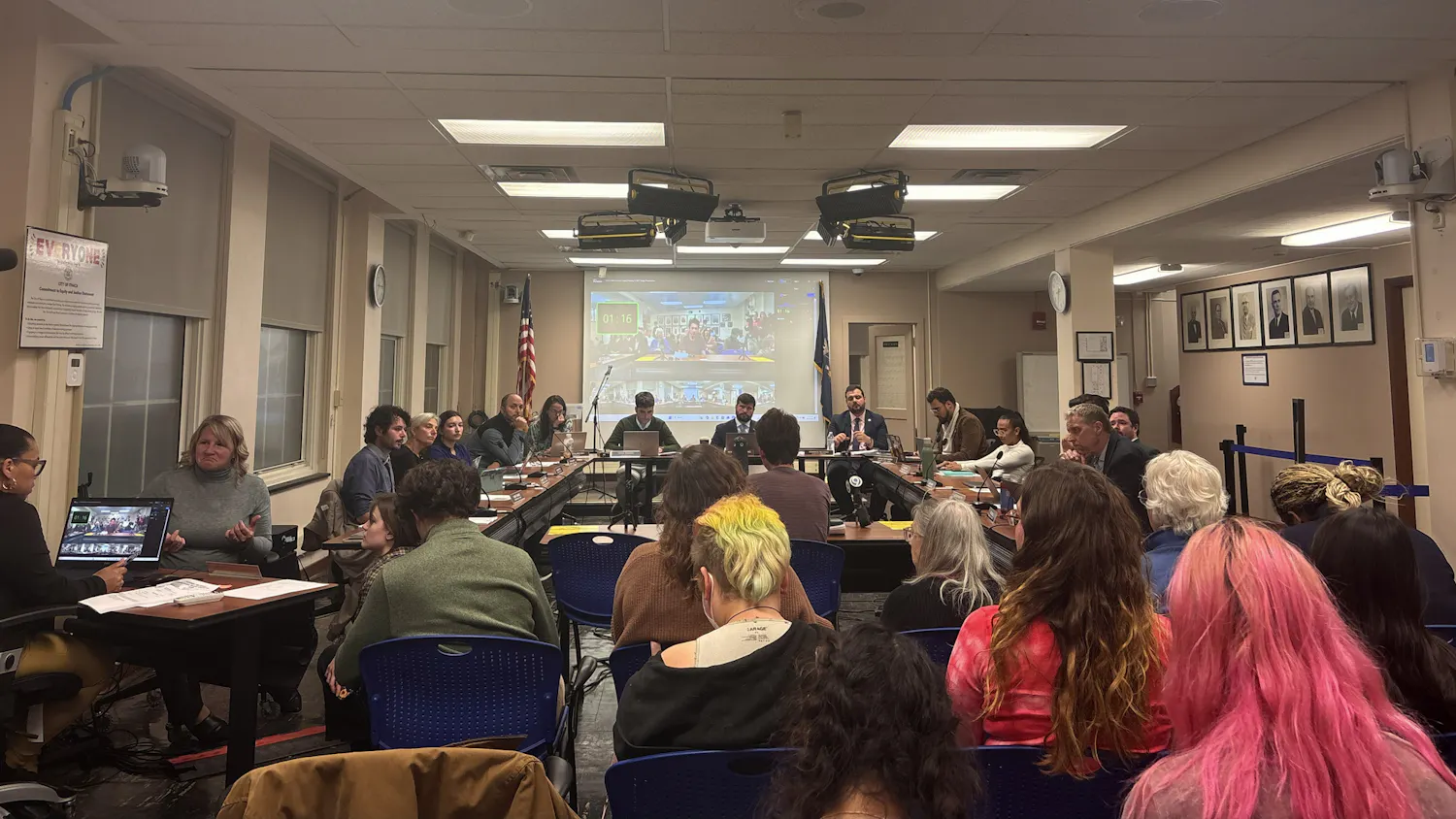
The Assembly represents the undergraduate student body as part of Cornell’s shared governance system. The Assembly drafts resolutions, or formal written proposals, to convey policy suggestions, criticisms and opinions to the University.
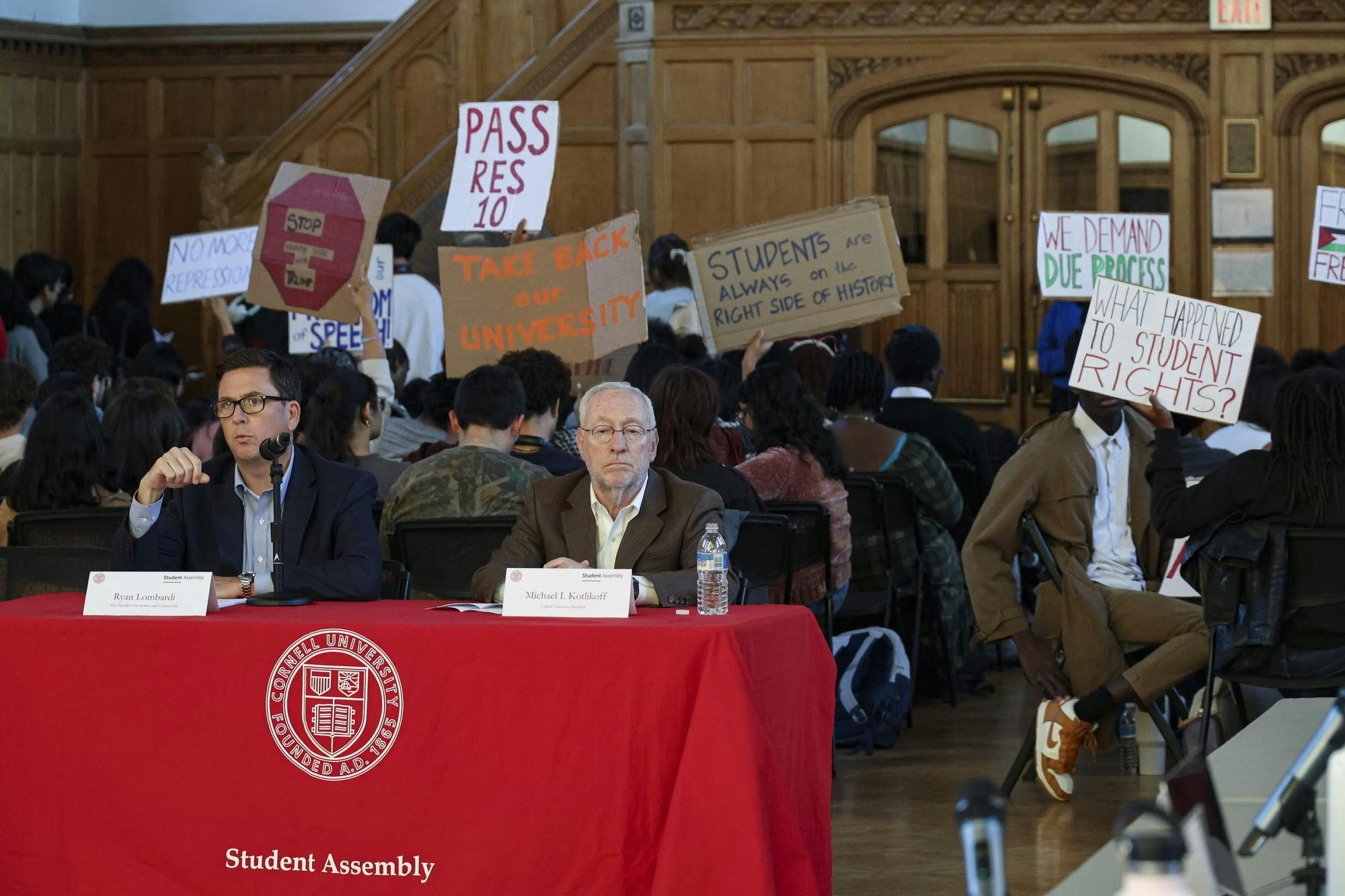
If passed within the body, a resolution is then conveyed to President Kotlikoff, who has 30 days to formally respond, according to the Student Assembly charter.
The 15% rejection rate of the current term is significantly higher than rates from recent years. In the 2022-2023 term, there was around a 2% rejection rate. In the 2023-2024 term, there were no rejections, and in 2024-2025 there was also around a 2% rejection rate.
Additionally, there has been a jump in the return rate during this term, which currently sits at 27% compared to 11% in 2024-2025 and 4% in 2023-2024. The president can return a resolution to the Assembly for further discussion. The Assembly must then update the resolution to incorporate feedback and resubmit it for reconsideration within 30 days.
The increased rejection and return rates “signal a disconnect between both the Student Assembly president as well as the University president,” according to Christian Flournoy ’27, executive vice president of the Student Assembly.
“There needs to be more collaboration and actual communication [between the Assembly and administration] before we’re even able to submit the resolution,” Flournoy said. “A lot of times, we’ll get [resolutions] that are returned or just rejected, and it’s either [because] there’s more that could’ve been done on our side or there's a difference of opinion."
Student Assembly President Zora de Rham ’27 believes the University is hesitant to accept resolutions that would lead to big changes.
“You'll see broader, bigger statements get rejected,” de Rham said, “because this is such a time of uncertainty for the University,” de Rham said. “There just is an unwillingness to take big leaps, and that's why we're only getting responses on internal or mandatory business.”
Over the past four academic years, there have been zero political resolutions accepted by the University presidents.
For example, Resolution 61 — which called on Cornell to terminate its partnership with the Technion – Israel Institute of Technology— was rejected as it “fundamentally conflicts with Cornell’s principles of academic collaboration and our core commitment to academic freedom,” Kotlikoff wrote.
Resolution 33, which sought to designate general election day as a university-wide holiday, is another rejected political resolution. “Cornell’s existing academic schedule provides multiple opportunities throughout the day for students to vote,” Kotlikoff wrote in his response.
Flournoy said that some resolutions deal “with the Assembly itself and our internal functions.” The first resolution accepted by Kotlikoff this academic term — Resolution 66, a continuation of the rejected Resolution 21 — falls under this category. This resolution approved the reassessed 2026-2028 Student Activity Fee.
“I definitely think that administrators are more confident responding with a concrete ‘yes’ when it's something internal,” de Rham said. “[This is] because we as a student assembly have complete control over enforcing and implementing” internal resolutions.”
The three other accepted resolutions — 34, 38 and 51 — are also internal, dealing with standardizing resolution authors and endorser rules, increasing outreach requirements and updating the bylaws with a contingency plan for vacancies in the independent offices.
Student Assembly members have also raised concerns regarding response times exceeding the administration's allotted 30-day window.
“The volume of resolutions and narrow response deadlines could make it difficult to respond quickly,” Kotlikoff explained when addressing students’ concerns regarding timeliness at the March 12 Assembly meeting.
Flournoy also spoke about delays on the Assembly’s side. “A lot of resolutions from this year necessarily haven't been conveyed right after they've been passed, and I think that's an issue that needs to really be addressed,” Flournoy said.
When asked if the administration had any comment on the higher rejection rate this term, a University spokesperson pointed to Kotlikoff’s comments at the March 12 Student Assembly meeting and the University Assembly meeting on Feb. 24.
“We seriously consider resolutions from the Assembly. This usually involves some research on the underlying issues and discussions among senior leadership, which means finding time across multiple very full schedules,” Kotlikoff said at the Feb. 24 meeting.
“[Students] have their own individual ideas and thoughts, and there's a desire to see this acknowledged by the president, and frankly [with] the drive of Cornell students, I don't see [the rejection rate] as being a deterrent,” Flournoy said. “If anything, it’s more of a motivator.”
Maya Johansen is a member of the Class of 2029 in the College of Arts and Sciences. She is a contributor for the news department and can be reached at mhj49@cornell.edu.