


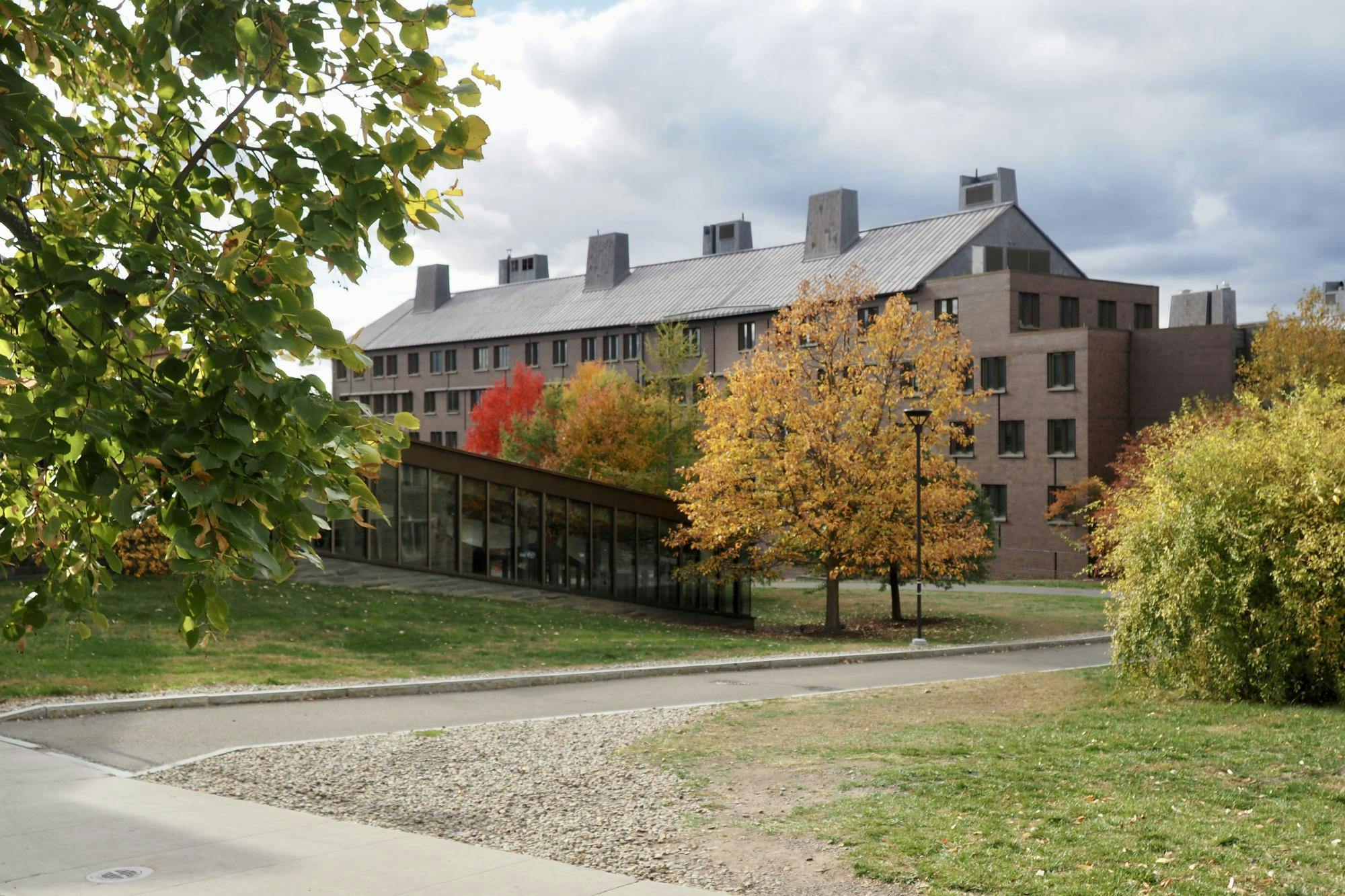
Why does a resident of Mary Donlon Hall pay the same amount for housing as a resident of a dorm like Ruth Bader Ginsburg Hall? One resident lives in a dorm built in 1961 with no overhead lighting or air conditioning, while the other revels in a room with both. One has suspicious stains in their carpeting, while the other has vinyl flooring. One has, to put it bluntly, a crappy dorm, while the other lives in luxury. Yet, they still pay the same price — how could this be fair?
This is a common question and complaint echoed by students outraged by the housing selection on campus. Already struggling with high housing and tuition fees, many students are frustrated that they have to pay the same amount as someone with a ‘nice’ dorm for one that is worse in quality. However, there is a higher degree of fairness to Cornell’s housing system than what it may seem like at first glance. Unequal housing is the price we pay for equitable housing, and I think it’s worth it.
For the 2026-2027 academic year, a standard double costs $13,744. That’s roughly the equivalent of paying around $1,650 in rent per month. Because of these exorbitantly high prices, students willingly opt in for triples because they are the least expensive option. A single has the highest price at $15,566 for the year, while a triple or one-room quad costs nearly $3,000 less at $12,644. Cramming more people into an already tight space is not an ideal living situation, but under these pricing conditions, it can alleviate financial burdens for students and their families. In this respect, deciding between a double, single or triple is not always a matter of choice, but of circumstance — one that is dependent upon your financial situation.
And this is exactly what would likely happen if the worst dorms cost the least and the best cost the most, as often argued by students. Housing selection would begin to diverge between high and low-income students. In turn, students would become segregated into dorms based on income, making wealth disparities more salient on campus. The nicest dorms would become a luxury, reserved for only those who could afford it, while low-income students would be confined to dorms with weird smells, broken elevators and clogged shower drains.
Not only would this pricing create a hierarchical housing system, but it would also place low-income students at a disadvantage. For instance, some studies suggest that the quality of one’s dorm may impact their academic performance. As we all know, grades can determine what graduate school you attend, what company you work for and what career outcomes and opportunities you have access to. Making the price of dorms proportional to their quality could inadvertently exacerbate opportunity gaps between high and low-income students.
To further its efforts at an equitable housing process, Cornell Housing should seek to mediate the differences in price between single, double and triple dorms. Students should not be financially pressured into a living situation that they may not be comfortable with. This is the ethos of their pricing across residential halls, and it should be the same for their pricing across the types of dorms students live in.
While I do envy the residents of more modern and renovated dorms (though, maybe not Ganędagǫ: Hall), I can reconcile these feelings with the knowledge that unequal housing is, at the very least, ensuring an equitable process. It creates a system where “any person” can live in any dorm. A system where students live among others who come from a diversity of backgrounds that may differ from their own. A system where students are not financially barred from accessing opportunities on campus.

Ava Betnar is a member of the Class of 2029 in the College of Human Ecology. She is an assistant lifestyle editor on the 144th Editorial Board and can be reached at abetnar@cornellsun.com.


