


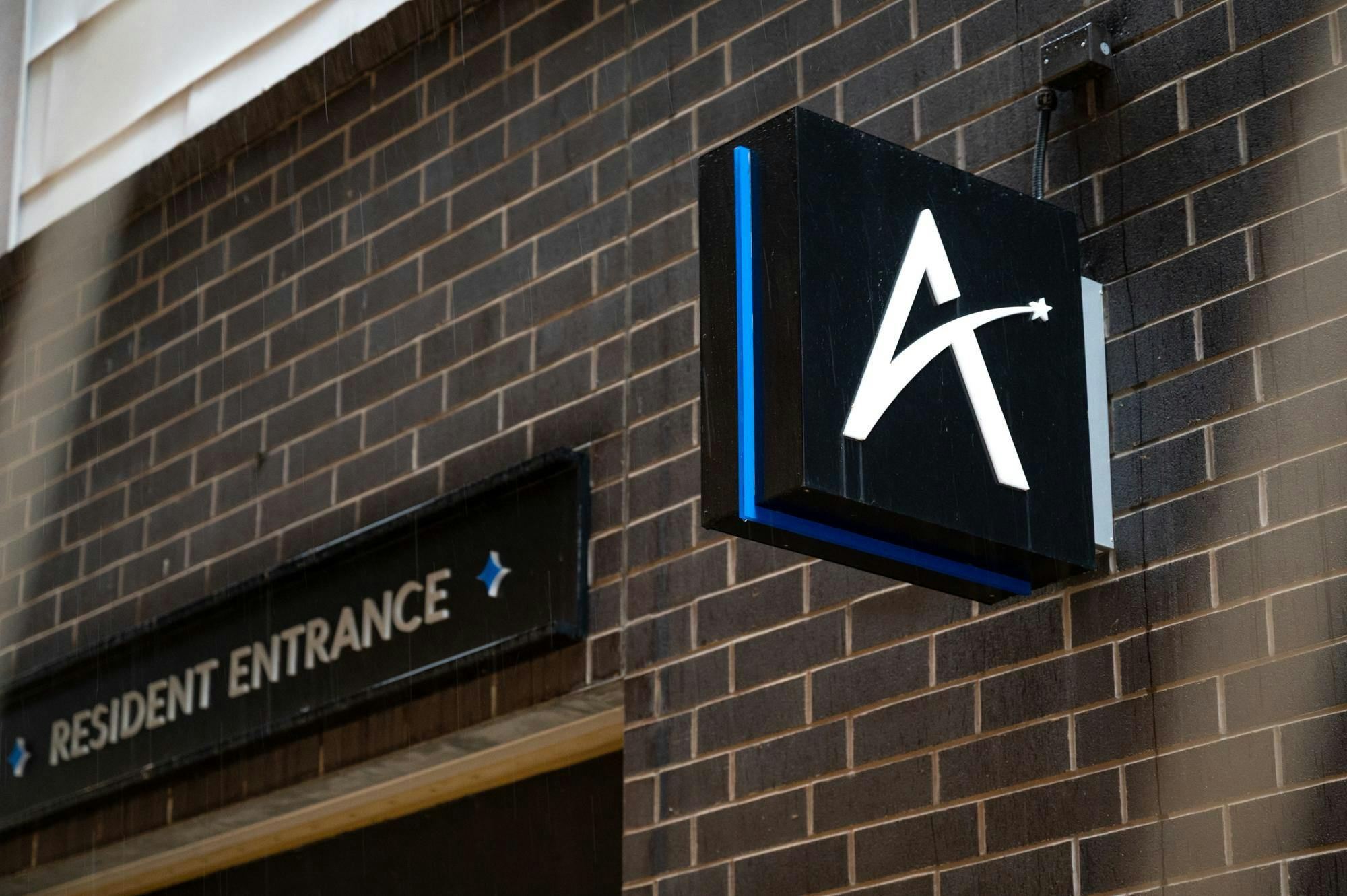
In an executive committee meeting on April 9, the Tompkins County Board of Health unanimously adopted a resolution enforcing a $40,000 penalty against Asteri Ithaca for violating orders regarding safety and sanitary concerns issued in January.
Asteri Ithaca, owned by the Vecino Group, is an affordable housing development in the Ithaca Commons with 181 residential housing units, including 40 with on-site support services for people struggling with homelessness. Asteri is funded both privately and publicly by Tompkins County, as well as state and federal partners.
The Tompkins County Board of Health’s decision is the most recent development in a chain of events regarding concerns of Asteri’s conditions. Hundreds of residents were forced to abruptly evacuate the building in March, due to the Ithaca Fire Department’s concerns for residents' safety. Residents have also spoken with The Sun about Asteri’s conditions, citing them as unsafe and hazardous.
Since January, the health board has found 83 violations of the Tompkins County Sanitary Code at Asteri, all outlined in the meeting’s agenda packet. These violations include piles of trash blocking hallways, cigarettes and hypodermic needles littering stairwells and urine and feces in shared spaces.
Following Tompkins County Environmental Health Division’s inspections of Asteri in January, the Commissioner of Whole Health, Jennie Sutcliffe, issued orders stemming from the findings. These orders asked management to improve waste management and cleanup of the property. The $40,000 fine Asteri is now facing is a result of management failing to address these orders.
The resolution gives Asteri Ithaca until April 30 to address these violations. Sutcliffe ordered changes outlined in the resolution, such as a complete implementation of a solid waste management plan, written plans for cleaning and security and the removal of biohazards.
The Tompkins County Whole Health Division will resume routine and frequent inspections of Asteri on May 1 to ensure compliance. According to the resolution, if violations are still found, the Whole Health Division will pursue an additional $9,000 penalty alongside a $2,000 fee per violation per day, according to the resolution.
Asteri Ithaca has avoided nearly $1 million in property taxes since 2022 through its payment in lieu of taxes agreement with the Tompkins County Industrial Agency. With these fines, code violations and a notice of default, Asteri is now at risk of losing this tax abatement.
One of the concerns brought up at the April 9 meeting was the effect Asteri’s conditions have on surrounding properties and businesses.
Katherine Taylor, a representative of the Ithaca Conference Center, which shares a space with Asteri, said at the meeting that the center’s proximity to Asteri directly impacts their ability to “attract events, generate revenue and fulfill our promise as a driver of economic activity for Ithaca.”
Taylor added that Asteri forces surrounding businesses to pick up the gaps in management, causing the center to pay nearly $100,000 in pest control, security and reputation costs.
Ithaca Conference Center is pursuing litigation against the Vecino for this reason, suing Asteri for mismanagement and breach of contract after the group did not take action to address repeated concerns about the building’s safety and hygiene.
Michael Perehinec, a representative of the Asteri Group, also spoke at the meeting and said that ever since violations were first found in January, management has invested “hundreds of thousands of dollars” in emergency clearing, hotel placements, transportation repairs and temporary staffing.
Perehinec asked the health board to consider an alternative to the $40,000 penalty. Instead, he suggested tying the penalty to “measurable, verifiable performance” with a step-based structure where the penalty could be reduced depending on successful inspections and demonstrated compliance.
Perehinec believed that his suggestion would still preserve the board’s enforcement authority but would make direct resources go to the cause rather than serve punitive measures.
Christy Bianconi, a board member, responded to this request saying the board has already been engaging in a measured process “for over eighteen months” since these sanitary complaints first began. The orders issued back in January were the first attempt to get building management to take action, and the failure to comply with those orders has led to this punitive measure.

Valencia Massaro is a member of the Class of 2029 in the School of Industrial and Labor Relations. She is a senior writer for the news department and can be reached at vmassaro@cornellsun.com.


