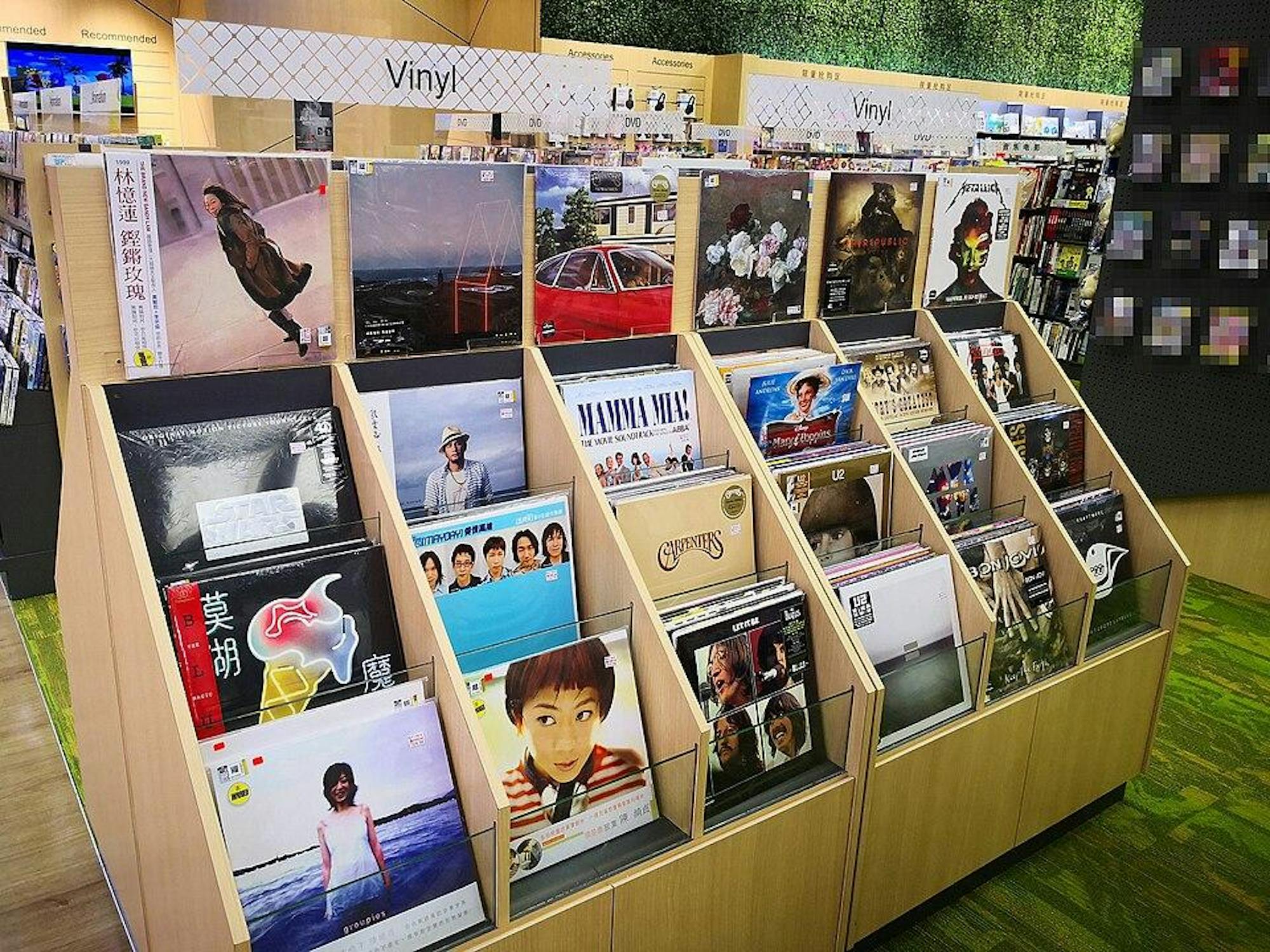
There’s not much to do in Ithaca on a rainy Saturday — unless you know where to look. This weekend in particular held an event I was excited for as a lover of music and a gumshoe of music lovers: the Ithaca Vinyl Records & CDs Fair. The Downtown Ithaca Conference Center took on the persona of an audio-fanatic's dream basement, hosting makeshift isles overflowing with CDs, vinyl records and various music paraphernalia. I wasn’t sure where to begin; not just as a shopper, but as an investigator. I wanted to pick the brains of these vendors who had come from far and wide to peddle their wares, because I’m sure they too wonder why vinyl records, against all odds, still hold appeal to a world where almost any song can be cued up at the push of a button.
I decided to admire the variety of genres available for purchase until I came across a vendor that looked in the mood to chat. When I spotted a man with a scruffy beard behind one table, examining a stack of 45s, I asked him to elaborate on his experience collecting and selling vinyl.
He looked up, startled. “I don’t work here,” he said, and nodded towards a small old man to my right. I laughed away my embarrassment and repeated my question to the actual vendor, adding that I was writing an article about the persistence of vinyl. “Of course it persists,” he answered, “I’m here selling them, aren’t I?” He claimed that people buy records because they are tangible and tactile. “Look at this cover art,” he exclaimed, holding up one sleeve depicting a snarling wolf, “you can’t get this visual on a phone.” Vinyl record sleeves portray album art in scaled-up glory, making the collaboration between the visual artist and the musical artist feel much more intentional and pertinent to the media as a whole.
The non-vendor joined the conversation then, adding, “The sound is way better, too!” The two men began talking about size differences in records when it comes to audio enjoyment. The technicality of the comparison was lost on me, but I picked up on some disagreement that abruptly led the vendor to exit the conversation. I realized that I should capitalize on my initial instincts about approachability, regardless of proprietor status.
I introduced myself to the bearded man, who identified himself as Mike Cook, a DJ for WRFI 88.1 FM and former DJ for Cornell’s own WVBR 93.5 FM. He only plays vinyl on the radio, carting around his wagon of records to curate a personal listening experience. He explained that radio broadcasting amplifies every crack and pop in a vinyl record, changing the aural experience. “I always play stuff with imperfections on my shows,” he told me, “so that people know there is a real person in the booth.” To Cook, the value of vinyl comes from physicality, but also from ownership. Streaming is renting; you only have access to your music as long as you keep paying a monthly fee. A record is yours forever (as long as you take good care of it). Owning records also leads to good conversation, since there is more to talk about than just the music. I agree that there’s interesting discussion to be had on the variation in size, quality of material, and even the physics needed to create a long-lasting piece of collectable media.
The next victim of my journalistic inquisitions was a vendor that sported a vibrantly red fez-style hat. “Don’t call them vinyls,” he implored me, “people like me will look down their noses at you and judge you mercilessly.” A pair of wire-rimmed spectacles hung crookedly at the end of his own nose, readily posed to support any looking-down upon clueless young shoppers such as myself. This vendor, Mark Zip, insisted that the audio experience was more about equipment than the record itself. “With the setup I have at home, you wouldn’t be able to tell the difference between a CD and a record.”
What value do records or CDs hold to people my age, a generation raised by streaming? Besides quality improvement, Zip believes that the ritual of vinyl appeals to kids that grew up creating instant mixed-genre playlists. It’s something novel that promotes intentionality in audio entertainment. “It’s really a weird object fetish,” he chuckled. Vinyl survives into the new generation because we enjoy the aspect of collection, curation and care. This practice is enticing in a way that folks from the age of vinyl cannot relate to, because to them it was the norm.
I don’t even own a record player. Why are expositions like this appealing to me if I cannot partake in the ritual? Maybe, in some vicarious way, I’m feeding my own “object fetish.” Today I enjoyed rifling through stacks of alphabetized sleeves, scouring for bands I’ve heard of, and admiring cover art I’ve never seen up close before. When I find an album I recognize and scan the track list for a song I like, I feel a sense of satisfaction in the fact that I am holding in a piece of media I have consumed over virtual platforms. Here it is, in its totality! Music becomes tactile; a new sensory experience.
This fair was not exclusively for records, of course: one woman behind a table littered with CDs smiled at me as I aimlessly traced eyes along her selection. I wondered what she thought of the fragility of these sacred media forms; whether she harbored an opinion on the quality of music preserved on vinyl versus polycarbonate plastic; if she had some secret musing she was longing to share with the public. The question barely left my lips before she let out a hearty scoff. “I’m not getting involved in that argument,” she answered with a shake of her head, “I ain’t no chump!”

Maya Blanchard is a member of the Class of 2026 in the College of Agriculture and Life Sciences. She is a staff writer for the Arts & Culture department and can be reached at mblanchard@cornellsun.com.