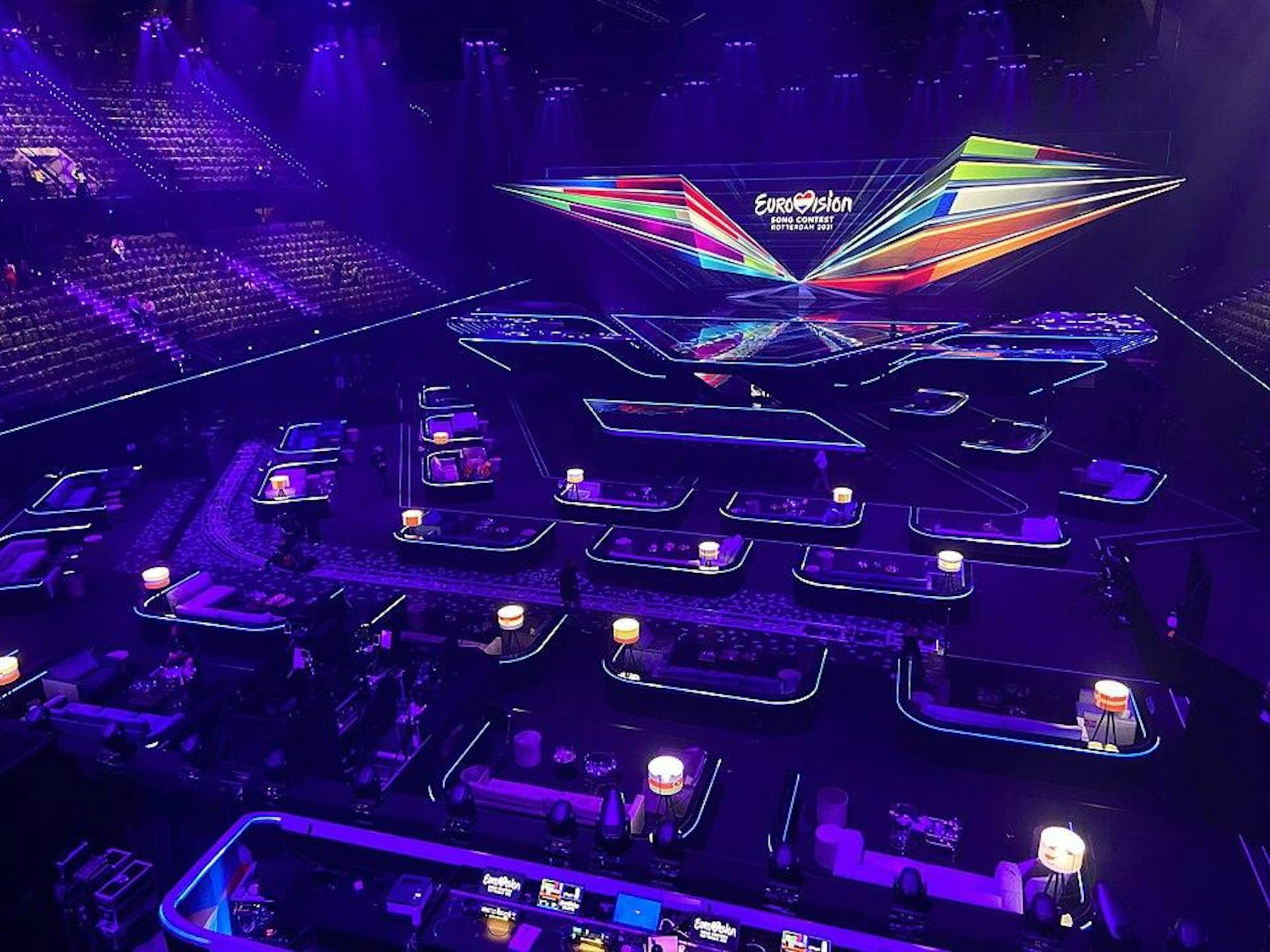
The Eurovision song contest is, perhaps, the only equivalent of the Olympics in the music world. Mostly familiar to the U.S. audiences thanks to Eurovision Song Contest: The Story of Fire Saga, it is exactly as gimmicky and offbeat as one understands it to be from the movie. Pyrotechnics explode, mechanical bulls get wheeled out onstage, masked metal artists get crowned the monarchs of European entertainment. But there is a method to the madness — a throughline stretching across years.
When one looks at the contest as a whole, patterns start emerging. While every year the final decision is jointly formed by the jury and the televote — which recently expanded to countries outside of Europe, which means that viewers in the U.S. and other countries can also cast their votes — the results do not differ that much from one year to the next. While entertaining, the contest proves to be somewhat formulaic, with a few variables changing without affecting the whole.
The pattern that is easiest to highlight is, perhaps, the winning ballad. Not too fast, not too slow, with a catchy chorus and a necessary impressive high note somewhere in the crescendo, this type of entry typically garners interest from both the jury and the public. While the professional judges look for quality of vocal delivery and the overall coherence of the piece, viewers still get enough entertainment value out of the entry to vote for it — especially if the ballad, as it happens, deals with the ever-pressing matter of a broken heart. The winning ballad cannot be sad for the sake of being sad: a degree of epic presentation is required, even just in the form of blasting white lights beneath the performer, or a vaguely panini-press-shaped stage setup. The predictability of this type of entry is almost industrial to a point where, every year, the qualifying songs are easy to point out before the main show even has a chance to begin.
But not everyone is aiming to win the Eurovision Song Contest. The winner inevitably carries a burden: their country of origin is obligated to host the contest the following year, unless extraneous circumstances prevent them from doing so, like in the case of Ukraine in 2022. Hosting can be a burdensome endeavor, especially in the absence of the required infrastructure: Guests from all over Europe and the world need places to eat and sleep, as well as transit options to use over the course of their stay. The hosting arena also needs to be in tip-top shape — one does not want to appear a subpar host on national television. For some countries, the downsides end up outweighing the benefits. The solution, in this case, sometimes lies in the entry itself: sending an obviously doomed contestant is easier than dealing with the consequences of an unexpected success. While tastes and preferences differ, it is sometimes abundantly clear that the specific performer is chosen as a safe dog to not bet on. They reliably deliver what technically counts as an ‘average’ entry, while staying safely in the non-winning zone for the lack of individuality, vocal range or staging. In this calculus, mediocrity becomes strategic. How else would one explain that the last win for the U.K. was in 1997?
But the contest is not only limited to ballads or europop bangers. Europe’s biggest stage has range, and sometimes, by luck, coincidence or an unexpected sense of appeal to the viewer, an alternative entry ends up entering the competition. In many cases, however, the token alternative entry of the year ends up being exactly that. For unclear reasons mostly originating from Scandinavia, those performers showcase their genre with such dedication they almost deserve a trademark appended to their names. When a metal entry emerges, it is rarely just ‘metal’; the entire essence of the performance is metal-shaped: fire on stage, masks or black latex, these artists never leave you guessing about where their loyalties lie in the music world. In a surprising turn of events, sometimes they end up being successful enough to beat the Winning Ballads of the year, perhaps due to their overall uncomplicated nature: The viewers end up getting exactly what they thought they would the moment they saw the performers take the stage, no interpretational finesse required.
Eurovision is, by all means, not a real representation of the European music scene. If anything, it functions as a little corner of hyperreality in the vast sea of subcultures and genres flooding the continent, from the dimly-lit clubs of Berlin to the sunlit stages of Sanremo, Italy, which is exactly what makes it entertaining, if politically charged at times. In the end, Eurovision is not Europe as it is, but Europe at its maximum volume, condensed into no longer than three minutes of glitter and smoke per country.

Arina Zadvornaya is a graduate student in the Duffield College of Engineering. She is a columnist for the Arts & Culture department and can be reached at az499@cornell.edu.