Exactly 20.9 miles north of Uris Library in the Village of Interlaken in Lake View Cemetery is a small, modest headstone. It is gray, plain and smaller than most. Yet, despite the humbleness of the stone, it stands out, for on top are numerous trinkets, a small toy robot, a pair of red, plastic sunglasses, several pens, a baseball, coins and a cigarette to name a few. No other marker in the cemetery is adorned this way.
I visited the cemetery one evening near sunset. The stillness of the air and silence were somewhat unsettling. I was alone, but I did not feel alone. I approached the grave and soon found myself looking down at the plain marker that read, “Rodman E Serling, Tec 5 US Army, World War II, December 25, 1924 - June 28, 1975.” I am now staring down at one of the greatest writers in television history. The same Rod Serling who wrote and produced The Twilight Zone and Night Gallery.
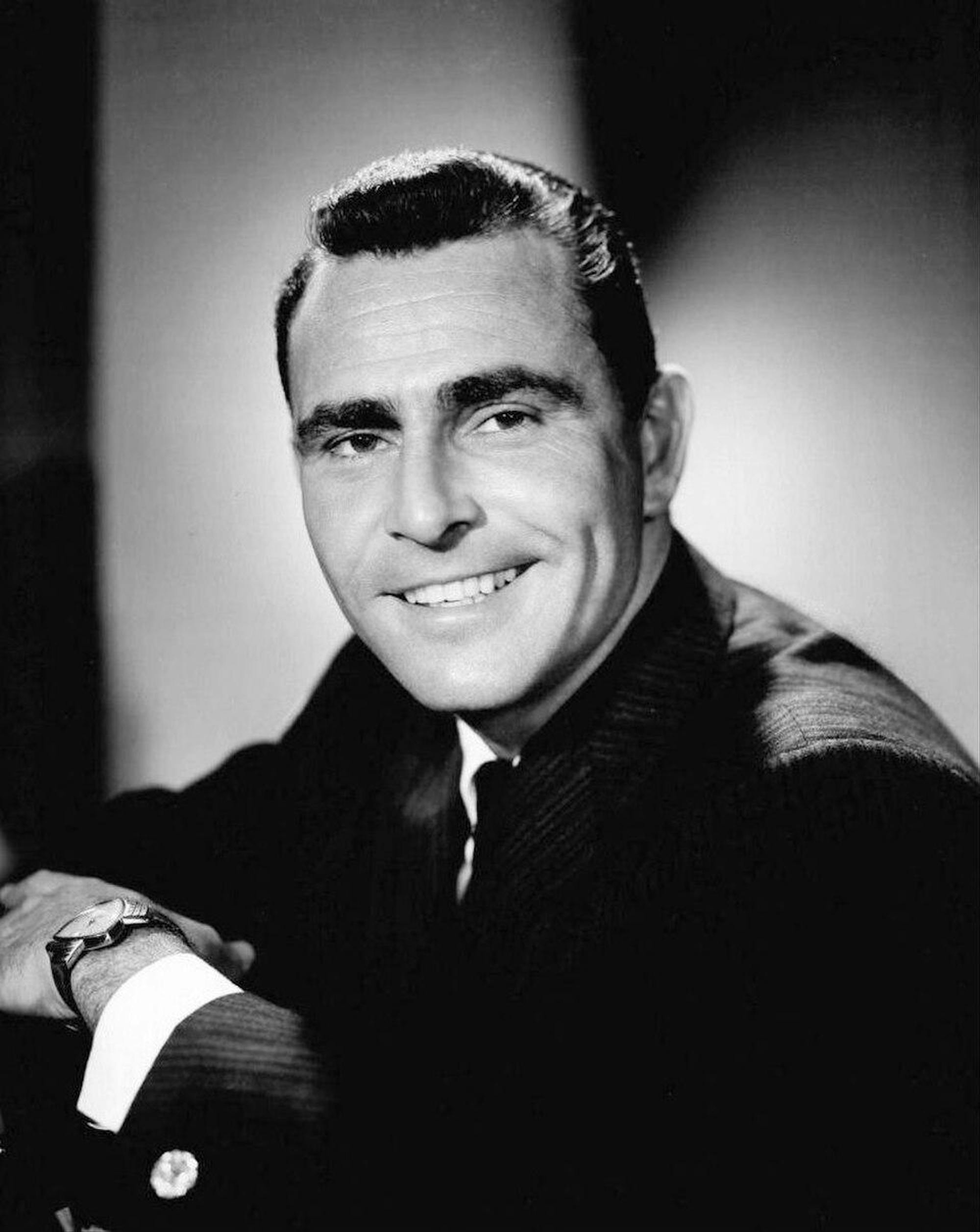
I could almost envision him standing there before his grave, dressed in his iconic dark suit with a white shirt and black tie — his posture calm, his hands folded in front of him, a cigarette between his fingers, smoke curling upward into the slowly darkening light. He stood with the air of someone who knew supernatural secrets but refused to directly disclose them.
I then imagined the man famous for his introductions — looking at me and, while pointing to his grave, beginning to speak in a measured, almost ominous tone: “Imagine if you will, this simple grave in an unremarkable cemetery, far from the lights and cameras of Hollywood. No monument. No marble statue. Nothing else to mark the man whose imagination defied convention, transporting millions on a journey beyond the ordinary to the place between fantasy and reality, a place called The Twilight Zone.”
The moment passed and I was again alone in the stillness of the cemetery. You might think this is an overly dramatic introduction to Rod Serling, but if you watched even one episode of The Twilight Zone, you know that it is strangely appropriate. Serling was a visionary who wielded drama, irony and moral tension like surgical instruments. A writer who, like Voltaire and Jonathan Swift before him, used narratives rich in allegory and symbolism to challenge societal problems such as censorship, greed, racism and bigotry disguising his social commentary as entertainment.
Serling was born in Syracuse, raised and educated in Binghamton and died in Rochester. From 1967 until his death in 1975, he taught at Ithaca College, commuting from his cottage on Cayuga Lake in Interlaken. In other words, Upstate New York was in his DNA.
If you’ve heard of The Twilight Zone but don’t know much about it, or if you refuse to watch old black-and-white TV shows, you’re missing out; that means you’ve never watched Serling’s famous plot twists. The episode, “Time Enough at Last,” where a nearsighted book lover, desperate for time alone to read, survives a nuclear blast and becomes the last person alive — finally free to read in peace — only to break his glasses and lose the ability to do the one thing that made his life worth living. Or “To Serve Man,” where seemingly benevolent aliens come to Earth, cure disease, end war and offer peace, only to be exposed when their gift — a mysterious book with the seemingly philanthropic title To Serve Man — is finally translated and revealed to be a cookbook!
What is amazing is that while Rod Serling is still adored throughout the globe, Ithaca College has the largest and most extensive collection of Serling’s creative and personal memorabilia in the world. They have many of his original television scripts, screenplays, awards (including some of his Emmys) and more. I’ve been there and was able to examine the scripts of several of my favorite episodes complete with his handwritten notes and edits.
Serling’s deep connection to the greater Ithaca-Binghamton region is evident in the settings, references and stories that reflect its landscape and character. For example, you can still see the carousel that inspired Serling to write The Twilight Zone episode “Walking Distance” in Binghamton. Watch the episode “Mirror Image” and catch the subtle reference that the bus in the episode has “Cayuga” written on it. That name was also utilized by Serling as the name of his production company, Cayuga Productions, which produced all five seasons of the show. There are many more references, but you get the point.
As a courtesy, I must warn you. If you have never watched The Twilight Zone, you must know that it is addictive. The good news is that if you do become a Serlingphile, the Rod Serling Memorial Foundation will be sponsoring Serlingfest 2026, a two-day Rod Serling extravaganza in Binghamton Aug. 21-22, 2026.
If you really think about it, the Ithaca region has a significant literary tradition: among Rod Sering, Kurt Vonnegut (former associate editor for The Sun!) and Toni Morrison, it has direct ties to three of the greatest American writers — four if you stretch the map and count Mark Twain who is buried in Elmira.
Personally, I have always admired Serling for his ability to convey social commentary through eerily entertaining stories, making his message digestible even for audiences who might resist a direct challenge to their beliefs. Serling’s grave reminded me that with all that is going on in the world today, we need someone like him, someone capable of transcending ideological differences and forcing us to challenge our own perspective.
As I left the cemetery that day, I looked back, half expecting to see Serling standing there, but all I saw, as twilight settled, was his humble grave marker. Seeing it one last time, I realized that perhaps Serling’s greatest legacy is not the worlds he created, but the truth he revealed: Reality is less transparent than we think — and that the extraordinary is often born from ordinary beginnings.
Aiden Gaddis is a member of the Class of 2027 in the College of Arts and Sciences. He is a staff writer for the Arts & Culture department and can be reached at ajg335@cornell.edu.