By Weather Man
Editor’s Note: 4/20 content is a part of The Sun’s joke issue and contains exaggerated and factually inaccurate information.
It’s a shame heaters aren’t allowed in dorms, because we are going to need them.
In an unprecedented deviation from forecasts promising a return to El Niño conditions in the Pacific Ocean and a warmer than normal summer across the Northern Hemisphere, this upcoming week is now expected to be the beginning of a long-term pattern change ushering in “super chilly” temperatures last seen around 25,000 years ago and leading to a 21st century ice age.
Rapid refreezing of Arctic ice following a brutal winter across the eastern half of North America has reintroduced the polar vortex, and a runaway feedback loop of extreme cold with no end in sight is expected to follow.
Remaining snow piles around the Ithaca area were excited about the prospect of renewed cold temperatures, with one stating that the continued survival of the species could “result in our long-awaited proliferation and world domination.”
In Ithaca, the current cold snap following this past week’s warm spell is the initial manifestation of this pattern change. A reinforcing cold front will sweep through the area late Tuesday night into Wednesday morning, bringing a powerful thundersnow squall as temperatures plummet into the negatives by Wednesday morning.
This squall may be the last time thunder is heard in Ithaca for several years, as temperatures warm enough to support towering clouds will not be present in the upcoming arctic regime. Sunshine on Tuesday may be enough to recover temperatures into the mid-teens, but strong wind gusts ahead of the next clipper system, a dry low pressure system that often precedes arctic air, will keep wind chills below zero throughout the day.
After lake-effect snow overnight Tuesday into Wednesday, a second reinforcing cold front crosses the area midday Wednesday, and damaging wind gusts up to 300 miles per hour are possible as the powerful glacial air slams into the area. Large numbers of displaced Canadian birds will be riding the “wave” of air, making this a can’t-miss event for any birders able to dodge the flying debris (looking at you, Cornell Birding Club).
Following the passage of the front, temperatures dip below -30ºF on Wednesday night, and little relief is expected Thursday and through the weekend as air sinks downward from higher regions of the atmosphere, pushing low temperatures further down towards -70ºF.
This pattern is expected to continue for some time, with relief not indicated by any long-range model. Previous ice age patterns have lasted for several years, and if the past is any indication, the cold could inconvenience the globe for the next 150 centuries. Seasonable warmth finally returns around April of 1502031 as ice rapidly melts.
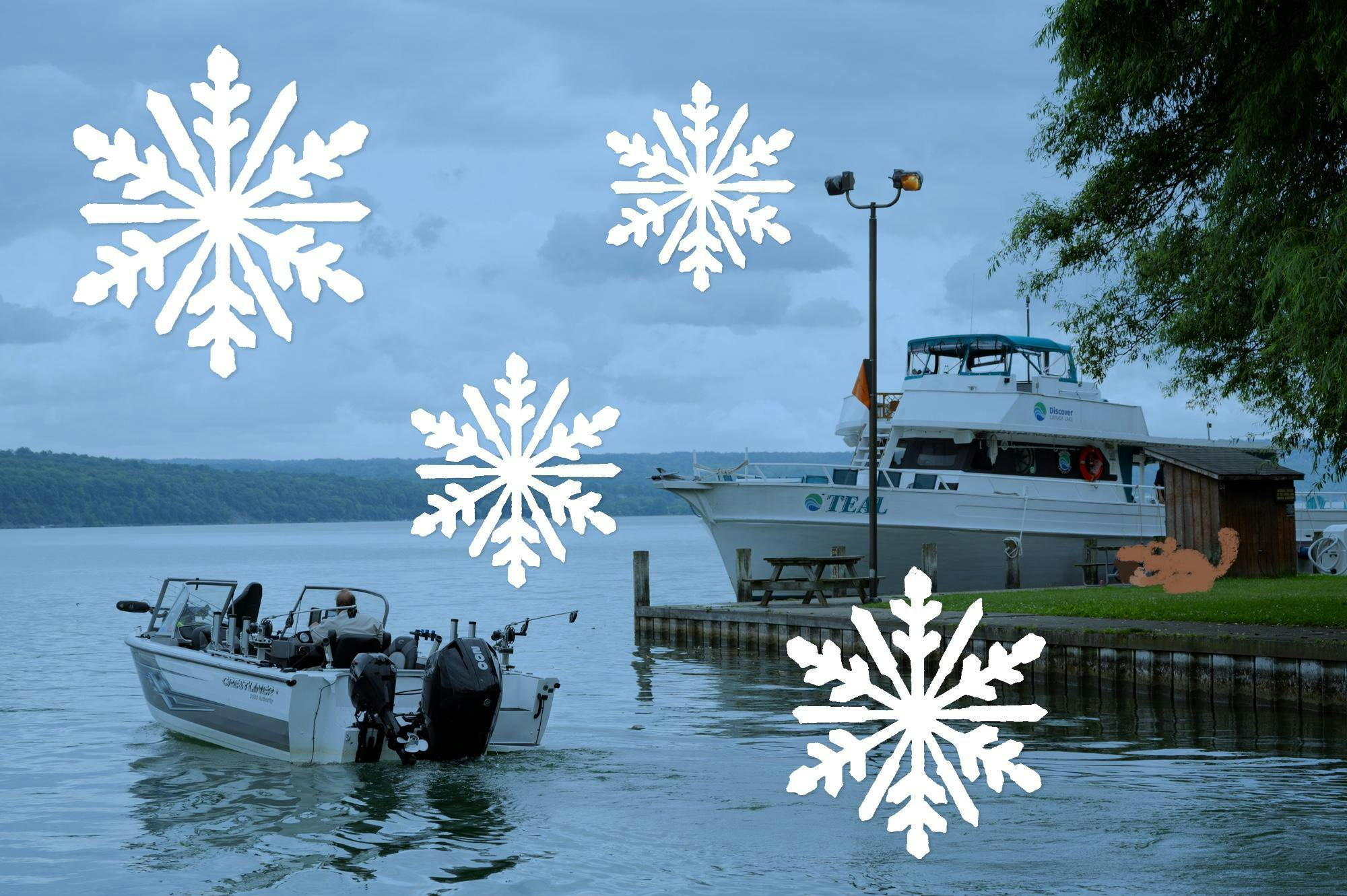
Cayuga Lake last froze in 1979, and 1865 was its most intense freeze in modern history. NOAA reanalysis indicates the coldest daily mean temperature of that season was around -6ºF. However, this week’s upcoming freeze and subsequent ice age are likely to knock those records out of the (frozen) water.
The temperatures expected later this week will blow past the proportions observed in 1865, resulting in rapid, almost explosive freezing of the lake. Chunks of ice will begin to appear with the secondary cold frontal passage on Wednesday, and by Saturday, the lake will have overflowed its banks with ice.
Due to the expansive tendencies freezing water has, a glacier will form to the hilltops that traditionally have overlooked the lake, and a soupy mixture of supercooled water and ice may reach as far as the Schuyler House area past the Commons before it fully freezes.
Cornell’s Office of the University Weather Machine issued a statement Sunday, stating they “were aware of anticipated weather conditions this week” and indicating that students should “expect no change to the University’s operating status.”
Bundle up, Cornellians!

4/20 content is a part of The Sun’s joke issue and contains exaggerated and factually inaccurate information.