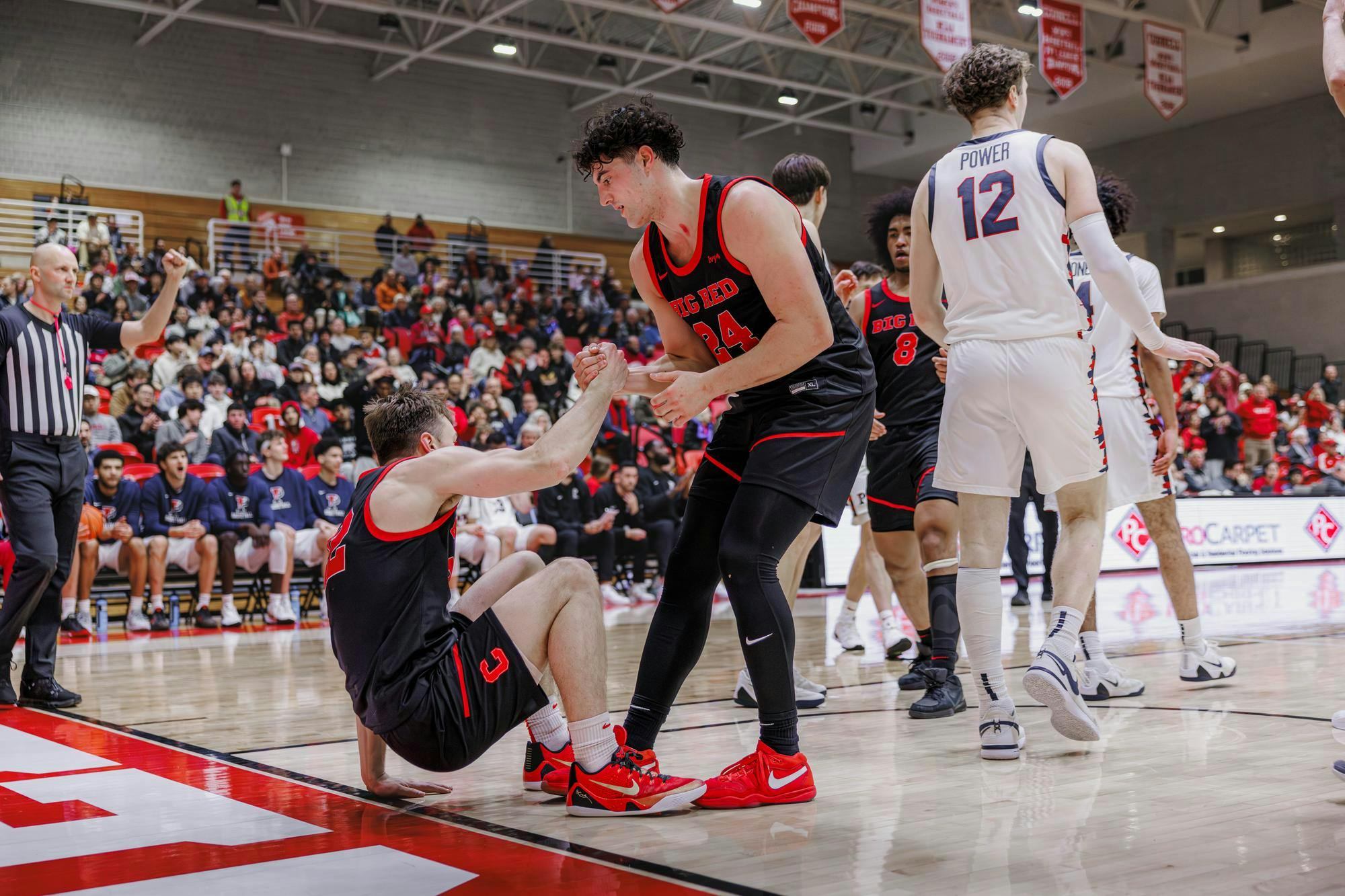
The departures of senior guard Josh Baldwin and senior guard Jake Fiegen mark a significant turning point for Cornell men’s basketball, not just because of their production, but because of what they represented in the program’s identity: toughness, versatility and late-game composure.
Baldwin is transferring to William & Mary’s men's basketball program, while Fiegen heads to Villanova men's basketball. From a competition standpoint, Fiegen is clearly moving up. Villanova competes in the Big East Conference, one of the strongest leagues in college basketball, while William & Mary plays in the Coastal Athletic Association, a solid but less nationally prominent mid-major. Villanova’s recent success and consistent NCAA Tournament presence offer Fiegen a bigger stage, while Baldwin’s move is more lateral, though it could provide him with a larger and more defined role.
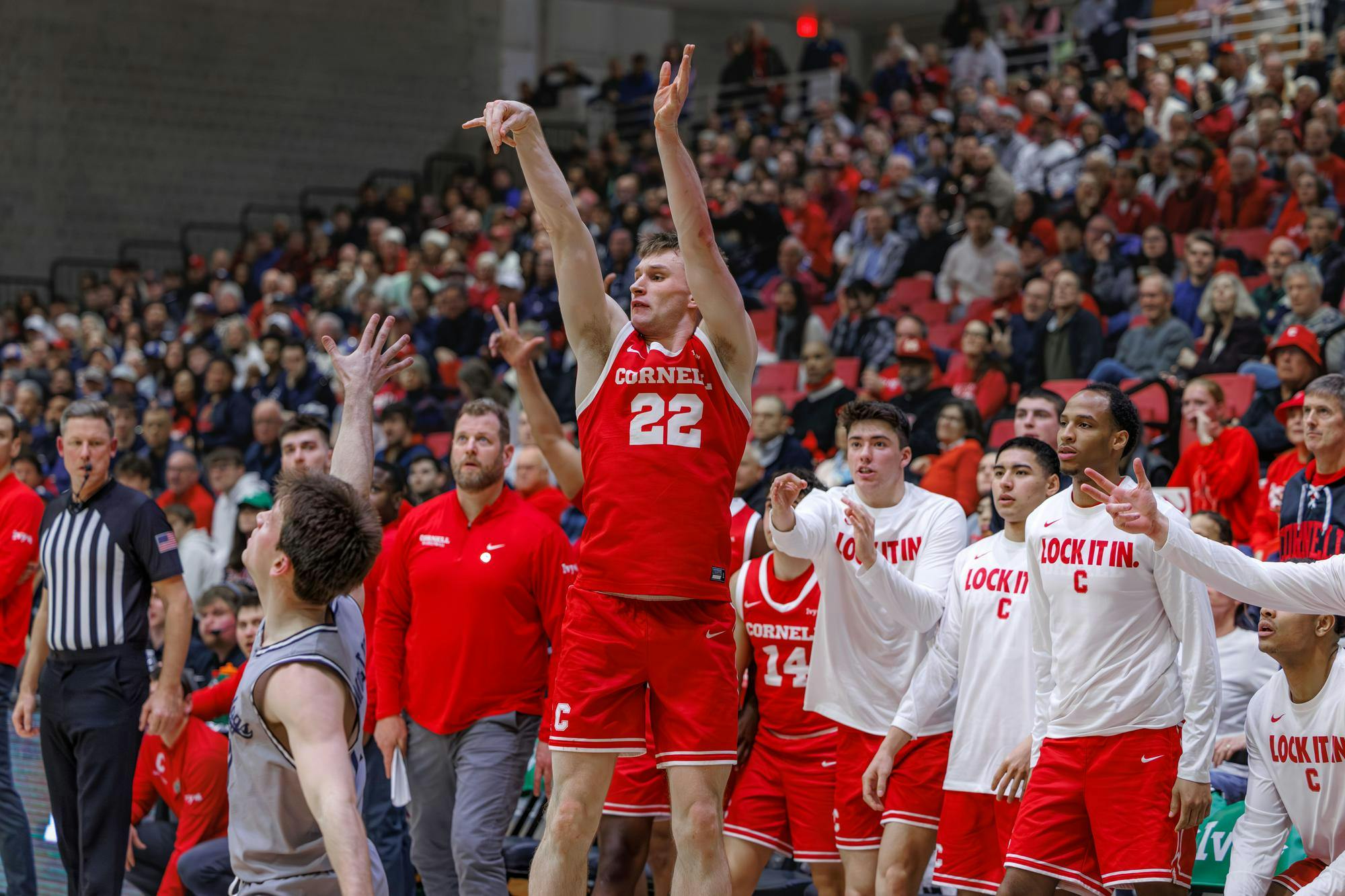
At Cornell, Fiegen was the offensive centerpiece his senior year. He averaged 17.1 points and 5.1 rebounds per game while shooting an efficient 54.6% from the field and 41.4% from the three. He ranked among the Ivy League’s top scorers and reached double figures in 22 of 24 games, combining consistency with explosive scoring ability. His standout performances included a 33-point outing against Dartmouth and a 31-point performance at Brown, along with a team-high 23 points in the Ivy League Tournament semifinal against Yale.
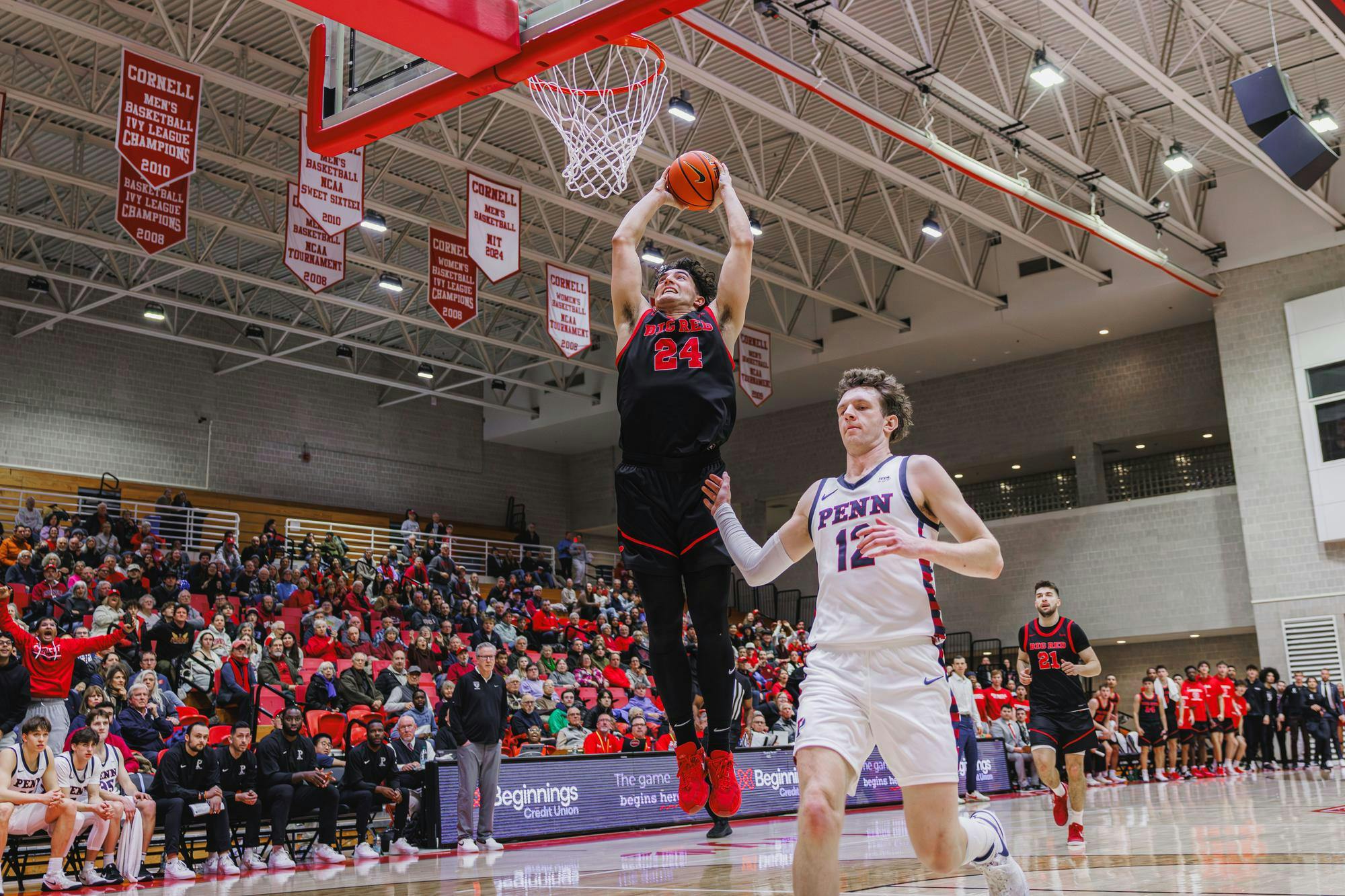
Baldwin’s impact came in a more versatile form. He averaged 7.4 points, 4.1 rebounds and 3.2 assists, finishing among the Ivy League leaders in assists per game. His ability to do a bit of everything — facilitate the offense, defend multiple positions and contribute on the glass — made him a key piece in Cornell’s system. Late in the season, he stepped into a larger role, starting the final 13 games and recording a 19-point, 10-rebound double-double in a road win at Columbia. His all-around presence was also felt in high-pressure moments, including a strong showing in the double-overtime win over Colgate.
Both players delivered when it mattered most. Fiegen’s scoring and shot-making defined Cornell’s offensive identity, especially in big games and late possessions. Baldwin, meanwhile, provided the balance, the connective play that kept everything flowing, often doing the less visible work that wins games.
Replacing them won’t be simple. Fiegen leaves behind a major scoring void and one of the most efficient offensive seasons in recent program history. His ability to create shots and deliver in key moments gave Cornell a reliable option late in games. Without him, the Red will likely need to spread that responsibility across multiple players rather than relying on a single go-to scorer.
Baldwin’s departure presents a different kind of challenge. Players who contribute across the board through scoring, rebounding, passing and defending are difficult to replicate. His versatility allowed Cornell to maintain flexibility on both ends of the floor, and his absence could force adjustments in lineup structure and tempo.
Still, change brings opportunity. With both veterans moving on, younger players will have the chance to step into larger roles, and Cornell’s system, built on ball movement and depth, has room to evolve. The next iteration of the Red may look different, but it will be shaped by the foundation players like Baldwin and Fiegen helped build.
Ultimately, both transfers reflect different paths forward. Fiegen is stepping into a higher level of competition with a chance to prove himself on a national stage, while Baldwin heads to a program where his all-around game could take on even greater importance. For Cornell, the task now is clear: adjust, reload and redefine what comes next as they look forward to another great season.
Sureya Lopez is a member of the Class of 2029 in the College of Arts and Sciences. She is a staff writer for the sports department and can be reached at slopez@cornellsun.com.