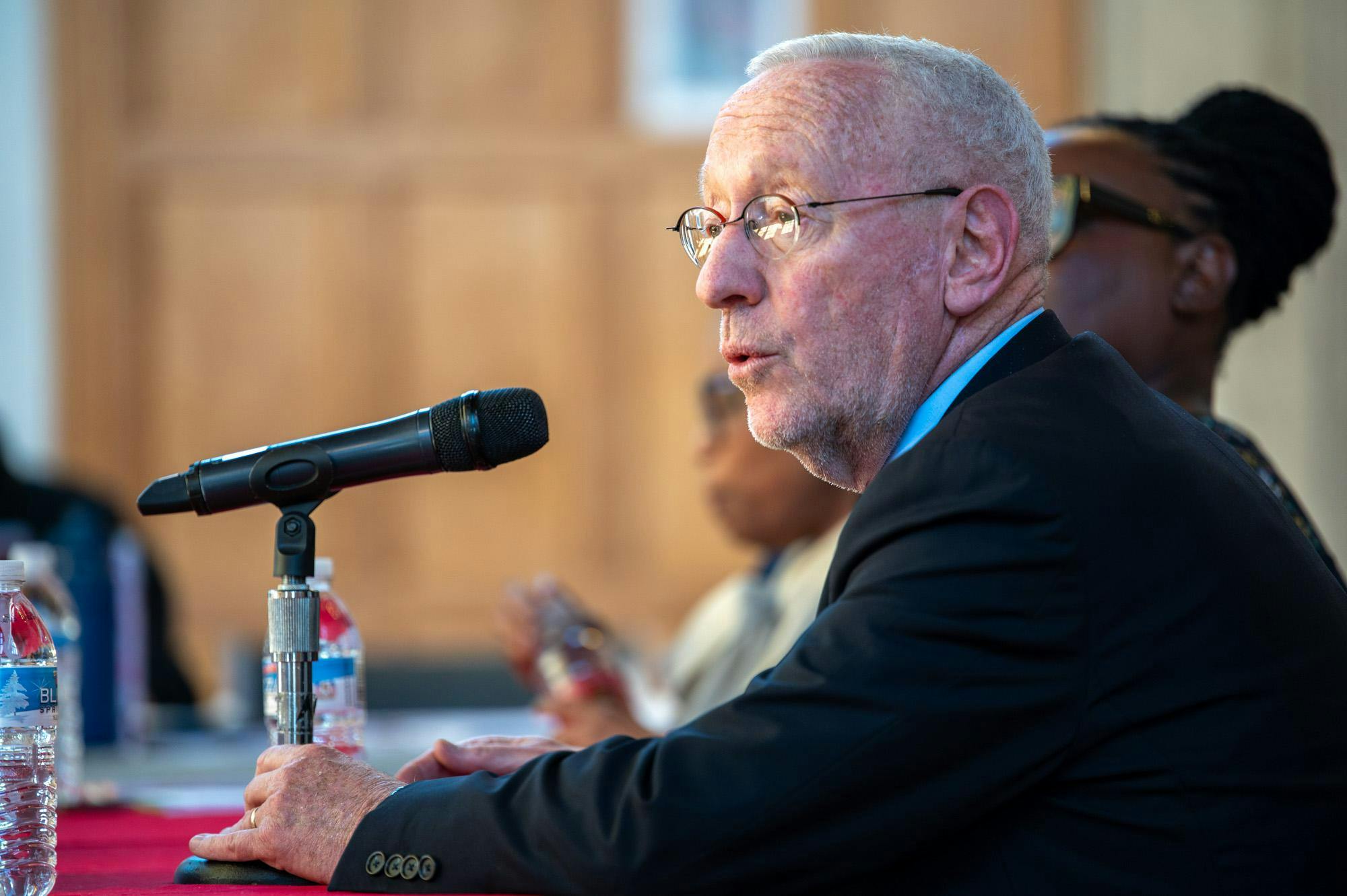
Cornell’s top administrators attended a University Assembly meeting on Tuesday, discussing the University’s handling of free expression, campus safety and long-term financial planning.
The U.A. is composed of appointed and elected representatives from Cornell’s faculty, staff, undergraduate and graduate and professional student communities. It serves as a shared governance body that facilitates communication between the broader University community and the administration.
President Michael Kotlikoff framed the meeting as a part of Cornell’s commitment to a shared governance process. The meeting covered protest activity, the ongoing Student Code of Conduct Review, support for international students and the University’s “Resilient Cornell” financial initiative.
President Kotlikoff, Provost Kavita Bala and Vice President for University Relations Kyle Kimball attended the session, answering pre-submitted questions and responding to follow-ups from shared governance representatives.
Kotlikoff opened by emphasizing that such appearances are central to administrative accountability, stating, “I see these visits as a key part of our responsibility to collaborate in a respectful and productive manner.”
Responding to questions about campus climate, Kotlikoff referenced the ongoing review of the Student Code of Conduct.
“We have a thoughtful process underway that will report out recommendations on the Student Campus Code,” Kotlikoff said. “Then we will have feedback from the assemblies and the campus on that report.”
During discussion of the code review, Kotlikoff also expressed concern about harassment directed at University officials. He cited “online harassment, targeting, misinformation and intimidation, both online and in person,” aimed at administrators and faculty who are working on the review.
This follows a December Student Assembly referendum opposing the University’s overhaul of the disciplinary process, which passed by wide margins.
In the vote, 93.5% and 91.7% of students who voted supported two ballot measures, which called for making Cornell’s judicial system independent of University administration and reinstating the campus-wide code of conduct, respectively.
Kotlikoff stressed that disagreement is appropriate but must remain respectful.
Expressing disagreement “is everyone's right and firmly within the spirit of shared governance,” Kotlikoff said. “But shared governance and this university are built on a foundation of shared values that demand we treat each other, whatever our differences, with dignity and respect.”
Kotlikoff also addressed the wave of demonstrations that have occurred this month — including two anti-Immigration Customs and Enforcement protests, the student demonstration at the Anduril career event and controversy surrounding a visit by an Israeli Defense Forces soldier on Feb. 2.
“I am most pleased that, unlike last year, campus protestors have observed the thoughtfully crafted expressive activity guidelines, and protests have occurred in a way that does not infringe on the rights of others,” he said.
Kotlikoff and Bala also discussed Resilient Cornell, which is focused on strategic cost reductions across the University, but were careful to distinguish the initiative from recent federal funding concerns, noting the University had already been planning financially prior to what he described as a “severe threat from the federal government on our funding.” He emphasized that the efforts are not solely a reaction to federal pressures.
U.A. members also pressed administrators about immigration concerns affecting international students on campus.
Eeshaan Chaudhuri ’27, undergraduate representative to the university assembly, asked Kotlikoff directly about the support being offered to international students.
“I'm just wondering, from a very high level macro perspective, what can the administration do at this time to help support the international students? And has there already been a change in terms of current policy towards supporting international students?” Chaudhuri said.
Kotlikoff responded, saying, “it is very, very rare for an international student to have their visa revoked,” and referenced expanded support resources for international students, including advising through International Services and Know Your Rights presentations. Kotlikoff also repeatedly stressed the University’s commitment to protecting international students.
Students on campus have also recently expressed concerns over continued Customs and Border Patrol recruitment on Handshake, Cornell Career Services’ recruiting platform.
Representatives from the Student Assembly attended the meeting and posed several follow-up questions to administrators, including concerns about administrative response times. Assembly members have repeatedly voiced growing frustration with the pace at which resolutions are advanced, often directing criticism toward President Kotlikoff, who is responsible for responding to Assembly proposals within 30 days, according to the Student Assembly charter.
Kotlikoff acknowledged the challenge of keeping up with the volume of resolutions from the Assembly and indicated that the administration is working to improve timeliness.
Vivienne Cierski is a freshman in the College of Agriculture and Life Sciences. She is a Sun Contributor and can be reached at vsc38@cornell.edu