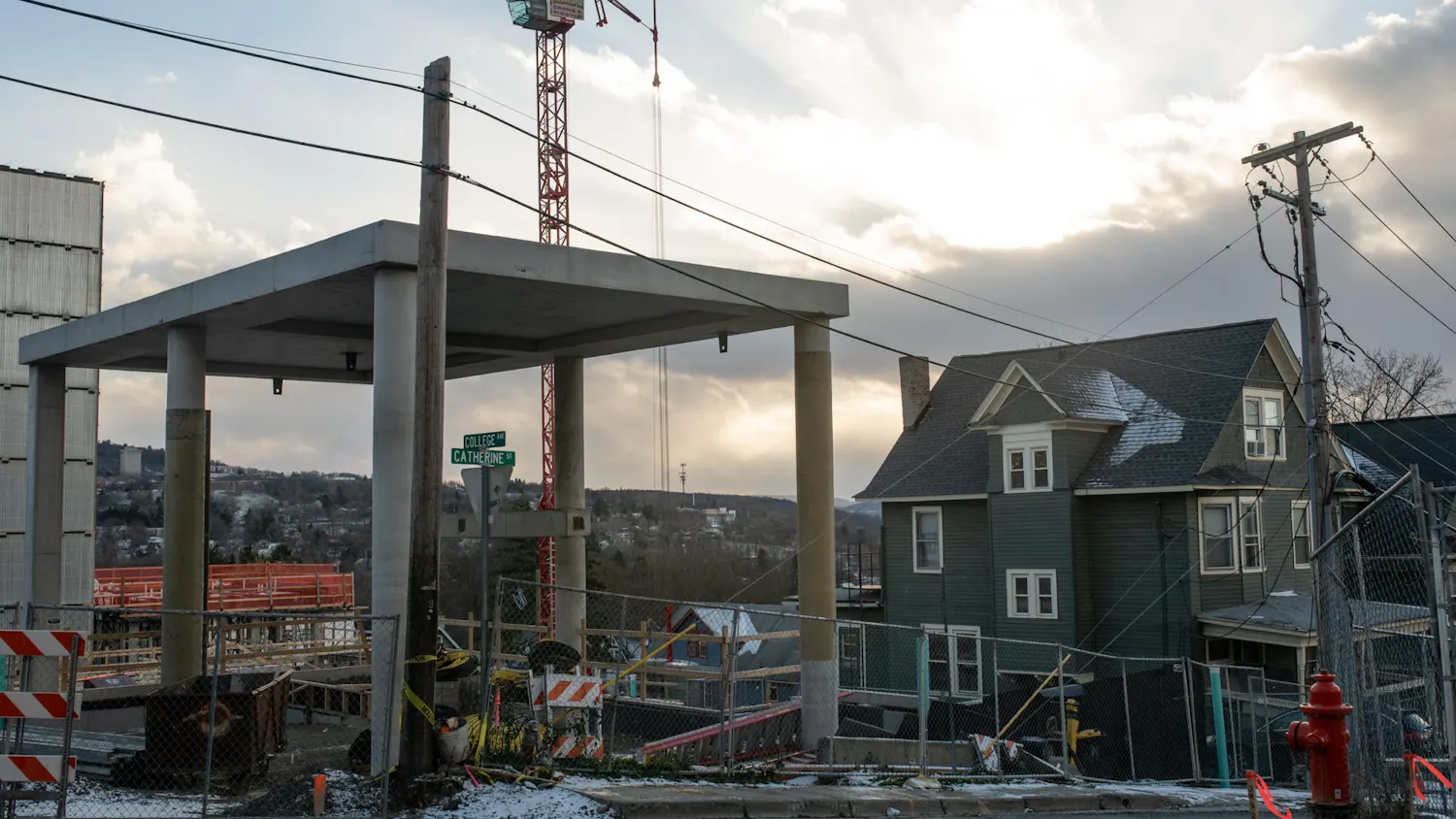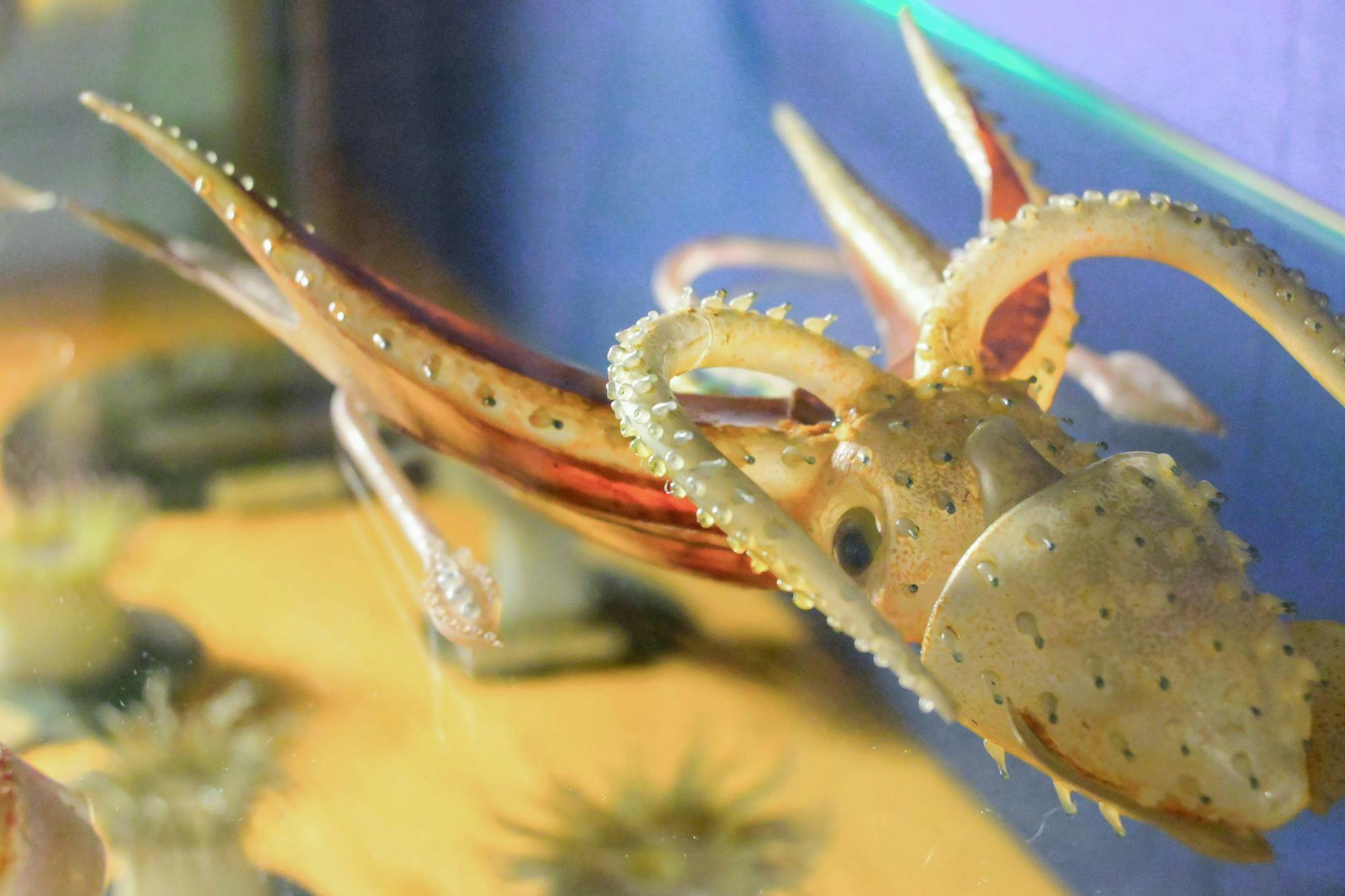
The Blaschka Glass Invertebrates Collection was recently moved from Corson-Mudd Hall to the Museum of the Earth due to construction in Corson-Mudd Hall. The collection features a diverse range of invertebrate models used for education, which have deep historical ties to Cornell.
The collection of glass models of soft-bodied organisms were made in the late 1800s by father and son Leopold Blaschka and Rudolf Blaschka, who created between 10,000 to 15,000 glass models of invertebrates in their careers.
According to Prof. Warren Allmon, earth and atmospheric sciences and director of the Paleontological Research Institution, which houses the Museum of the Earth, Cornell bought the largest single order of soft-bodied animals from the Blaschkas, consisting of 700 models, in 1885.
Unique Educational Tools
Since their creation, the Blaschka glass models have been used for educational purposes in undergraduate classes and labs, according to Allmon. In the present day, when students are able to access YouTube videos of diverse life in the deep ocean and dissect live marine organisms, the models continue to serve as teaching tools in the Museum of the Earth.
Assistant Prof. Leslie Babonis, ecology and evolutionary biology, and the curator of the collection explained that the Blaschka models are useful learning tools for students due to their true-to-life characteristics, which accurately represents the translucency and movement of these organisms through the medium of glass.
“If you take [soft-bodied] animals out of the ocean and you preserve them in alcohol and put them in a museum, they just look terrible,” Babonis said. “And so one of the things that's so special about this collection is that the artists captured the beauty of these animals and the biology of them in glass, which really nicely matches the actual animals when they're alive.”
The Blaschka collection is also known for showcasing a wide variety of invertebrate life. According to the Museum of the Earth website, the collection includes numerous taxonomic groups, including Cnidarians, like jellyfish, and Mollusks, like snails.
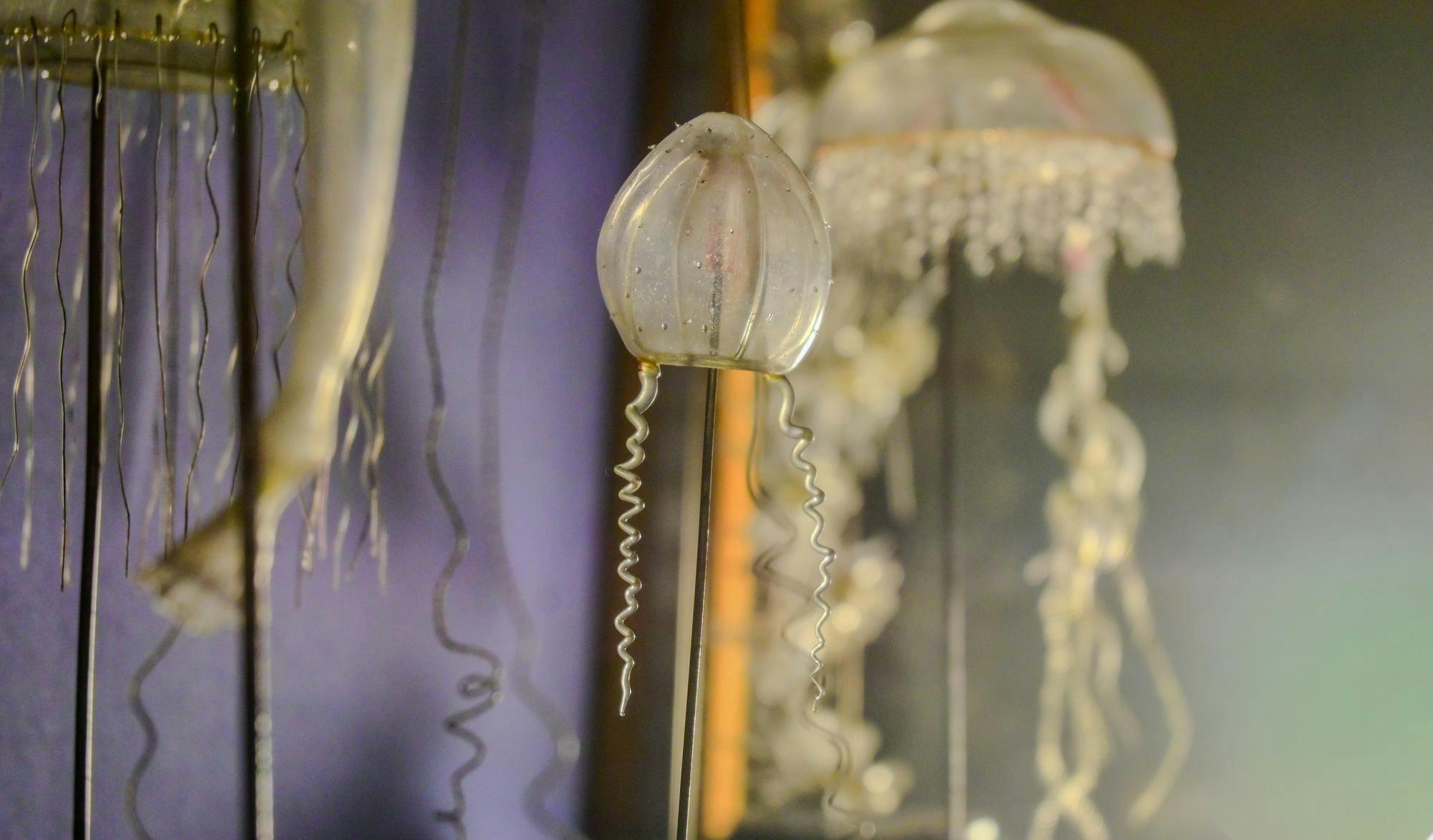
The Blaschkas also made models of the same animal across different growth stages so that students could observe how invertebrates looked at different points in their life, according to Allmon.
“[The Blaschkas] did a really spectacular job of capturing the diversity and really highlighting some of the species that people don't think about very much,” Babonis said.
For instance, stalked jellyfish are a type of jellyfish that live stuck to the seafloor instead of swimming freely. Although there are over 10,000 species of Cnidarians, one of the earliest groups of animals including sea anemone, jellyfish and more, there are only 50 species of stalked jellyfish in the world. Despite this, the stalked jellyfish is represented in the Blaschka collection.
Regular visitors to the exhibit include students from Babonis’s class BIOEE 3730: “Biodiversity and Biology of the Marine Invertebrates” at Cornell, Allmon said, as well as other universities across New York State, including Binghamton University, SUNY College of Environmental Science and Forestry and Hobart and William Smith Colleges.
When Babonis takes her class to see the models, she asks her students to identify the different groups of animals based on the traits they see, letting students actively apply in-class learning.
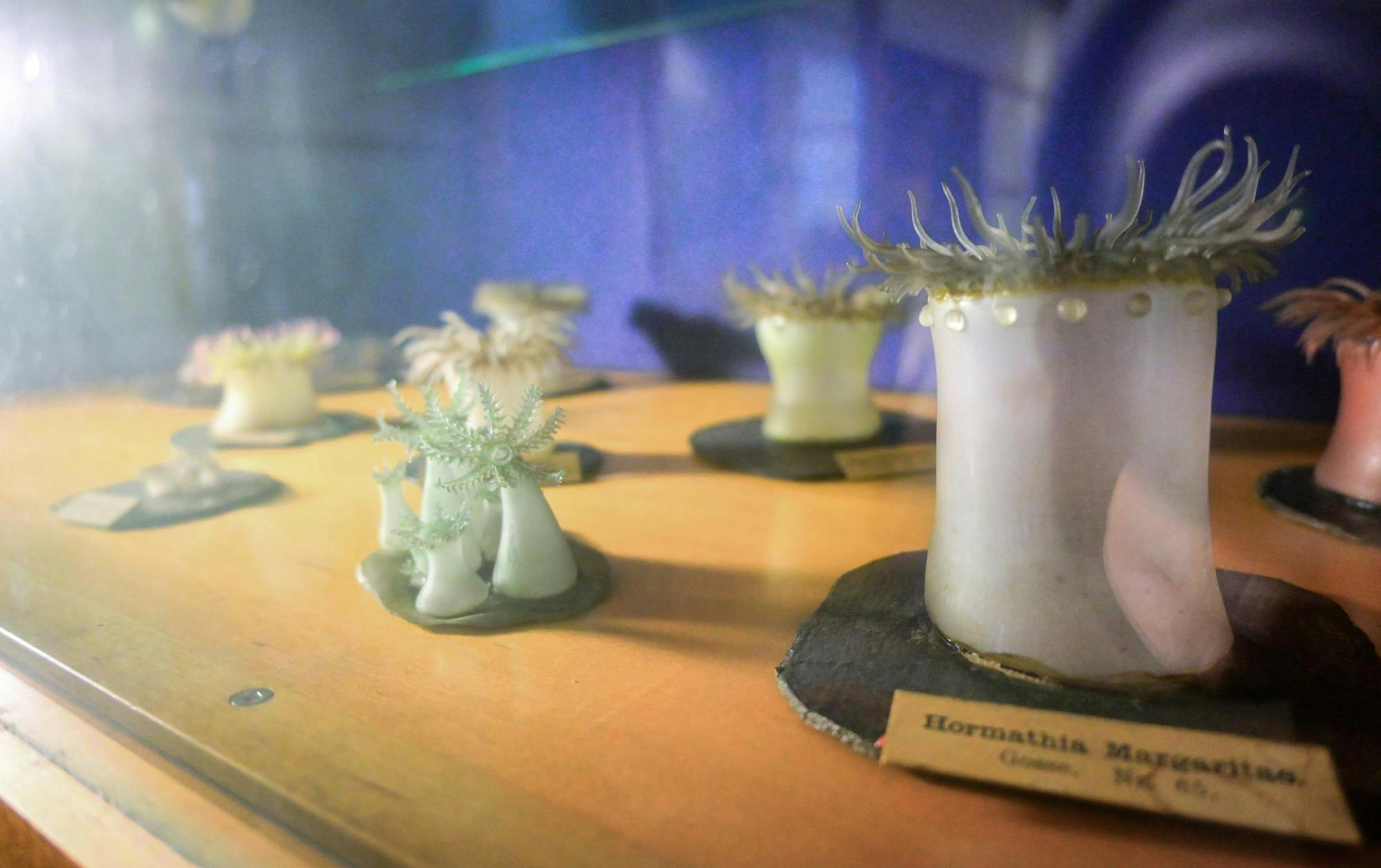
Beyond the scientific teaching value of the glass models, the artistry of the Blaschkas’ work remains a point of intrigue. The Blaschkas used a technique called lamp work where cold glass was put into an alcohol lamp and heated up in order to manipulate its shape, Allmon said. However, according to Allmon, not even the Corning Museum of Glass fully understands how the Blaschka models were created.
“Another reason to have [the collection] in the museum is to get people to think about how observation interacts with representation,” Allmon said. “Art and science has always been a theme of the museum…thinking about how do you see things and translate it into some artistic medium.”
A Long Journey to Cornell
The history of how the Blaschka models were acquired by Cornell and later restored involved the contributions of multiple individuals.
Leopold Blaschka, father of Rupold Blaschka, was born in Bohemia. Their family specialized in making glass and jewelry, which led Leopold to his work in decorative glass and jewelry. Upon seeing Leopold’s decorations in Dresden, the director of the natural history museum of Dresden requested Leopold to make sea anemone models for the museum in 1863. According to Allmon, word of mouth quickly spread news of the models, and this resulted in the Blaschkas’ work being sold internationally to different institutions.
Initially, the models were stored in Cornell’s former natural history museum in McGraw Hall. When the museum was closed in the 1930s, there is no record of where the models stayed next, according to Allmon.
In the 1950s, Prof. Emeritus Tom Eisner, chemical ecology, found the models in a closet, and he recognized them to be from the Blaschka collection. In the 1960s, the models were loaned to the Corning Museum of Glass, where many of them remain today, according to Allmon.
In the 1990s, Prof. Drew Harvell, ecology and evolutionary biology, restored and installed the models in the atrium of Corson-Mudd Hall, according to Cornell digital collections. Over the years, from the 700 that Cornell started with, around 130 models were lost.
Once the ongoing construction ends in Corson-Mudd Hall, Babonis hopes to bring some of the models stored in the warehouse at the Corning Museum of Glass to campus.
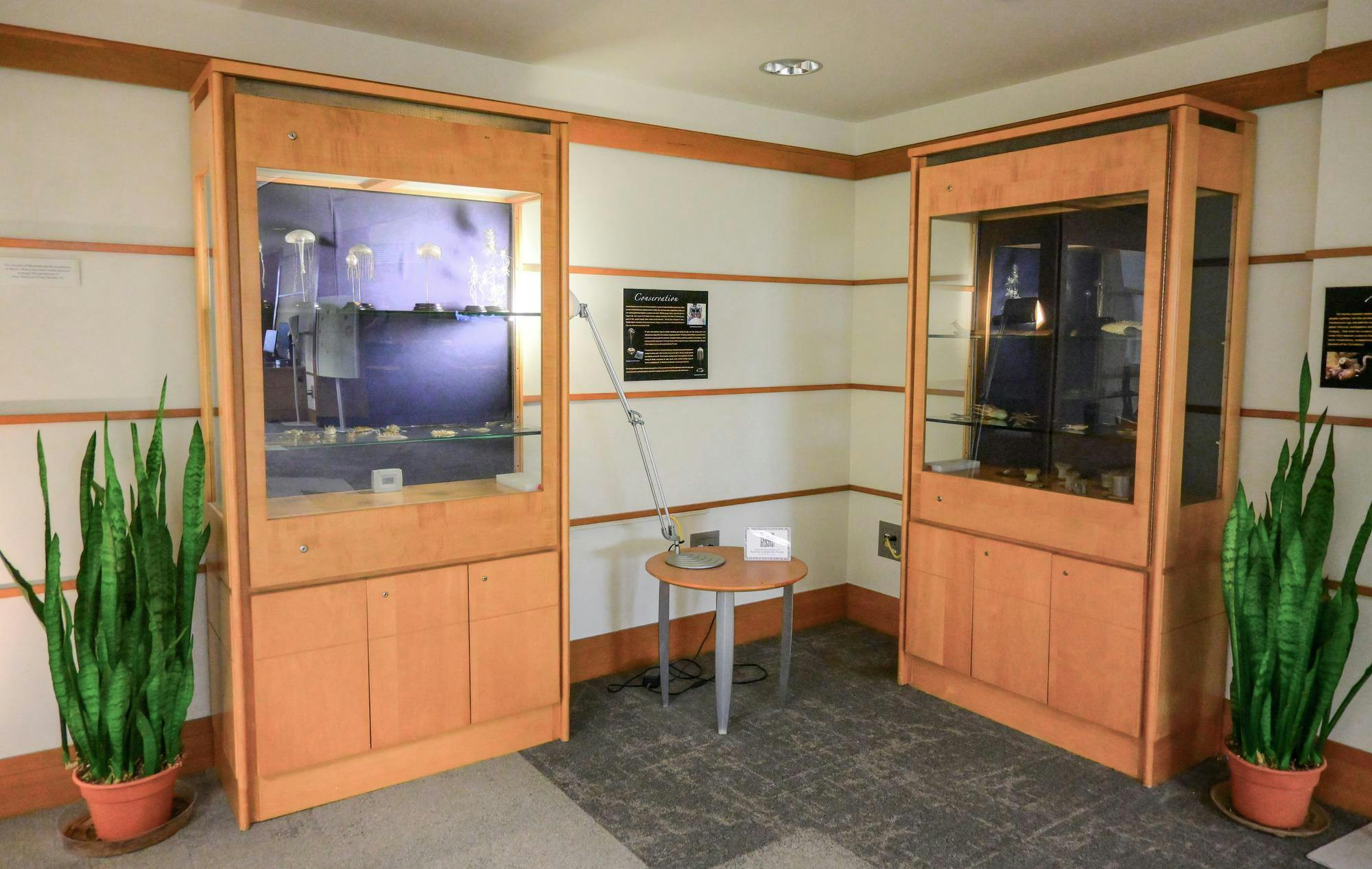
Visitors can view the Blaschka Glass Invertebrates Exhibit in the Museum of the Earth, or a permanent, small collection of around 50 glass models in Mann Library open to the public.
“[The museum is] absolutely the perfect place for them because so many more people are going to get to see them now that they're at the museum than they would passing through Corson,” Babonis said.
Danbi Lee is a member of the Class of 2028 studying nutritional sciences in the College of Agriculture and Life Science. She is a staff writer for the science and technology department and can be reached at dalee@cornellsun.com.