

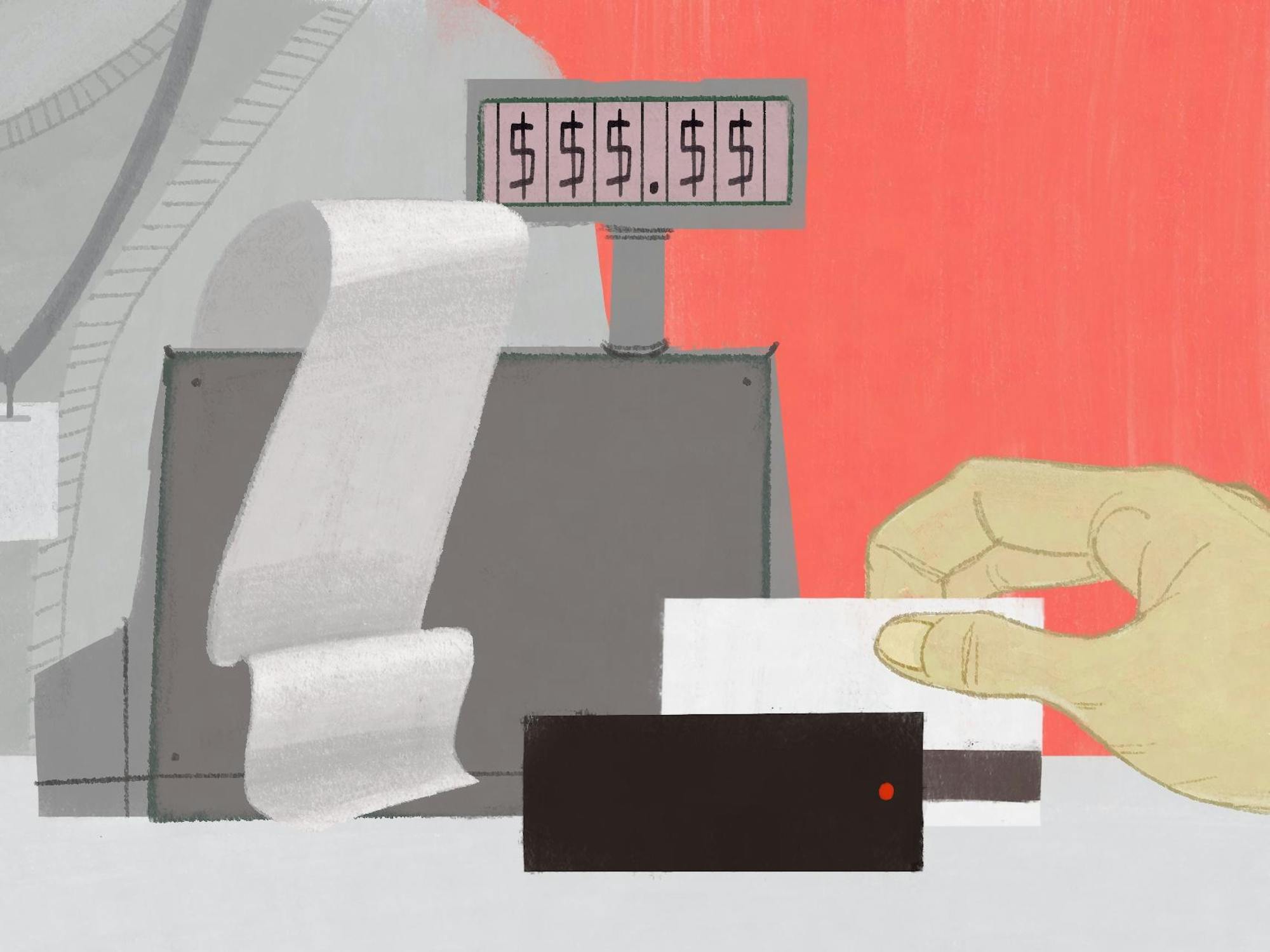
A common complaint among students living on South Campus is how far their residence halls are from on-campus dining options. Even I can admit, as a West Campus resident, that all 10 dining halls being a 20-minute walk away from South Campus feels unfair. However, one major advantage of living in Collegetown is the associated South Campus meal plan.
City Bucks were initially meant to be an ‘equalizer’ for those living on South Campus and have quickly become an attractive feature of the area. Students in residences like Cascadilla Hall, Sheldon Court and Schuyler House are eligible for the Collegetown Meal Plan. This plan includes up to 10 dining hall meals per week, $500 in Big Red Bucks per semester and $436 in City Bucks per semester. BRBs function like a campus debit balance that can be used at Cornell Dining cafes, markets and food courts, while City Bucks can be spent at participating off-campus restaurants in Collegetown and beyond, through the delivery service IthacaToGo. These participating locations include a wide range of popular student spots such as Wings Over Ithaca, 7-Eleven and P-Dough, giving students easy access to great off-campus dining.
This structure differs from the meal plans commonly used on North and West Campus. First-year students and West Campus residents typically have unlimited dining hall access with $400 in BRBs per semester. By contrast, the South Campus plan has more flexible spending in the form of City Bucks. South Campus residents have more food variety, as they can split their meals between dining halls, campus cafes and nearby restaurants.
Downtown Ithaca has some fantastic eateries, so many that my wallet or time here will run out before I even scratch the surface. Whenever I do make the trip down there, I love exploring hole-in-the-wall places and discovering the hidden gems of this sleepy city with friends. I would have more freedom to explore more of Ithaca if my meal plan included City Bucks too.
I strongly believe that including City Bucks in more meal plans would largely benefit the community through encouraging students to support small businesses. After looking through some of the archives on dining on The Cornell Daily Sun’s website, I can truly say that students are a lifeline for local restaurants. For example, I read this article on the Ethiopian restaurant Hawi, and it inspired me to try the place out myself. Indeed, I noticed that most of the people there were Cornell students. Likewise, when I went to U Tea Bubble Tea, I asked a worker whether most of their customer base was students. The answer was an immediate “yes.”
We, as students, are a crucial lifeline for many of these restaurants and increasing City Bucks’ coverage in meal plans is a simple way to strengthen our relationship with small businesses. When more students have the ability to spend their meal plan dollars off campus, it means that the economic activity generated by Cornell students spreads beyond dining halls and into the Ithaca community. Restaurants that operate on tight margins, especially smaller, family-run establishments, benefit from the steady stream of student customers that Cornellians provide. In a city where the academic calendar corresponds with business, students can help keep these eateries afloat.
I also believe that this switch will help people get out of their dorms more. Yes, Ithaca is cold while school is in session, but staying cooped up for long periods of time is not good for your well-being and diminishes the college experience. We need to try new things to have the most fulfilling time possible. I strongly believe that having the extra incentive of spending City Bucks may be the push that some students need to put themselves out there.
How many times have we heard someone say that Ithaca is boring — that there is nothing to do around here, dining hall food is getting old or dorms are starting to feel depressing? In many ways, these problems share the same root. Ithaca has far more to offer than what exists inside our campus, yet the current system does little to encourage students to venture out. It is unfortunate that the structure of our meal plans can limit discovery and adventure, which is why a change is worth considering.
I recently wrote a piece about BRBs outlining similar points. I argued about the benefits of increasing the amount of BRBs students receive and the number of eateries that would accept them as a form of payment. I would not advocate a similar change here, as I am less concerned about increasing the number of City Bucks for students on the South Campus meal plan, but rather increasing access to students by having City Bucks be available on all meal plans.
I would not support a large allocation of City Bucks in new plans, given that would likely be reflected in uncomfortable tuition increases. City Bucks were created as a way to give South Campus residents access to food options, not as an overhaul for the rest of the meal plan. A modest growth would preserve that balance. Even a smaller amount or the option for other students to opt in at a limited level would still encourage students to explore Collegetown and Downtown Ithaca without dramatically altering the structure of the existing system. The goal should be to widen access and not to redo the entire program.
Ultimately, expanding City Bucks is a small change that could produce meaningful benefits for students and the surrounding community. It would allow more students to experience the local restaurants that give Ithaca its charm and support the small businesses that rely heavily on the student population. At the same time, it encourages students to step beyond the boundaries of campus and engage with the city around them. A thoughtful expansion — one that keeps costs reasonable while increasing accessibility — would strengthen the connection between Cornell and Ithaca in a way that benefits everyone involved.
Sahil Raut is a junior in the School of Industrial and Labor Relations. He can be reached at ssr247@cornell.edu.


