At the inaugural event of Black Men 4 Christ, the Africana Studies & Research Center Multipurpose Room became a center for discussion about the film Sinners in the context of spirituality, its music and what the acclaim and success of the film mean. Seth Vieira ’26, the founder of the organization, helped kick off the event, which was led by music from the band Shea!, as the multipurpose room filled with the sounds of guitar, keyboard and singing.
Rather than just reviewing Sinners, the event was centered around being a conversation about the cultural and spiritual ideas that flow through its story. With the guidance of BM4C and guest speakers, the audience examined how Sinners used the focus of the film, music and religion not only as parts of the narrative but as ways of offering a commentary on belief and identity.
The portrayal of faith by Sinners was one of the central themes of the conversation that night. Students reflected on their own experiences with religion, the depiction of religion in the film and the existence of Christianity not as a static institution, but as a personal and complicated relationship with God. The film is not to serve as a way of guiding people to Christianity or telling people how to live their lives; it offers a story of how characters in this fictional world, not so far from our own, grapple with their own sins, lives and relationships with God.
During a question and answer session with Dr. Victoria Netanus Xaka, the guest speaker of the night, she describes Christianity as coming to Black individuals through cultural genocide. When referring to Sinners, Dr. Xaka was most enthused to see the character of “Annie” at the center of a word cloud activity conducted at the event. Annie, the main supporting character of Sinners, offers a unique perspective on faith and Hoodoo. Annie maintains a connection to African-derived spirituality, being a Hoodoo practitioner and healer. The spirituality of Annie is powerful in Sinners, with her mojo bags offering spiritual protection for characters such as Smoke, which repels the vampires trying to turn him. Having Annie still practicing African-derived spirituality offers a powerful and anti-imperial instance of faith.
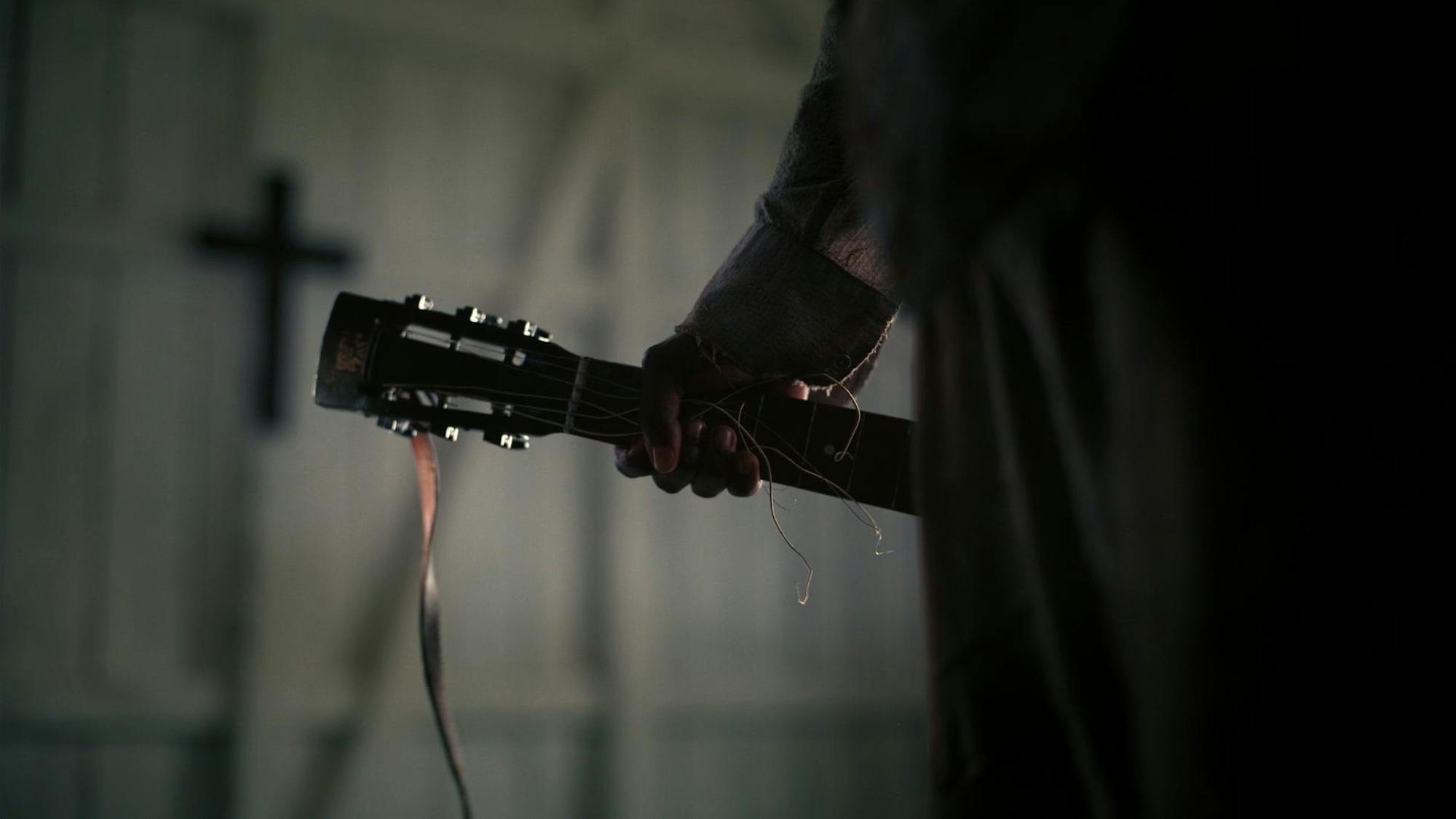
Throughout the rest of the discussion, the music of Sinners was repeatedly brought up as a powerful element of the film. Similar to Annie’s spirituality working in tandem with Sammie Moore’s relationship with Christianity, the music of Sinners works as a connecting and uniting force between the past and present of Black culture and identity. Most notably, the scene in the juke joint of Sammie playing music, with the past, present and future coming together under the roof of the joint to dance. The film, which is composed by Ludwig Göransson, draws inspiration from gospel and blues while also utilizing Irish folk music for Remmick, the main villain of the film. The music of Sinners, because of this connection to the past, is not simply a background track for the film; it contributes to the narrative itself. The performance by Shea! and at the end of the evening, Baraka Kwa Wimbo, enhances these points. As the harmonious gospel of Baraka Kwa Wimbo or the keyboard and guitar of Shea! rang out through the multipurpose room, the music created an atmosphere that emphasized the power of music as cultural expression.
As the evening progressed, the discussion became a reflection on how art shapes a community. Dr. Xaka praised Sinners most for how challenging the film was. “There wasn’t a clear representation in the devil that would make the film really digestible,” said Dr. Xaka. She noted that Black stories are told in simplified ways and rarely allowed complex storytelling, as Sinners does. The film's complexity and quality are what draw people to both the film and its message. One attendee asked if Black voices are only listened to because their art is so good. Dr. Xaka gave a resounding yes, even referencing how Sammie’s powerful, captivating music drew in Remmick.
The event of BM4C, the nuanced discussion that took place and the power of Sinners, offered a reflection on the meeting that had formed. Cornell stands for “any Person … any Study,” to emphasize the sharing of intellectual and cultural expression by the students of the University. So eloquently said by an attendee of the event during the open Q&A, BM4C and the Africana Center is a “maker of a home away from home that could feel like a wilderness.” The forest of Cornell University was less daunting that night, as the BM4C, Seth Vieira, Dr. Xaka and all the people gathered together took a piece of art, in Sinners, and reflected on the intersection of culture, faith and music that a complex film is able to elicit from its viewers.
A film drew together students, musicians and professors to reflect on belief and storytelling. Seth Vieira reflected on the goals of the organization, saying, “It’s not about forcing belief, it’s about promoting understanding.” And like the gathering that night, Sinners does just that. A film with religion, spirituality and Hoodoo, mentioned all throughout, never once asks its viewers to adhere to any one religion. Instead, it asks people to reflect on their own experiences with whatever they believe in. Living within an empire, Sinners teaches us to ask: “What are you willing to risk to live in your truth? What might it cost you?” as stressed by Dr. Xaka. In that conversation, Sinners proved that true power in art does not tell you what to believe in; it gives people the strength to ask themselves what they truly believe in and what they are willing to sacrifice for that truth.
Brayden Rogers is a member of the Class of 2028 in the College of Arts and Sciences. He is a columnist for the Arts & Culture department and can be reached at brogers@cornellsun.com.