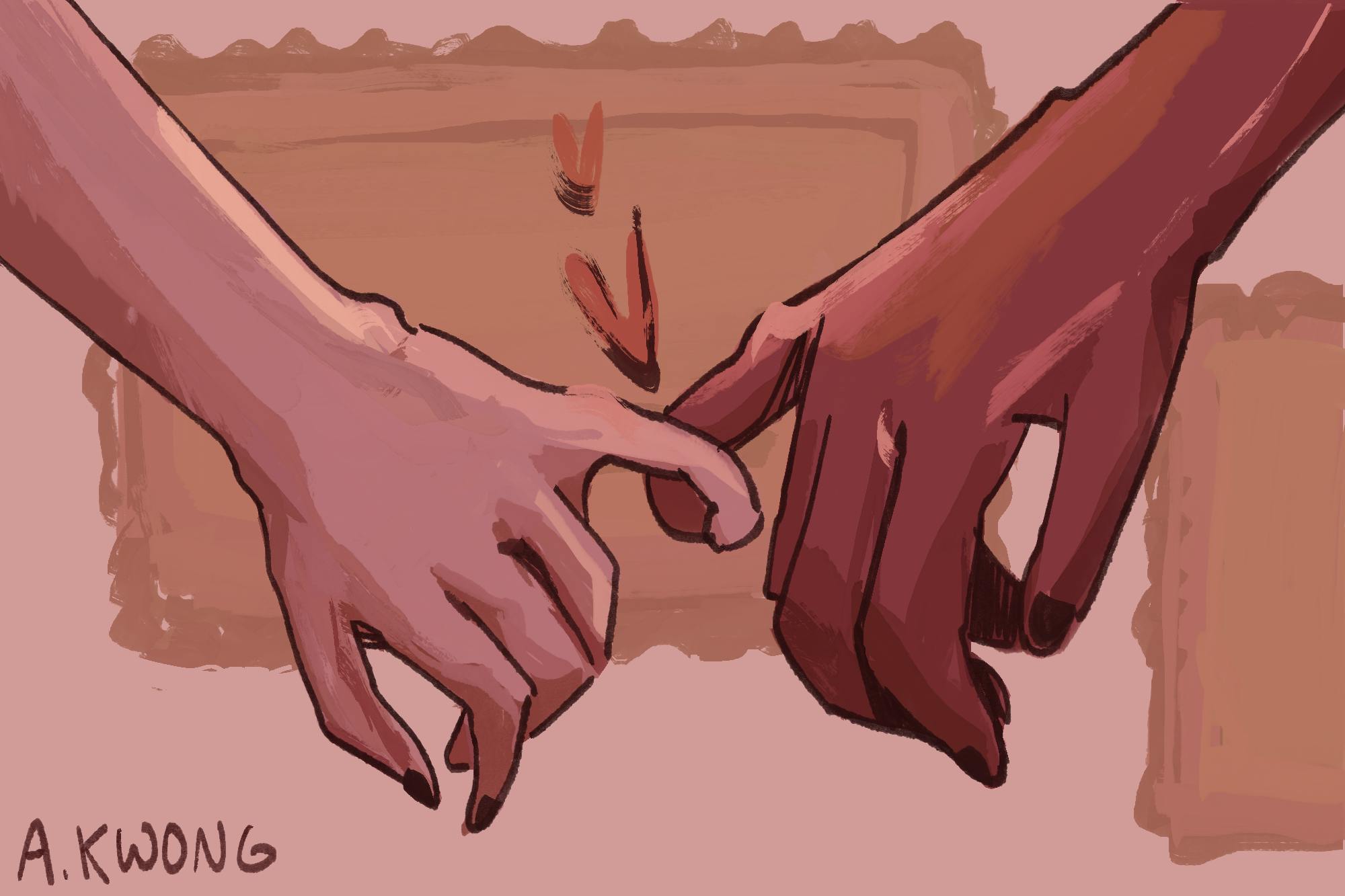
I recently listened to a Today, Explained podcast titled “Are boyfriends embarrassing?” that delved into the phenomenon of women hiding their boyfriends from online platforms or avoiding displaying them on social media. The podcast mentioned the original Vogue article “Is Having a Boyfriend Embarrassing Now?” from October 2025 that first addressed the trend of women decentering men, especially in their online presence. This is partially attributed to the idea of ‘heterofatalism’ or the increasingly prevalent opinion of straight women that heterosexual relationships are hopeless endeavors.
I have seen this myself as many popular influencers and even friends of mine have chosen not to post their boyfriends on Instagram. The rationale behind this choice includes centering one’s social presence around only themselves or an individual’s anxiety about ending a socially public relationship and needing to remove photos. Looking into this phenomenon reminded me of another social crisis called “the male loneliness epidemic” and made me curious if there was a tie between the two.
I first started hearing about the male loneliness epidemic over the course of the past year. There have been quite a few TikToks as well as some podcasts and Youtube videos exploring the topic. From my experience, this so-called epidemic is due to a growing awareness that many men our age are facing loneliness and social isolation, either due to having a limited number of friendships or a lack of real connection. This had me wondering: What is the source of increasing male loneliness? Are women and their increasing expectations for heterosexual relationships to blame?
In order to answer these questions, I first wanted to find some statistics to better understand the trends I have seen. Recent polls accumulated by the American Institute for Boys and Men show that 25% of men aged 15-34 report feelings of loneliness compared to 18% of women. They also reported that men are more likely to report feeling disconnected. As for the impact of women on male loneliness, I find that women decentering relationships is somewhat rooted in the fact that more women are pursuing higher education. According to Pew Research Center, 47% of American women, ages 25-34, hold a college degree compared to only 37% of men of the same age range. A recently published article from the Los Angeles Times also reports women outnumbering men in medical, law and vet schools across the country.
With women taking their careers more seriously, they have shifted away from a historical dependence on finding a husband for financial security. Removing this dynamic from heterosexual relationships has complicated implications. What women are looking for from a male partner has changed, forcing couples to define new roles for themselves within their relationships. If women are able to provide for themselves, they are less likely to depend on a man for purely financial gain. Women may not want to put a substantial amount of time and effort into a relationship when they have their own accomplishments to focus on. This has led to a disparity between men and women, with The Wall Street Journal reporting that only 34% of single women are looking for a serious relationship compared to 54% of single men. This mindset supports the idea of heterofatalism as women are finding fulfillment in other areas of their lives. Posting their boyfriends less on social media is just one manifestation of this shift in thinking.
Where does this leave men? Men don’t have a rulebook for this new reality. Their fathers were the breadwinners and gender roles were clearly predetermined. Now, their roles are much more fluid as women take on responsibilities outside the household and men are expected to play a larger part in household tasks and child rearing. In order to revive faith in the success of heterosexual relationships, men need to acknowledge the new goals and expectations of women, and women need to understand that men may not know where to start. In this new age of progression towards gender equality, there is going to be a transition period for both men and women as they discover how to have successful and equal partnerships. This will take some grace from both genders as we as a society navigate through unchartered territories.
Emma Robinson is a member of the Class of 2027 in the College of Arts and Sciences. She is a staff writer for the Arts & Culture department and can be reached at erobinson@cornellsun.com.