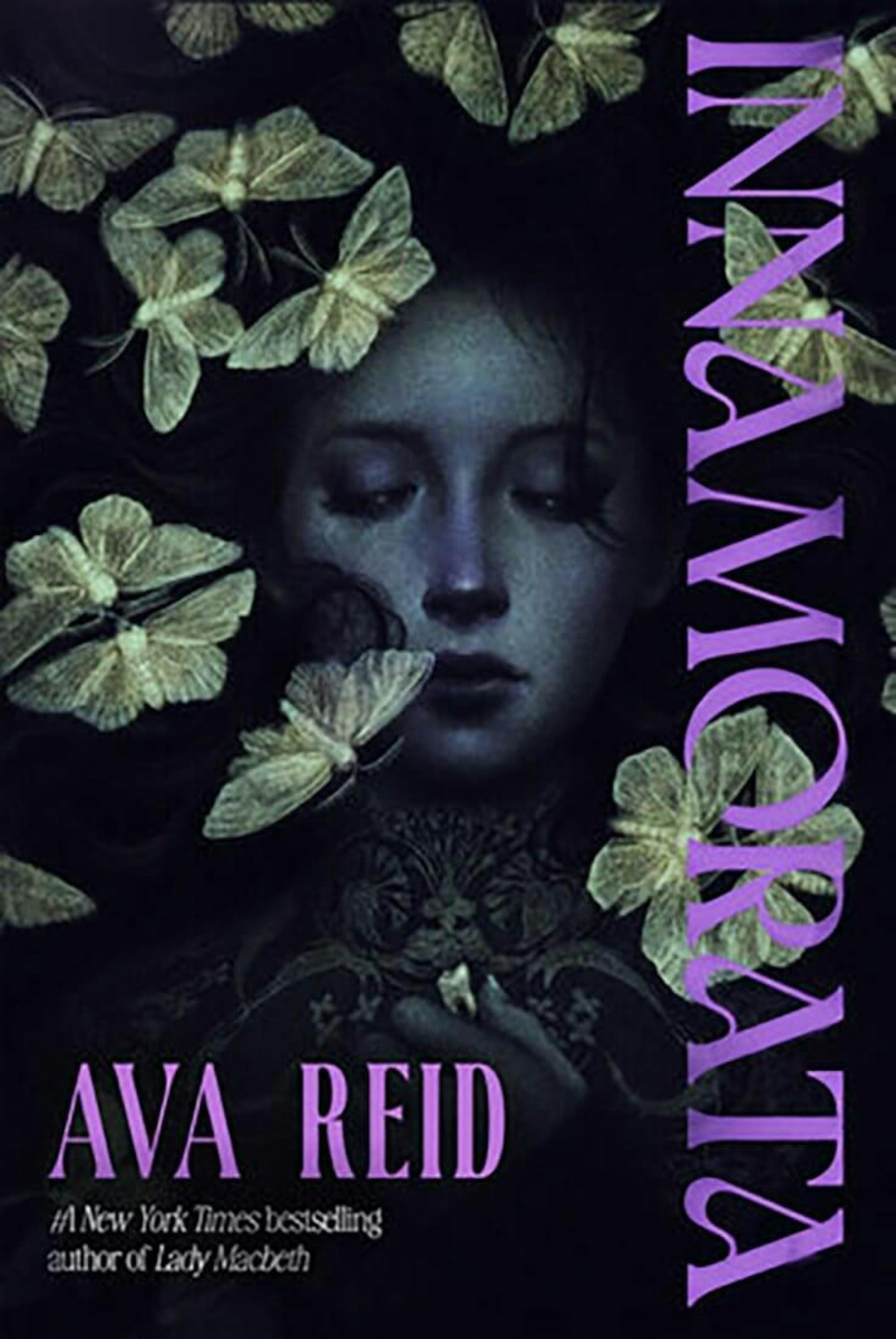
Ava Reid's new adult novel Innamorata is a haunting gothic masterpiece that I loved to ruination. It felt like a secret: a tale collected and stored by the stone walls of an ancient castle whispered to passersby in the fading light of dusk. It was something meant to remain hidden, covered in dust and banished to the back of a cabinet. Ava Reid brings the tale out of the dark and into a lurid light that is both enchanting and horrifying.
The story follows Lady Agnes, a silent young woman who exists in the shadow of her cousin, Marozia, and the posthumous memory of her grandmother, Adele-Blanche. Adele-Blanche was the former Mistress of Teeth, a leader of one of the seven noble houses of Drepane. Inspired by Venetian-occupied Crete, Drepane is an island structured through base anatomization — there is one house for each part. The novel opens with Adele-Blanche's desecration — the methodical removal of her blood, eyes, teeth, heart, lungs, flesh and bones. In Drepane, desecration is the law; before the seven noble houses, death reigned upon the island. A plague ravished the population until death itself was conquered with magic. Necromancy brought the dead back stronger, but their ravenings were insatiable and eventually the blight spread beyond the island and onto the shores of Seraph. It is not long before the blade of a conqueror snuffed out necromancy and all who know its secrets were slain. But many years later, Lady Agnes harbors a secret: Adele-Blance raised her to be the one to recover death magic and bring honor back to the noble House of Teeth. First, she must gain entry to Castle Crudele, the ancient home of the conqueror and current home to a tyrant king and golden prince. But Adele-Blanche is dead and Lady Agnes’ life is her own. Castle Crudele may hold more than the trials her grandmother bred her to undertake.
Let me start by saying that I began this book during a lunch break — a decision I would strongly advise against. Ava Reid is one of my favorite authors because her writing is positively bewitching. Her imagery has the power to wrench readers through the page so they experience the story alongside her characters. With Innamorata, this is a double edged sword: One can revel in the decadence afforded to Drepane's royalty, or feel skin torn to bone and the rabid hunger for putrified entrails. Much of Reid's imagery is unsettling and somatic, often likening lips to worms, tongues to dead things and garden paths to innards. This decaying imagery festers, breeding maggots that writhe between the lines and seep into the reader's bones. Innamorata hides nothing, instead taking a magnifying glass to all that we would prefer to turn away from. Reid demands that we look, that our stomachs flip and our lips curl in disdain. She reminds us what humanity looks like with its skin peeled wide open like the petals of a moldering rose.
Throughout the novel, I adored how lived-in the world felt — from the way the flowers in bloom left a cast of pollen on the ground to the weight of history and the fear of its repetition. One of my favorite scenes describes how moths used to be used in an earlier war to convey messages. They were bred to have varying colorings and patterns to signify different plans of attack or even emotions. For the silent Lady Agnes, this is her first reacquaintance with voice and it is both moving and creative.
Agnes’ silence is very intriguing. From the start, it feels less like an absence and more like a held breath. As readers, we often read in silence and thus reading Innamorata brought me closer to her — I felt her silence in my silence. I felt the power of the empty air like a whetted sword. For her, silence is borne of pain ignored and screams that meant nothing to those who heard them. But with silence, she could stun people in ways words could not. In this, she found power. Agnes’ journey with her voice, her past and her destiny were some of my favorite aspects of the book. Her character is one I could ache for and condemn in the same heartbeat. All the characters have such nuance and complexity that one could read the book thrice over and still find new perspectives and details. Even the chapter titles, which I adored, hold clues to untangle.
It is also important to note that Innamorata takes inspiration from the Italian epic poem “Orlando innamorato” by Matteo Maria Boiardo. Character names in Innamorata are drawn from this epic along with real historical figures. In this sense, much of the book felt like it was tumbling towards some unavoidable fate. Each character felt like an actor in a masque, unaware of the stage they tread but feeling the draw towards their fate nonetheless. This also led to some overly caricatured characters like the sluggard king and his indulgence as a metaphor for his vile abuse of power.
Innamorata also explores how one's life changes when they are no longer haunted by their past. I feel like this exploration was well done, but in a way that kept the reader in the dark regarding the machinations of the plot. Towards the end, the novel felt more like an open world sandbox for imagery and debauchery that strayed increasingly further away from discernible plot. The plot was still unfolding, just outside the awareness of the main characters. For many this may be intriguing, but for others it could feel like a betrayal. I feel like I was so consumed with the novel that it ceased to matter and I just let the tenebrous miasma sweep me away. Sometimes I found my eyes glued to the page in horror almost wanting to stop, but being caught in the snare of macabre fascination. All this being said, definitely check the trigger warnings carefully before committing to Innamorata and prepare to be transfixed and glutted on horror, tragedy, beauty and grotesquerie.
Thank you to Penguin Random House and NetGalley for an ARC of Innamorata!
Ayla Kruse Lawson is a member of the Class of 2027 in the College of Human Ecology. She is a staff writer for the Arts & Culture department and can be reached at akruselawson@cornellsun.com.