


Susan Henry, former dean of the College of Agriculture and Life Sciences, died on March 7 at 79 years old.
Henry served as the Ronald P. Lynch Dean of CALS from 2000 to 2010, overseeing the foundation of the Dyson School of Economics, and was the first woman to hold the position. She taught molecular biology and genetics during her tenure at Cornell until her retirement in 2020.
During her earlier career as a scientist, Henry made significant discoveries including the “Henry Regulatory Circuit” which are the mechanisms cells use to determine whether lipids are used for cell growth or stored as fat.
She was one of the first scientists to use the S. cerevisiae yeast as a model for studying biology, and her work provided insights into understanding cancer and obesity.
Today, 20% of pharmaceuticals including insulin, hepatitis and HPV are derived from the yeast she researched.
“She was one of the smartest people I’ve ever met, and that’s one of the reasons I worked in her lab for so long,” said Stephen Jesch, who served as a postdoctoral associate and senior research associate in Henry’s lab for over 15 years, said in an interview with the Cornell Chronicle.
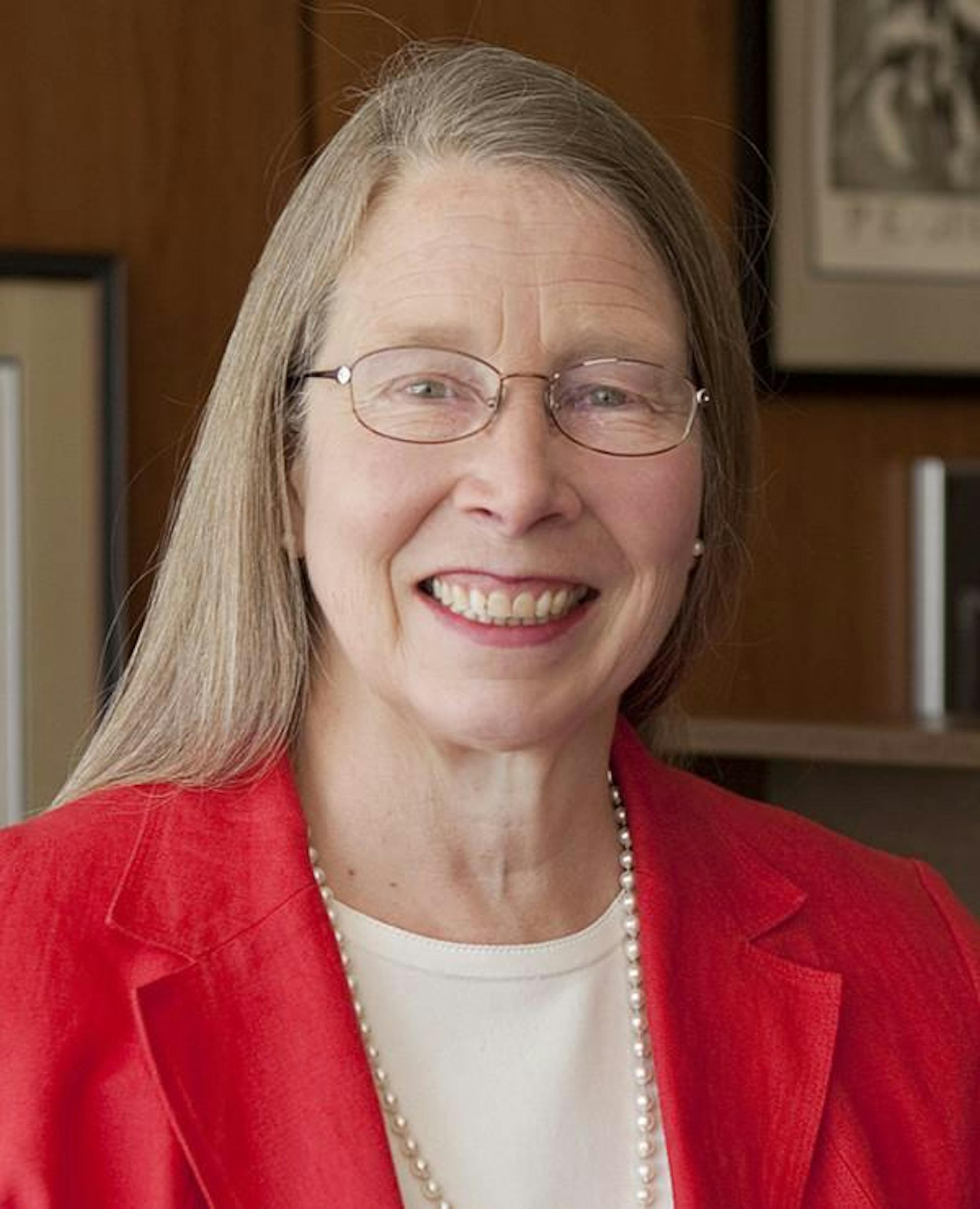
Henry taught molecular biology and genetics while at Cornell. (Courtesy of Cornell University)
As dean of CALS, Henry named the establishment of the Dyson School of Applied Economics and Management as one of her “proudest achievements,” according to the Chronicle. She also oversaw the development of four new majors within viticulture and enology, agricultural sciences and information sciences.
Henry was also present for the creation of the Weill Institute for Cell and Molecular Biology, The Cornell Teaching Winery, the Riley-Robb Biofuels Laboratory and renovations to Mann Library.
“Beyond her professional contributions, Susan was a valued mentor and a dear friend,” said Prof. Scott Emr, molecular biology and genetics, who is the previous founding director for the Weill Institute for Cell and Molecular Biology, an interview with the Chronicle. “I deeply miss our time together – especially Susan’s honesty, openness and genuine friendship.”
Henry was born in Virginia and attended high school in the D.C. area.
She graduated from the University of Maryland with a bachelor’s degree in zoology in 1968, and obtained her Ph.D. in genetics from the University of California, Berkeley in 1971. She then went on to complete postdoctoral research at Brandeis University and join faculty at the Albert Einstein College of Medicine in New York City from 1972 to 1988, when she was hired as Dean of the Sciences at Carnegie Mellon University. She would work there until being hired at Cornell in 2000.
Henry was also the winner of the National Institute of Health’s merit award for “outstanding” research, served as a member of a national advisory council for the NIH and also chaired an NIH committee focused on the health of minority populations.
Henry is survived by her two children, Rebecca Alice Henry and Joshua Armstrong Henry, M.S. ‘03, Ph.D. ‘05.
Correction, March 26, 10:45 a.m.: This article was updated to correct the timeline of Henry's career to include that she worked at the Albert Einstein College of Medicine in New York City before being hired at Carnegie Mellon University.

Everett Chambala is a member of the Class of 2027 in the School of Industrial and Labor Relations. He is an assistant news editor for the 144th Editorial Board and can be reached at echambala@cornellsun.com.


