Disclaimer: This article contains spoilers for Wuthering Heights (2026).
PSA: ‘Morally gray’ is not a healthy character trait, and domestic violence is never sexy. There is a fine line between love and obsession, and Wuthering Heights remains firmly in the latter category. The movie is based on Emily Brontë’s classic novel by the same name and is essentially an uncomfortable display of aggression masquerading as a slow burn love story. Timing the release for Valentine’s Day, these filmmakers clearly wanted to produce the romance of the year, but they critically misread the source material and wound up romanticizing infidelity and coercion instead.
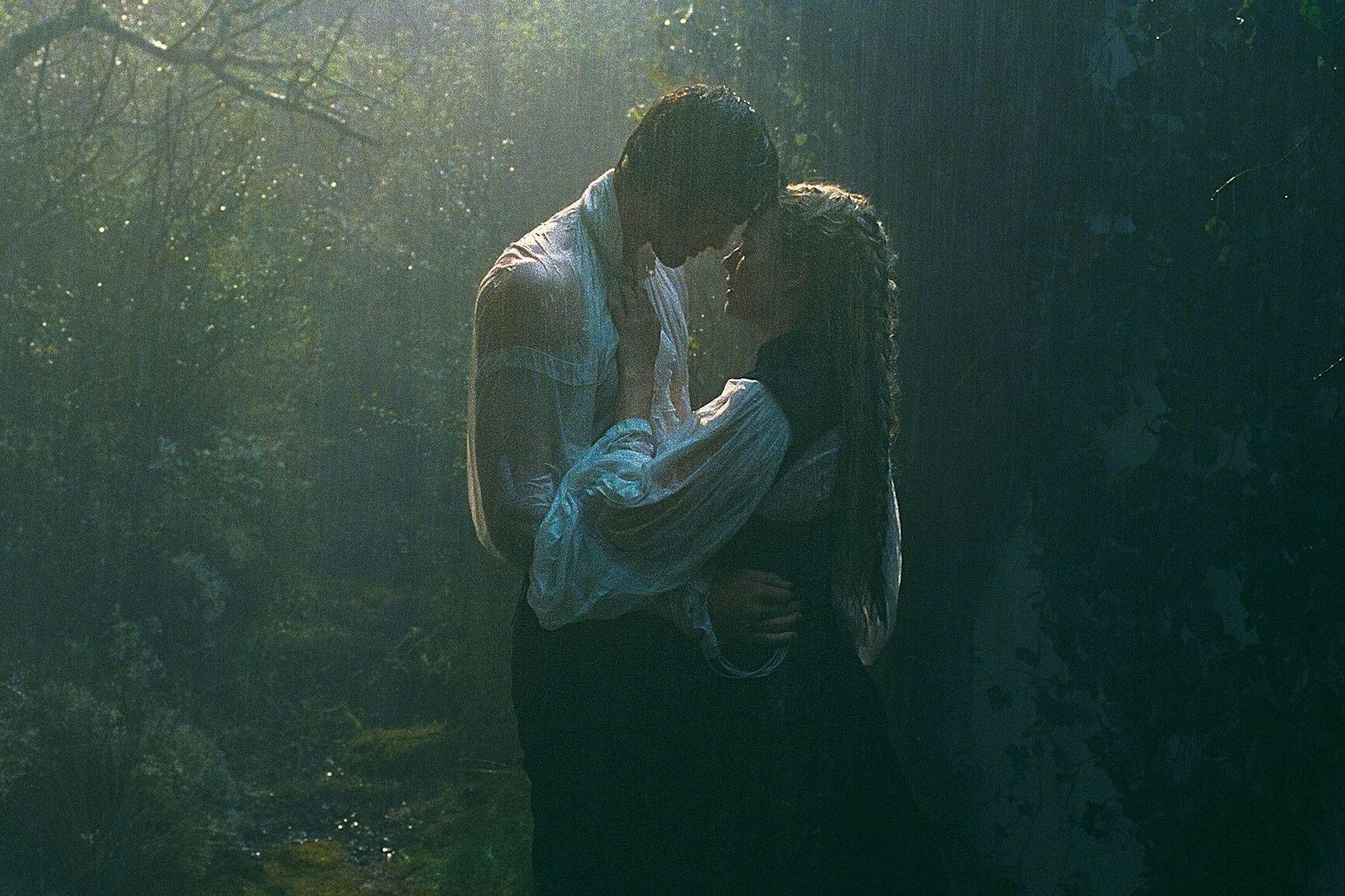
Wuthering Heights takes place in the moors of England in the late 1700s at the titular estate, where young Catherine Earnshaw (Charlotte Mellington) lives with her father. The family takes in an orphan whom Catherine names Heathcliff (Owen Cooper), and the two become fast, inseparable friends. As they grow up, Cathy’s father becomes lost in violent, gambling tendencies and the family falls into poverty, bringing adult Cathy and Heathcliff (Margot Robbie and Jacob Elordi) closer together. They develop a romantic bond, taunting the audience with the growing tension between them — tension that doesn’t break until after Cathy announces her engagement to Edgar Linton (Shazad Latif), their wealthy neighbor who lives nearby at an estate called Thrushcross Grange. She had previously met Edgar while spying on him and his ward, Isabella (Alison Oliver), and agreed to marry him in an attempt to bring her family out of poverty. Her adoration for Heathcliff stays constant, even after years of being apart, so when Heathcliff visits her new estate after being abroad, nothing (not even Cathy’s husband) stands in the way of their carnal desire. When it is revealed that Cathy is pregnant with Edgar’s child, Heathcliff expresses in a heated fit of passion that he would kill Edgar, alerting Cathy to the extent of his aggressive tendencies and prompting her to stop seeing him. Out of spite, Heathcliff instead pursues Isabella, Cathy’s sister-in-law, coercing the younger girl into marriage by taking advantage of her sexual attraction to him. This sends Cathy spiraling into a sickly depression, which leads to a miscarriage and her death at the end of the movie.
The framing of the movie was misleading, capitalizing on only the romantic snapshots of a much longer and more nuanced novel. Wuthering Heights is not a love story, it is a tale of obsession and regrets that happens to include the words, ‘I love you.’ Canonically, Heathcliff is an incredibly violent man throughout his life, easily provoked and abusive to his servants and family. As if that isn’t enough, he’s also intrinsically lacking in morals, as is visible in his treatment of Isabella. In the book, she is a victim of his deception and is lured into marriage without knowing the type of man she is marrying, whereas in the movie she willingly enters this marriage for the express purpose of sexual gratification, minimizing Brontë’s nuanced characterization of her and emphasizing the movie’s unnecessary eroticism.
Trailers and advertisements for the movie frame Elordi’s Heathcliff as an absolute dreamboat, with quick shots teasing heavy breathing and bare skin to entice the Bridgerton audience (if you know, you know), and calling the movie “The Greatest Love Story of All Time.” The perverted nature of this movie was certainly a selling point and was uncomfortably, constantly present. Indeed, filmmakers took full advantage of the movie’s R rating, with many scenes bordering on pornography. Still, this fiery passion stood at odds with the absurdist, psychologically unsettling theme, making the entire film feel a bit like evil Alice in Wonderland with sex thrown in.
Alice in Wonderland is the best way for me to describe the cinematographic filming style. Nothing feels quite right in this universe, with latex skirts, rooms made entirely out of crystal and vivid colors in a desolate wasteland. A heavy distinction between the dark tones and shadows of Wuthering Heights and the glittering vibrancy of Thrushcross Grange make the world feel divided in half, with all of the land in between the two estates unusually stark and barren. The film focuses primarily on the color red and the implication of blood, which provides a striking contrast to the often dull and sterile backgrounds. Blood splashing against a white wall or Cathy’s red skirts billowing over a monochrome floor provide a jarring relief from the eternal darkness of the Heights and contribute some satisfying, macabre symbolism for my fellow literary analysts.
Although I was generally dissatisfied with the treatment of the plot, I would be remiss not to applaud the distinct cinematic style of writer and director Emerald Fennell, whose direction you may recognize from the 2023 film Saltburn, and the similarities between the two movies do not stop with Jacob Elordi in a leading role. Both films are more of a psychological thriller than anything else, blending romantic tension with a morbid fetishization of death. Wuthering Heights exists as a series of artistic frames, as if the aforementioned themes were prompts for a piece of contemporary art. The vast majority of the shots are either extreme close-ups of a character's face, evoking a tightly uncomfortable intimacy, or wide landscape shots that paint a dramatic picture and prioritize the expansive scenery over an actor’s particular features.
All that to say, Wuthering Heights was never meant to be the greatest love story of all time. Emily Brontë wrote a complex tale of yearning, yes, but of violence and incest too. The best way to enjoy this movie is to view it as a piece of provocative art rather than a faithful interpretation of classic literature. And if your friends walk away from this movie singing Heathcliff’s praises, please check in on them.

Gia Lish is a member of the Class of 2029 in the College of Arts and Sciences. She is a staff writer for the Arts & Culture department and can be reached at glish@cornellsun.com.