For a planet that has never before felt more connected, we seem to be becoming more unmoored by the hour.
Our phones open doors into the lives of friends and strangers alike. Power lines and satellites stitch continents together into a global cultural patchwork, offering scandals, news and funny animal videos at our fingertips. And yet, something about this endless access fatigues us. Tired of permeability and openness, we clam up inward, the music following close behind. Tones darken, lyrics stop detonating and begin to confess, wrapped in the gentle strokes of a singer-songwriter’s guitar or hazy bedroom-pop textures.
This transformation is perhaps most notable — and most surprising — when it pertains to metal. It is strange to imagine the genre that has long run on anger and teenage rebellion powered by anything else, or represented by anyone other than the noble lineage of ever-explosive, unpredictably charismatic frontmen. The early 2000s and 2010s offered no shortage of personalities in the arena, from Rammstein’s Till Lindemann to Bring Me The Horizon’s Oli Sykes, all embodying the same idea of a musician: a mobile pyrotechnics show, a natural disaster contained in a human body. These frontmen represented the archetypal unsatisfied youth reaching for more. Crying for visibility and, in many cases, political change, they were heralds and messiahs at once, offering something not typically provided by the polite everyday world — a safe space to, in the words of Tears for Fears, shout, shout, let it all out.
But as the calendar tipped into the 2020s, the restlessness soured. The children of yesterday, no longer proudly parading around in anarchy-themed shirts, grew into disillusioned adults — less eager for revolution, more afraid of losing what they already have. Inward-facing anxiety replaced righteous rage, and slowly, heavier music genres traded the all-encompassing question of ‘Is there something wrong with the world?’ for a quieter, more naked possibility:
Is there something wrong with me?
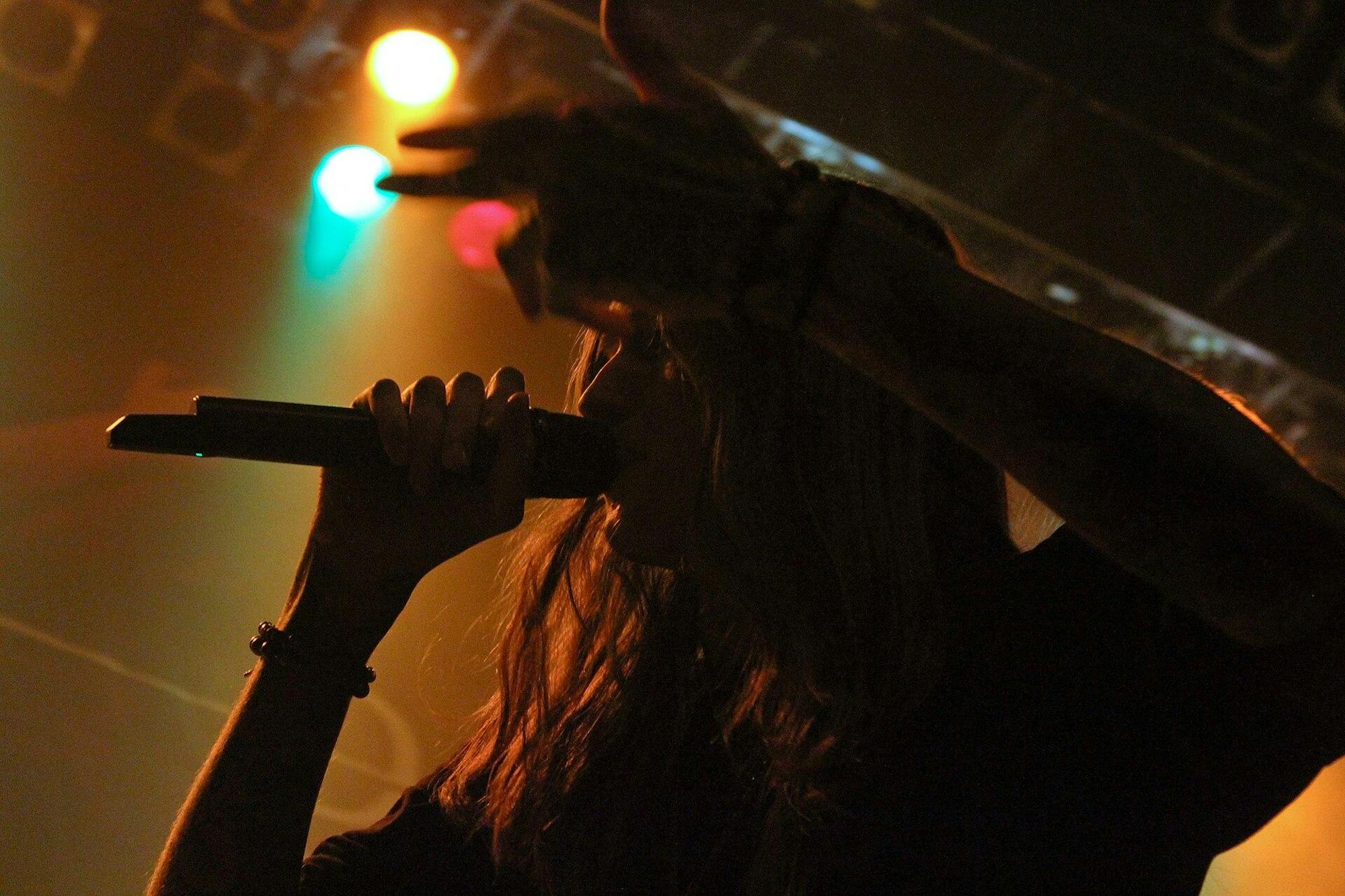
This shift marked a transformation in nearly everything, from lyrics to aesthetics. Personal narratives were slowly but surely replaced with theatrical personas and concept albums narrating imaginary empires rather than the real ones. The new wave of alternative metal bands, admittedly, barely behaves like typical bands at all. Sleep Token refuse interviews entirely and, if not for internet sleuthing, might have remained anonymous indefinitely. Bad Omens’ Noah Sebastian delivers none of the expected metal-vocalist theatrics: Half-lit by projection, he sings while strolling back and forth with one hand in his pocket, as if caught somewhere between a warm-up and the formation of a private thought.
And that restraint resonated. The new wave of performers arrived at a cultural hinge moment: Older alternative metalheads grew weary of feeling out loud, while younger faithful, somewhere along their journey through the internet, became quietly convinced that feeling out loud was cringe. In this economy of emotion, a new type of artist — one who feels deeply without fully knowing how to show it — can not only exist, but thrive. Opaqueness becomes both currency and performance strategy. Even stage design reinforces the same idea. Where a vocalist was once held in a beam of light, like the centerpiece of a rich dinner table, they now often move in half-shadows, visually indistinguishable from the rest of the band. The choice reflects a broader duality of modern life: The more visibility we are granted, the less we want to reveal; the more fame expands, the less singular one feels, surrounded by pervasive stardom.
But is collective anxiety productive? Where the frontman’s job was once to sublimate the crowd’s energy and detonate, it is now almost the opposite — to sit on stage and imply, without saying it outright, ‘I’m just like you.’ No longer a messiah or a herald, the musician becomes a companion in life’s hardships rather than a guiding light or a braver alter ego. While this may cultivate a healthier relationship with fame than the early-2000s celebrity machine allowed, it offers little in the way of escape. The burden of transformation, once carried by the frontman, is now returned back to the audience, thus creating a cozy — yet ultimately not comforting — echo chamber of feeling.
It may, however, also be true that the needs of a listener have simply shifted. While a performer can no longer provide salvation, they are not expected to offer it in the first place. When the public cannot trust politicians or even itself, why would it trust an artist? And yet, something is undeniably lost in the exchange. When artists stop pretending to be larger than life, the fantasy of transcendence, chased by humanity from its very inception, disappears with them. Recognition replaces transformation; companionship replaces confrontation. The modern alternative metal frontman does not promise to change the world or even himself. He promises only that he, too, is uncertain. It is a humbler offering, and, while in many ways it might be a truer one, it still leaves the audience to decide what to do with their own unrest.

Arina Zadvornaya is a graduate student in the Duffield College of Engineering. She is a columnist for the Arts & Culture department and can be reached at az499@cornell.edu.