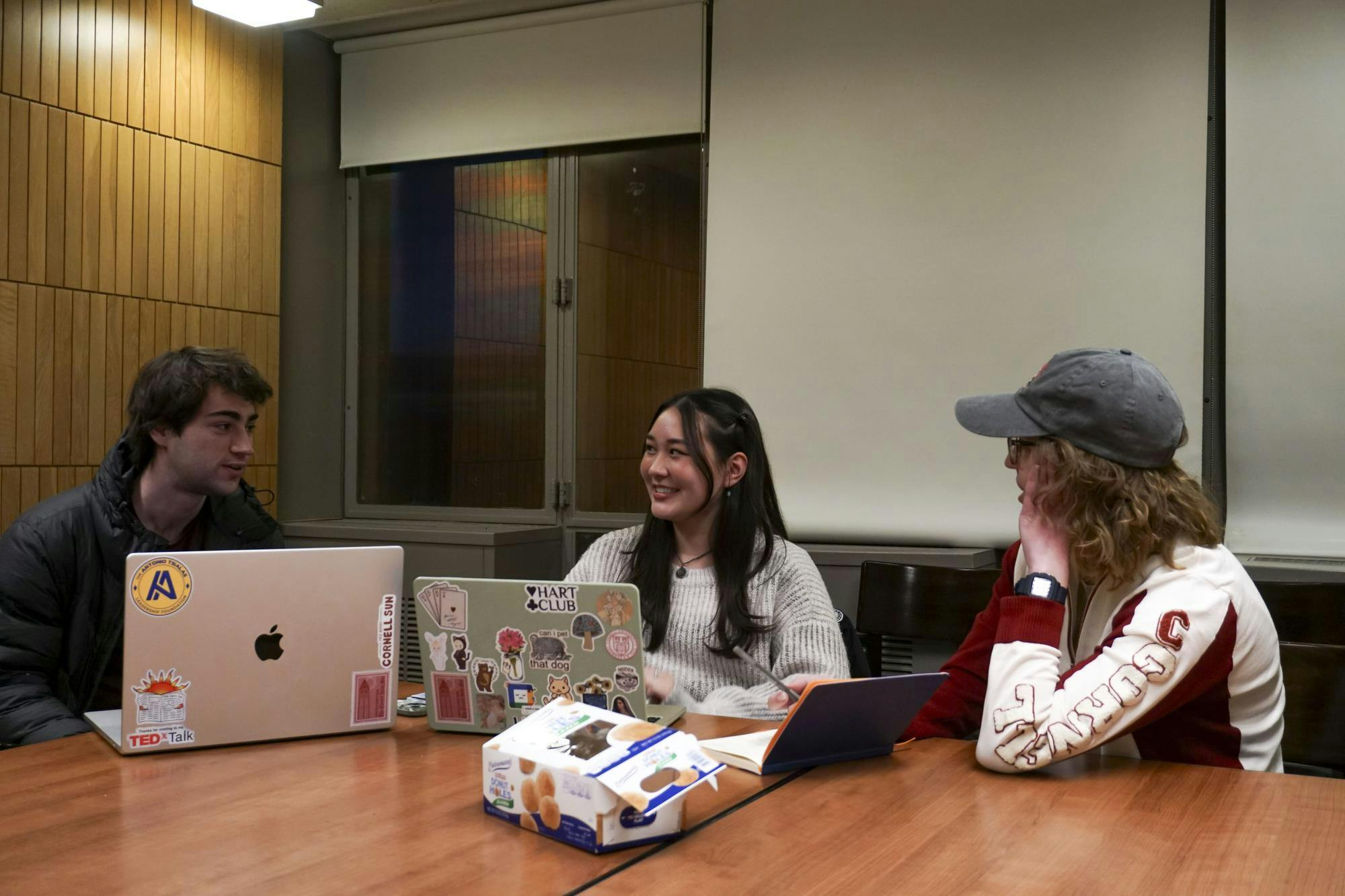
Debates surrounding representation in media have pervaded pop culture conversations. Whether it is reactions to casting choices for live-action remakes or book adaptations, diversity in film or the perpetuation of stereotypes in art, we must discuss representation’s role in the media we consume. The Sun Round-Table series welcomes writers from subjective sections at The Sun to examine different perspectives on one topic, a chance for writers to stop typing and start talking. On Feb. 2, writers from Arts & Culture came together and discussed globalization, Heated Rivalry and the value of seeing yourself on screen.
Arina Zadvornaya, a graduate student in the Duffield College of Engineering, began the conversation with representation behind the camera. When the credits roll at the end of the movie, it’s easy to neglect the work of those beyond the director and screenwriter. Zadvornaya stated, “Representation behind the camera seems like such an elusive concept to me. … These roles need to be acknowledged in the first place … not just kind of background noise.” The Academy introduced the Achievement in Casting Oscar that will be awarded for the first time this March. This award recognizes the work of casting directors who often make or break a production. When we celebrate and recognize the power of behind-the-scenes representation, we make way for substantial on-screen representation.
Speaking of casting, recent choices for book adaptations were raised during the conversation. Percy Jackson and the Olympians, the Disney+ television series based on the series by Rick Riordan, caused internet outrage over the casting for Annabeth Chase. The character is white in the novel, but the actress in the TV show, Leah Jeffries, is Black. Riordan responded to the backlash by highlighting the underlying racism. The Bridgerton Netflix series, adapted from the novels by Julia Quinn, features white characters in the books, but the TV series has incorporated multiple races and ethnic identities. More recently, Emerald Fennell’s Wuthering Heights stars Jacob Elordi, a white actor from Australia, as Heathcliff, a character who is ‘othered’ in the novel, suggesting some race or ethnicity other than white. These casting changes from book to screen raise questions around the superficiality of representation. Melissa Moon ’28 asked, “If a character is written as white originally and they're cast as a person of color, how does that change their portrayal in the show? Can they be superimposed onto the original character without any accommodation for that cultural difference?” The room answered by identifying the “spectrum of tokenism to invisible heritage,” as Moon calls it. Forms of representation in media fall across this spectrum, rather than being distinctly ‘bad’ or ‘good.’ Zadvornaya asked, “Would it still be a valuable representation [in Bridgerton] if they were not doing such a great job differentiating between Korean and Chinese cultures? Is it better than just casting a white lead?” Bridgerton Season 4 features the female lead character, Sophie Baek, who is Korean. Zadvornaya clarified that if the production is not doing a good job of showcasing the nuances of certain cultures, it’s possibly better to go the “safe route” of just casting someone white. Moon responded that this falls on the aforementioned spectrum. She said, “If we’re talking about racial representation, there is merit to seeing people of different races on screen. Their identity does not have to be its whole plotline. I think them just being on screen is important, but at the same time, it’s the 21st century, and we have an obligation to be doing more.”
What does it mean for representation in media that we’re in the 21st century? Following the internet’s increased access to information, proper representation in media is expected. Representation takes many forms: racial, gender, neurodivergent, relationships (romantic and platonic). While online outrage may focus on race-conscious casting, many communities appreciate and value well-done representation in art. With such diversity in our communities, how can we present homogeneity in our art? Moon, who is Korean-American, said, “I would only see white women on my screens [as a kid] and that informed my beauty standard and aspirations in life. … There is a very deep merit in being able to see yourself represented on screen. … I think that’s really important for informing your self-perception.” Zadvornaya called representation a “resource.” Seeing yourself on screen or on page is essential for adolescents considering their future possibilities. For example, following Heated Rivalry’s popularity as a gay romance hockey show, hockey player Jesse Kortuem came out as gay and attributed his choice to the show’s success. Representation is both reactive to environments and constructive for future generations.
Tommy Welch ’26 brought in a negative form of representation. In the 1915 movie The Cheat, Japanese actor Sessue Hayakawa brands a white woman with a Japanese sign to indicate his ownership. This followed anti-Japanese sentiment in the U.S. after increased immigration from Japan to California. The California Alien Land Laws barred Japanese families from owning land. The Cheat supported these sentiments and depicted Japanese men as ‘cheats’ who would steal white women. This facilitates harmful stereotypes that may incite violence outside of the theater and affect cultural attitudes that inform policymaking. When the media supports racist and prejudiced thinking, it’s easier to normalize systemic oppression on the basis of race or ethnicity.
While there is no clear answer on how to go about proper representation in media, our writers covered why it’s valuable and important to discuss. The internet can debate whether or not Bridgerton is successful in integrating multiple cultures or if Rachel Reid properly wrote a Japanese-Canadian character in Heated Rivalry, but what’s significant is that we represent our social reality of living in diverse communities. As Welch describes, bad forms of representation can support racist policies and harmful stereotypes. The value of seeing yourself on screen, as Moon said, is undeniable. If it can happen in the book you’re reading or the show you’re watching, then maybe it can happen in your life too. That’s the point of impactful representation in media: Art can welcome all.

Sophia Romanov Imber is a member of the Class of 2028 in the College of Arts and Sciences. She is the associate editor for the 144th Editorial Board and was an assistant arts editor for the 143rd Editorial Board. She can be reached at sromanovimber@cornellsun.com.