Ah, the romantic comedy. We know them, we love them. The joys of narrative predictability and romantic clichés run rampant in a brief, one-to-two-hour-long journey in which two strangers follow their fates toward each other and happy endings are the rule. In the freshman writing seminar ENGL 1111: “Much Ado About Rom Coms,” the incredible Lecturer Emily Foster has kept this classic genre alive and well-revered in my head. There’s nothing quite like a slice-of-life story that’ll make you laugh and give you a satisfying ending, guaranteed to leave you hopeful and happy. Sadly, this enthusiasm has been lacking in the rom-com box office. The cozy, nostalgic, Nora Ephron-esque romantic comedy is seemingly done for, replaced by divisive films like Anyone But You and The Kissing Booth. In the 2010s and onwards, rom-coms have suffered from the very thing that had previously made them enjoyable — their predictability. The charm of a chance encounter suddenly felt like a forced meet-cute, and characters became less flawed, tumbling into boring archetypes of “good-girl-bad-boy” or “rich-guy-poor-girl.” What keeps predictability enjoyable is the circumstance it unfolds in. Basic tropes like friends-to-lovers, which we’ve seen hundreds of times, can feel brand new when the characters offer a certain relatability and the story is worthy of your undivided attention. Even if you know how it’ll end, you’re hooked on seeing how they’ll get there. All this to say, I was elated to realize that today's audiences and studios are refusing to let the beloved genre fade away, prioritizing a well-written plot and complex characters. Studios have turned to romance novels as a way to revive the rom-com hype, and who better to turn to than the queen of the modern rom-com, Emily Henry.
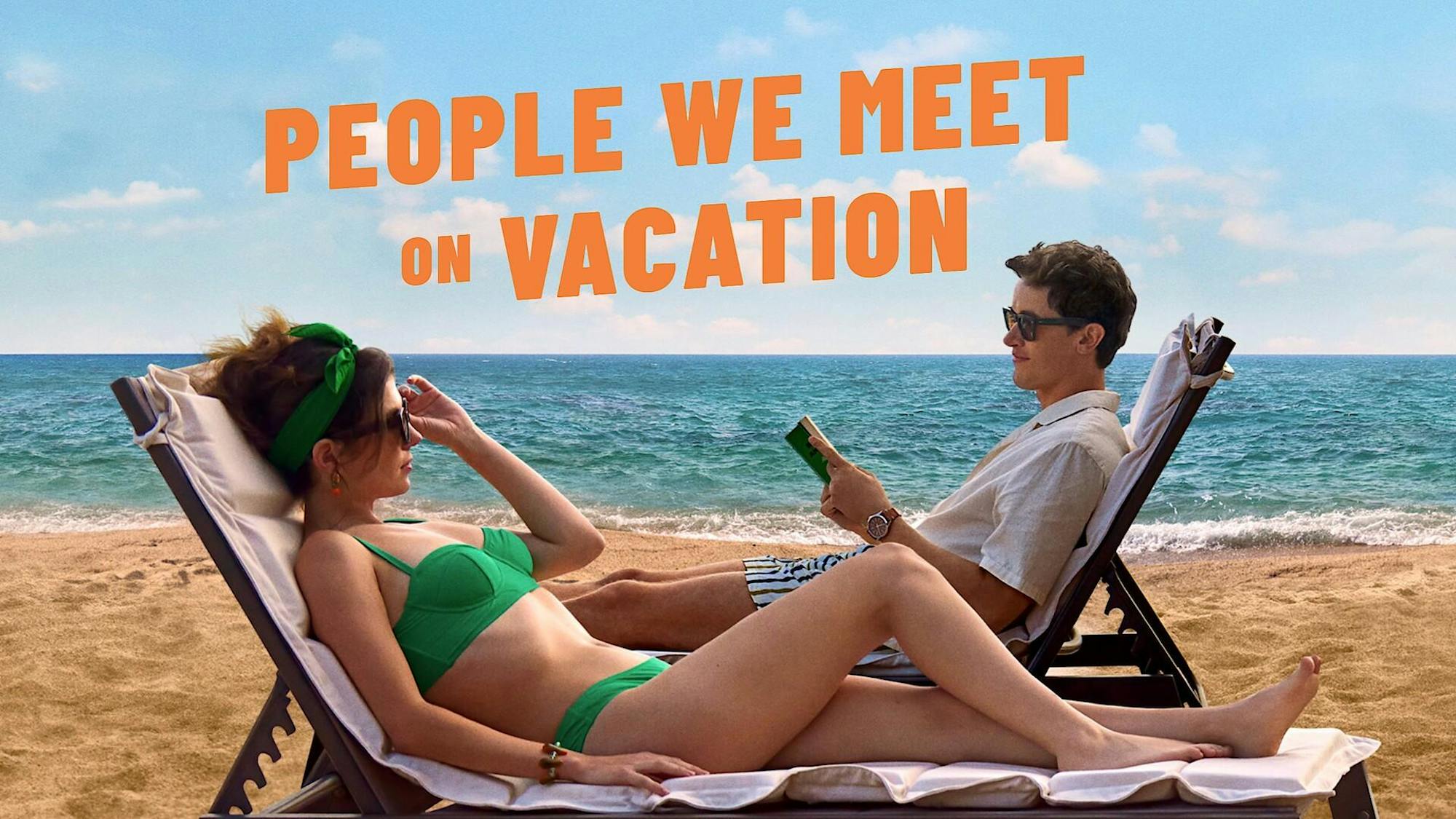
Earlier this year, on Jan. 9, the first of Emily Henry’s adaptations, People We Meet on Vacation, was released onto the streaming giant, Netflix, debuting to 17.2 million viewers over its launch weekend. The movie quickly became a must-watch among rom-com enjoyers with high praise linking it to When Harry Met Sally’s friends-to-lovers glory. The response to the movie has been mostly positive, with a steady 76% on Rotten Tomatoes and approval from many fans of the book. Much of the film’s accolades are traced to its genius casting of Tom Blyth as Alex and Emily Bader as Poppy. As someone who read the book prior to the movie's release, the casting was in fact phenomenal; Blyth perfectly mastered Alex’s balance between stoicism and oddness, and Bader’s Poppy embodied, as the actress said in an interview at the premiere, her “muchness” in a beautiful, moving way.
Most issues with the film have been tied to its rapid pacing and merging of moments that were originally spread out across the 300 pages and 25 chapters. The book covers ten individual summer trips Poppy and Alex take, providing thorough time for pacing, proper build-up, and big moments that take up their allotted space on the page. However, when these moments such as the Tuscany trip — when Poppy has a pregnancy scare — or the Croatia trip — where Poppy and Alex share their first kiss — were combined in the movie to save space and time, readers were left disappointed, and non-readers faced whiplash with the fast pacing. Consolidating chapters into scenes can’t be an easy job, but when handling such beloved characters and novels such as Emily Henry’s and the future of romantic comedies (albeit a little dramatic) hinging on the successes of these adaptations, making sure the readers' expectations are met, especially with such important moments, is crucial. I, for one, wouldn’t have minded a longer movie if it meant getting those small moments that build up the protagonist's characterization and make for a more satisfying ending.
Other audience critiques and possible solutions for People We Meet on Vacation are that it should have been a limited series in order for all the trips to properly unfold, or that a theatrical release would’ve made the film an event viewers could go to with their friends, harnessing that incredible communal experience of a rom-com on the big screen. I remember having an absolute blast watching Materialists in theaters with my friends, and I firmly believe that if People We Meet on Vacation had been released in theaters, it would’ve made more money and been talked about more.
People We Meet On Vacation was the perfect choice as the first book to adapt from Henry’s well-loved repertoire. It’s a book that is widely enjoyed, but hardly ever anyone’s Emily Henry favorite. Five of Henry’s six books have secured adaptation deals; Funny Story, Beach Read, Happy Place, and Book Lovers are to follow in People We Meet on Vacation’s footsteps. While I haven’t read all of Emily Henry’s books that are up for adaptation, I can attest to Beach Read and Funny Story as extraordinary romantic comedy novels that I cannot wait to see on screen. The adaptations carry a tall order given the new expectations set after the first one’s release, but early reports are promising, with Emily Henry herself writing the screenplay for Funny Story. Fans of the books have demonstrated great enthusiasm for these upcoming films by vehemently fan-casting their favorite characters with beloved actors (my favorite of these being Joe Keery as Miles from Funny Story, thanks for asking).
While the future of rom-coms was looking bleak for a while, have no fear, Emily Henry is here to save the day with her upcoming films. And hey, if they disappoint, at least we can always find comfort and giddy tropes in the books!
Paulina Delgado-Umpierre is a sophomore in the College of Arts and Sciences. She can be reached at pmd99@cornell.edu.

Paulina Delgado-Umpierre is a member of the Class of 2028 in the College of Arts and Sciences. She is a staff writer for the Arts & Culture department and can be reached at pdelgadoumpierre@cornellsun.com.