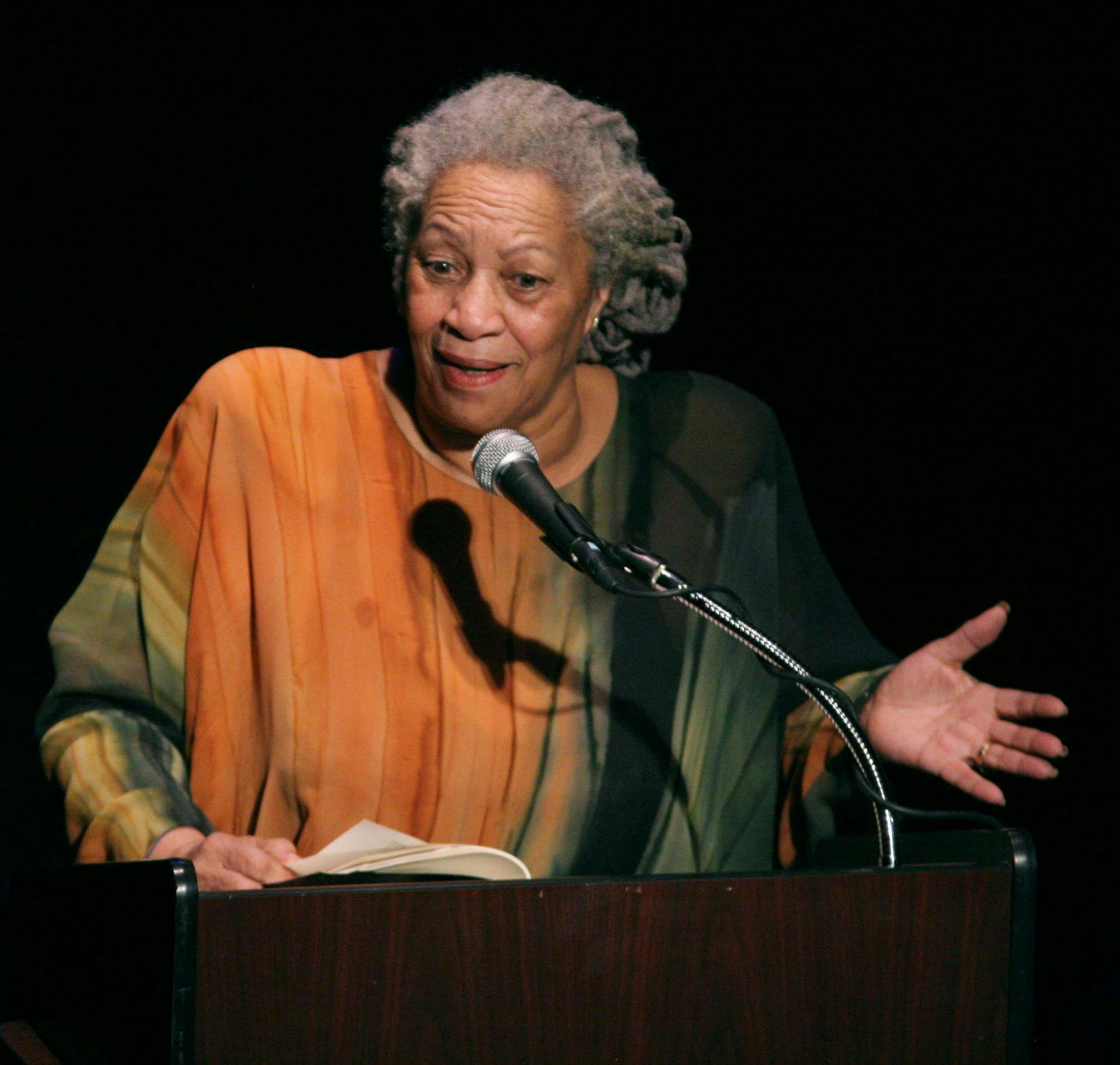
Although it's been nearly six years since her death, the words of Nobel Prize-winning author and Cornell Alumna Toni Morrison, M.A. '55, reverberate as though she were still here among us. They pulsate throughout conversations on Black feminist thought and in retellings of American history, especially in the stories that make us uncomfortable, as Morrison boldly recognized them as the ones most worth telling.
Born in 1931 as Chloe Ardelia Wofford, Morrison is remembered as one of the most formidable literary figures of the 20th century, having broken barriers at every stage of her career. She was the first Black woman to be a fiction editor at Random House in New York City, where she helped bring to publication the work of prominent Black activists such as Angela Davis and Toni Cade Bambara. In 1993, she became the first Black woman to receive the Nobel Prize in Literature, an accolade that marked only the beginning of wider recognition of her work. In 1996, she was selected by the National Endowment for the Humanities to deliver the Jefferson Lecture, the highest honor for achievement in the humanities offered by the federal government, and in 2012, President Barack Obama awarded her the Presidential Medal of Freedom, an honor that I feel was long overdue by that point.
I could spend the rest of this article just talking about the many awards Morrison received throughout her lifetime, and after; she truly and undeniably is a once-in-a-generation writer and activist, but her legacy extends beyond just her awards. Though she refrained from identifying with the label of ‘feminist’ while alive, Morrison’s work is largely regarded as foundational to modern Black feminist thought, having once stated, “I write for black women. We are not addressing the men, as some white female writers do. We are not attacking each other, as both black and white men do. Black women writers look at things with an unforgiving yet loving eye. They are writing to repossess, re-name, re-own." And that is exactly what Morrison accomplished with her work: repossessing the stories of Black womanhood that America was, and still is, too afraid to tell and often all too keen to censor.
This commitment is reflected even in Morrison’s earliest works: Her debut novel, The Bluest Eye, follows Pecola Breedlove as she struggles with internalized racism, believing her suffering would vanish if only she had blue eyes. There is no hesitation in how Morrison exposes how young Black girls are left defenseless against white supremacist beauty standards in a society built on the blood of exploited Black Americans. Morrison is equally unflinching in Beloved, which follows Sethe, a formerly enslaved woman, who, facing recapture, kills her infant daughter to avoid seeing her return to a life of bondage. When the child returns as a ghost to haunt Sethe, Beloved is revealed as far more than a horror story, as it focuses on the familial grief and inherited trauma of the Middle Passage and American slavery.
Morrison’s true genius lies in the fact that she never once allowed her readers the comfort of detachment; she recognized the stories she was telling were uncomfortable ones, as they reflected the uncomfortable and often brutal reality that Black women experience in a white-supremacist society. Morrison’s work holds us in a much-needed uncomfortable proximity to a true American history defined by slavery, capitalism and gender-based violence. This proximity cements Morrison as foundational to Black feminist thought today and reminds us that her words serve a dual purpose: they are as much an invitation as they are a warning. A warning not to forget the brutal stories that have shaped this nation. An invitation for Black and Brown creatives to remain present in an era defined by racial polarization and anti-Black discourse.
For Cornellians, celebrating 95 years of Toni Morrison should be more than an act of alumni pride; it should be an intentional reminder to examine our allyship and anti-Black bias within our community. Morrison offers a model of fearless truth-telling that we should all aspire to emulate for the next 95 years and beyond.

Leslie Monter-Casio is a member of the Class of 2028 in the Brooks School of Public Policy. They are a staff writer for the Arts & Culture department and can be reached at lmontercasio@cornellsun.com.