Get up off the couch and apply — the next Survivor could be you!
The above statement is Jeff Probst's common sentiment as the host and executive producer of CBS’s Survivor. As an avid viewer of Survivor, The Amazing Race, Big Brother and other reality competition shows, my message to most fans of the show is simple:
Sit back down on the couch.
These reality shows pride themselves on bringing people of all walks of life together to compete for a cash prize. It’s a showcase of “outwitting, outlasting and outplaying,” as Survivor says, or “expecting the unexpected,” as used by Julie Chen Moonves on Big Brother. These shows, however, have become all too predictable with recent casting trends. I am tired of seeing casts chock-full of exhausted superfan archetypes.
There are the ‘law-school nerds,’ ‘goofy-outcast women,’ ‘athletic-freak men’ and ‘loyal-to-a-fault allies.’ We are no longer seeing people on these shows. We are seeing pre-written characters. Many of these shows are edited to tell a story that engages the audience and keeps people coming back week after week, but I am less inclined to come back year after year when I keep seeing the exact same types of people on each reality competition show.
A lot of this comes down to recruiting. Casting directors used to say they would randomly sit next to someone on a plane, find them fascinating, and then cast them on the show (and yes that is a true story of how one contestant ended up on Survivor). These kinds of stories were staples across reality competition shows until recently. Recruits, as they are called, are the backbone of what makes reality competition shows, specifically Survivor, the shows that they are. These were people off the street who came for one thing: to win money. That’s what made the earlier seasons of the show so enticing; these people were cutthroat, they backstabbed, they were villains.
Nowadays, the casting directors of these reality shows tend to cast superfans. Superfans are avid watchers of a show who know the game, the common strategies and the challenges they may face while competing. A superfan plays the game in a vanilla way; they are too experienced. This gamesmanship of these reality shows has dried them up. The superfans play to win, but more so to live out their lifelong dream of being deserted on an island, locked in a house or traveling the world from yellow mat to yellow mat.
I hate superfans, and I love recruits.
Where superfans know the game going into it, recruits have to learn on the fly. Where superfans play the ‘optimal’ game they calculated from previous seasons, recruits fly by the seat of their pants, doing whatever gets them a day further. Superfans go onto the show and treat the host like a celebrity; recruits are there to win. These reality competitions have evolved a lot over the years — much of the ingenuity we see comes from recruits who haven't seen much of the show before. They have to come up with never-before-seen ideas to take out their fellow contestants. Superfans go with the tried and true methods, which makes every season feel the same.
This is an epidemic that plagues all of reality TV, none more than Survivor. Fans online calculated the contestant data for every season of the show and found that, of the last nine seasons, only one had a cast with more than three recruited contestants. This is a far reach from the earlier seasons, where seven of the previous nine seasons had three or more recruited contestants.
This trend doesn’t just change the show; it makes it worse.
These shows are becoming less about American people fighting on an island to be the Survivor and more about who knows how to ‘game the game.’ Players now brag about having homemade challenges in their backyards, practicing for years so that when they have to hang on to a wall by their fingertips, they are ready. This is the problem, it is no longer about outwitting, or expecting the unexpected or not getting u-turned.
With Survivor 50 less than a month away, I hope the show makes a change in its next era — realizing that the claim to fame of the show was making ordinary people step out of their comfort zones and truly survive. The show will continue to fail and inevitably be canceled if it continues the superfan epidemic that I, like so many other fans, hate. The solution: For Survivor to survive, it needs to stop casting fans who need to play, and start casting people who need to win.
Brayden Rogers is a sophomore in the College of Arts and Sciences. He can be reached at bjr236@cornell.edu.
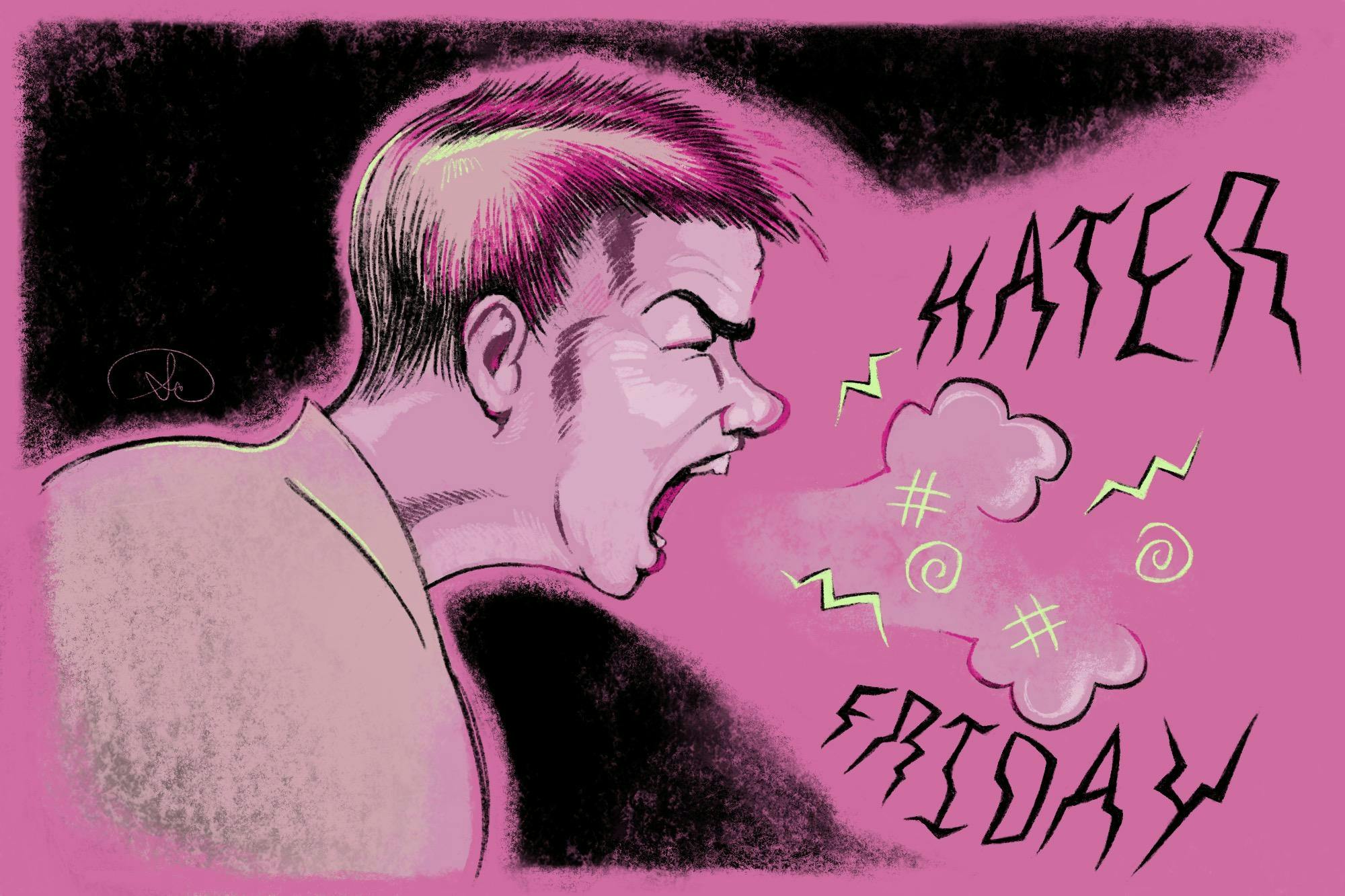
‘Hater Friday’ runs on Fridays and centers around critiquing media or culture.
Brayden Rogers is a member of the Class of 2028 in the College of Arts and Sciences. He is a columnist for the Arts & Culture department and can be reached at brogers@cornellsun.com.