


By now, I feel like it’s fair to say that the ‘whodunit’ mystery is a relatively tired formula in literature and film. While you could probably logic out an infinite number of plotlines with as many twists and turns as there are days in the year, finding ways to make an overdone genre feel fresh again is certainly a challenge. Though the same can be said for most other film tropes — slasher, sci-fi, survival, biopics, the list goes on — I don’t think that audiences will ever lose hope that the next murder mystery they watch will shock them in a completely new way. It is this craving for novelty that has continued to drive the whodunit industry forward since the 1900s, perhaps to exhaustion. Maybe I’m more cynical than I used to be, or maybe I just need to stop watching so much TV, but either way I’ve started to grow tired of the predictably placed red herrings and theatrical monologues of today’s whodunit mysteries.
Amidst the barrage of low-budget and tacky crime sagas that have graced my screen in the past five years, Rian Johnson’s Knives Out mysteries have finally started to make my brain hurt in a good way. While the greatest mystery of all lies in its bizarre name choice, the now-trilogy took off in 2019 with the release of Knives Out, a refreshing take on the classic drawing-room murder film. Knives Out works because of its ability to manipulate the traditional order of whodunit mechanics in an entirely new configuration. Paying homage to the most endearing traits of its predecessors, the film’s gothic setting is balanced by comedic critiques of the upper class and hilariously eccentric characters. In such a highly saturated genre, the success of the Knives Out trilogy (particularly its namesake) rests in its willingness to preserve the comforting foundation of the whodunit formula while finding ways to sneakily outsmart the audience. Whether that’s placing plot twists earlier than expected or engineering entire narrative reversals, the Knives Out franchise has yet to fail me in terms of its shock factor.
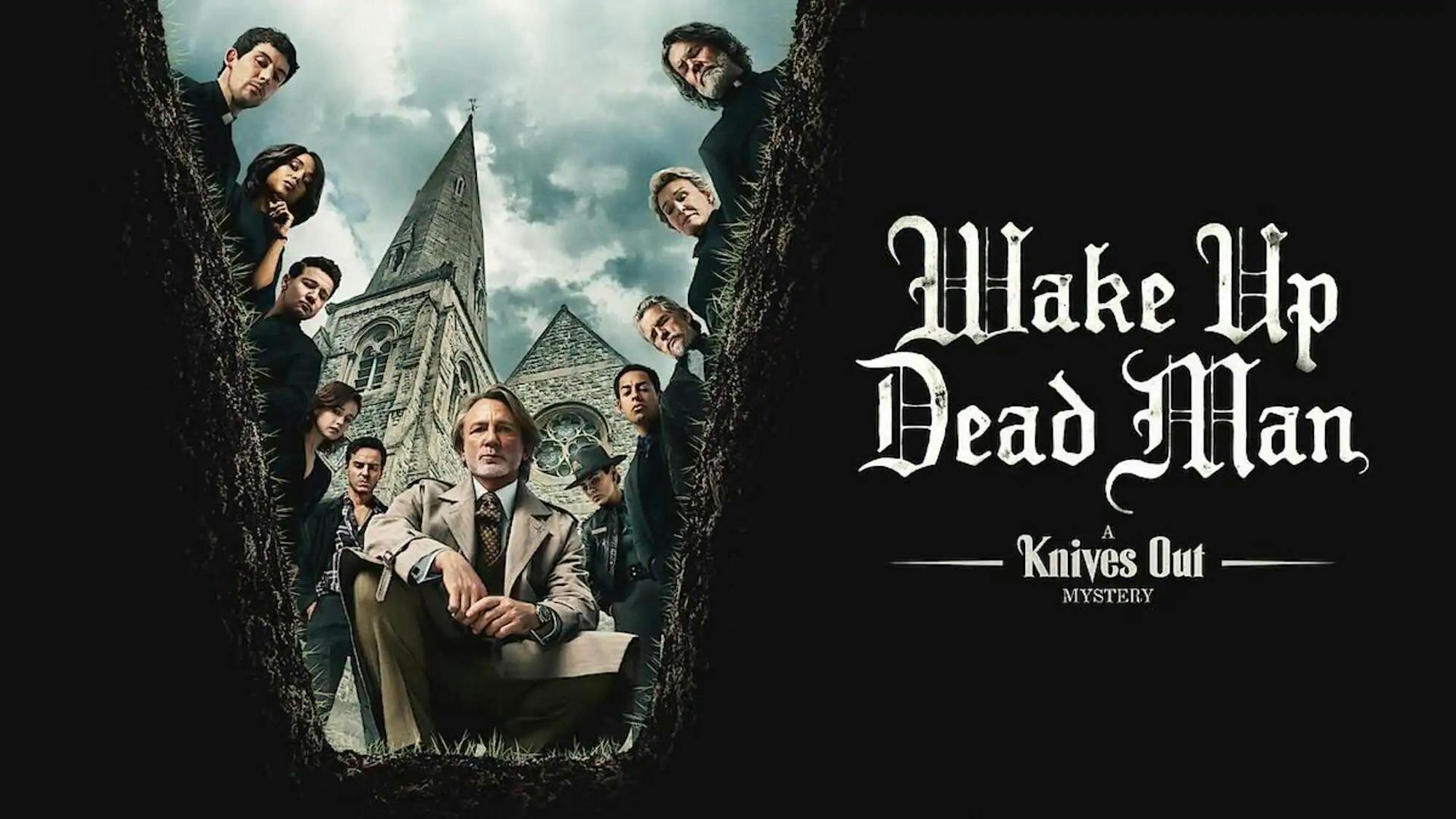
The introduction of detective Benoit Blanc (Daniel Craig), akin to Agatha Christie’s know-it-all Hercule Poirot, is the perfect example of Knives Out’s ingenuity. At first glance, Blanc exists solely as a satirical tribute to the sleuthing archetype of whodunits past. His Southern drawl, colorful suits and drawn-out monologues certainly don’t do him any favors. However, I think that the genius to construct a character as shockingly complex as Blanc is best showcased in the series’ most recent November 2025 addition, Wake Up Dead Man. As the only consistent character in the franchise so far, by the third Knives Out movie, I had grown accustomed to the antics and mishaps of Benoit Blanc. A steady observer of the social dynamics that change from film to film, Blanc seems to unravel and evolve alongside the characters that he interrogates. After making a relatively late entrance to Wake Up Dead Man, Blanc and his off-putting new hairstyle deliver a surprisingly introspective monologue that completely reframes my understanding of his character’s inner turmoil. As he describes his choice to “kneel at the altar of the rational” rather than of the religious, Blanc’s momentary abandonment of certainty exposes the fragility beneath his archetypal detective front. In this respect, it is Rian Johnson’s delicate balance between nostalgia and the deconstruction of overused whodunit tropes that truly sets apart the Knives Out mysteries from their contemporaries.
Naturally, the successful release of the series’ third installment begs the question of a potential fourth, fifth or even sixth addition to the growing Knives Out universe. As we’ve seen countless times before in the entertainment industry, the pressure to replicate past triumphs often seals the downfall of any overzealous franchise. So far, though, Knives Out’s greatest strength is its unpredictability. The stark tonal jumps between films serve as plot twists in their own right, preventing the expectation of recreating the same atmosphere with each new release. The wildly successful White Lotus operates similarly. Relying on frequent changes in character, tone and setting, White Lotus and Knives Out dodge creative stagnation while falling back on the consistency of wit that fueled their original success. While some critics of Glass Onion (the second Knives Out mystery) accused Johnson of departing too heavily into comedic territory, the film’s lighter tone was exactly the risk he needed to take in order to preserve the series’ momentum. By the time he circled back to the darkness of Knives Out in Wake Up Dead Man, Johnson’s strategy felt like one made to last.
While I’m not entirely sure what the future holds for Knives Out, I hope that the series continues to inspire new and exciting perspectives in the whodunit genre. After all, the murder mystery formula is infamous for a reason: when it’s good, it’s great. As long as the likes of Rian Johnson can resist the temptation of repetition, then perhaps the whodunit has managed to reinvent itself in more ways than I expected.

Charlotte Feehan is a member of the Class of 2028 in the College of Arts and Sciences. She is a staff writer for the Arts & Culture department and can be reached at cgf47@cornell.edu.


