

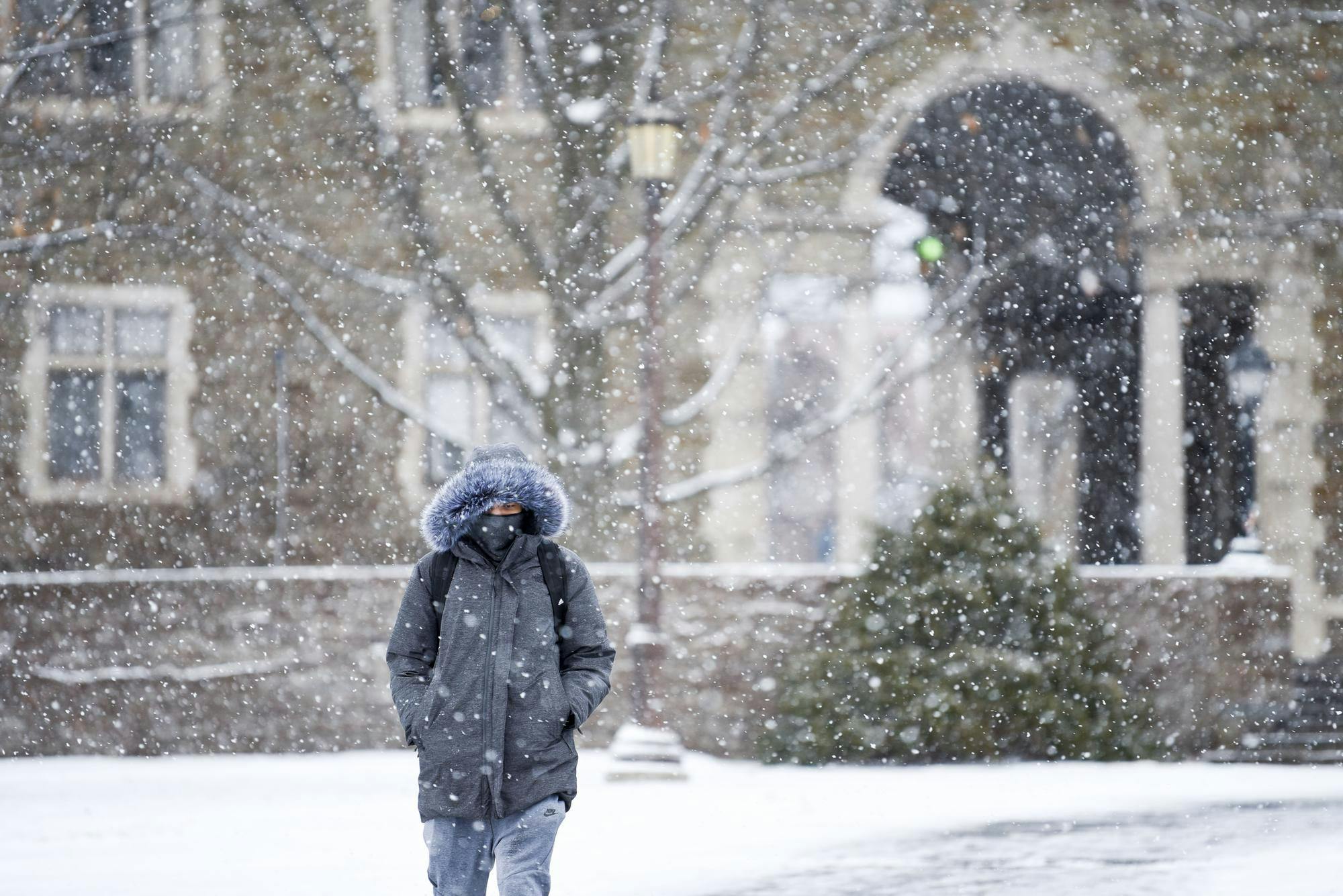
Ithaca is in the midst of a major winter storm. With over a foot of snow forecasted, the city could face its biggest two-day snowfall since February 2021.
With icy road conditions, the potential for power outages and a large amount of snow to come, The Sun compiled some safety guidelines for handling winter storms like this.
Winter Weather Alerts
The National Weather Service uses a watch, warning and advisory system to categorize hazardous weather events.
A watch is issued when the risk of hazardous weather has “increased significantly,” but details are still uncertain. An advisory is issued when weather conditions may cause “significant inconvenience,” and could threaten life or property if precautions are not taken. A warning, the highest level alert, is issued when there is an immediate threat to life or property.
In all cases, a warning or advisory signals that the conditions it advertises are imminent, either currently occurring or expected within the next 36 hours.
As a part of its system, NWS offers a suite of winter weather products, or alerts, on its website to warn of impending snow, sleet or ice in affected areas. It issues three levels of winter storm alerts.
A winter storm watch indicates that conditions are favorable for a winter storm event within the next 24 to 72 hours. Depending on how the forecast evolves, NWS will either cancel the watch if confidence in a storm decreases, or upgrade the watch to a warning or advisory as winter weather nears.
A winter weather advisory is issued when minor to moderate amounts of snow, sleet or ice cause “significant inconvenience” and could threaten life or property if caution is not exercised.
A winter storm warning advertises a winter storm event causing a significant threat to life or property.
NWS also issues warnings for other types of winter weather, such as lake effect snow, ice storms, and blizzards. These alerts are defined on the NWS site.
A watch may not always precede a warning or advisory if conditions change quickly. Issuance criteria varies across the country and scales with how well-equipped an area is to deal with winter weather. The NWS Forecast Office in Binghamton states warning criteria in Ithaca is greater than seven inches of snow or one half inch of ice.
Before The Storm
NWS outlines a checklist of things to prepare before a winter storm strikes. When planning for a storm, the primary focus should be “loss of heat, power, and telephone service and a shortage of supplies,” according to NWS.
Recommended supplies include a flashlight, batteries, food that does not require refrigeration or cooking, extra prescription medicine, first-aid supplies and an emergency source of heat such as a space heater.
Residents should also check smoke detectors, carbon monoxide detectors and fire extinguishers, as alternative heat sources carry a greater risk of fire. People who own generators, which are used as a backup source of electricity if the power goes out, should review safety guidelines and never operate a generator in an enclosed space.
Travel is discouraged during winter storms, but people who must travel should make sure their cars are fully winterized, their gas tanks are close to full and that they are carrying a winter survival kit.
Pets should be brought inside before the storm hits. People with outdoor livestock should prepare for the extra attention they will need during the storm.
During the Storm
The Federal Emergency Management Agency recommends staying inside during the peak of the storm. People who need to go outside must prepare for the cold with layers that “cover as much skin as possible,” including a hat, a face covering, gloves and waterproof boots.
Ice may not be immediately visible — FEMA states that “slow, short, shuffling steps” minimize fall risk. Shoveling snow carries hidden health risks, including slipping and overexertion; the best shoveling practices include taking frequent breaks, pushing instead of lifting and doing warm-up exercises.
Hydration is important during winter storms, as cold air is dry. The Massachusetts General Hospital recommends avoiding heavily caffeinated or alcoholic drinks as they can further exacerbate dehydration.
NWS advises against driving during winter storms, but if necessary, drivers should slow down on the road, inform someone of their destination and route, bring a winter kit, fully charge their cell phone and read up on what to do if their car begins to skid.
If the heat or power goes out, the main priority should be to preserve the existing heat inside the building, according to FEMA. To preserve heat, FEMA recommends to close doors and vents in unused rooms, place a rolled towel at the bottoms of doors and close curtains or blinds unless it is sunny outside.
If the residence cannot conserve or generate heat, Tompkins County operates a warming center on 227 Cherry St. which is open to all adults.
It is important to recognize the signs of frostbite and hypothermia, which are severe medical emergencies. Symptoms include cold, waxy or discolored skin, shivering, numbness and impaired judgement or loss of consciousness, according to the American Red Cross.
After the Storm
If power or heat remains out after a storm, New York City Emergency Management recommends not to remove heat-conserving measures until utilities are restored. Colder air often follows winter storms, according to NWS.
Snow should be cleared from all cars, as snow or ice sliding off of a car can decrease visibility, and cause accidents; a snow-covered license plate is a violation under New York traffic law. The exhaust pipe should also be cleared to prevent carbon monoxide exposure.
After a storm, drivers should never drive through flooded roadways, as floodwaters from water main breaks and snowmelt may conceal hazards, according to NWS. National grid, an electric utility company, recommends never to approach or drive over downed power lines, as they may still be live and can create electric fields across wet ground.
Drivers should allow extra time for road crews to reach residential streets, as the City of Ithaca plows these last, and continue to use caution on roadways as black ice may linger even on plowed roads.
The Tompkins County Sheriff wrote in a Friday statement that the community should check on each other throughout the storm, and that the sheriff’s office “appreciate[s] the community’s cooperation and encourage everyone to prioritize safety.”


