


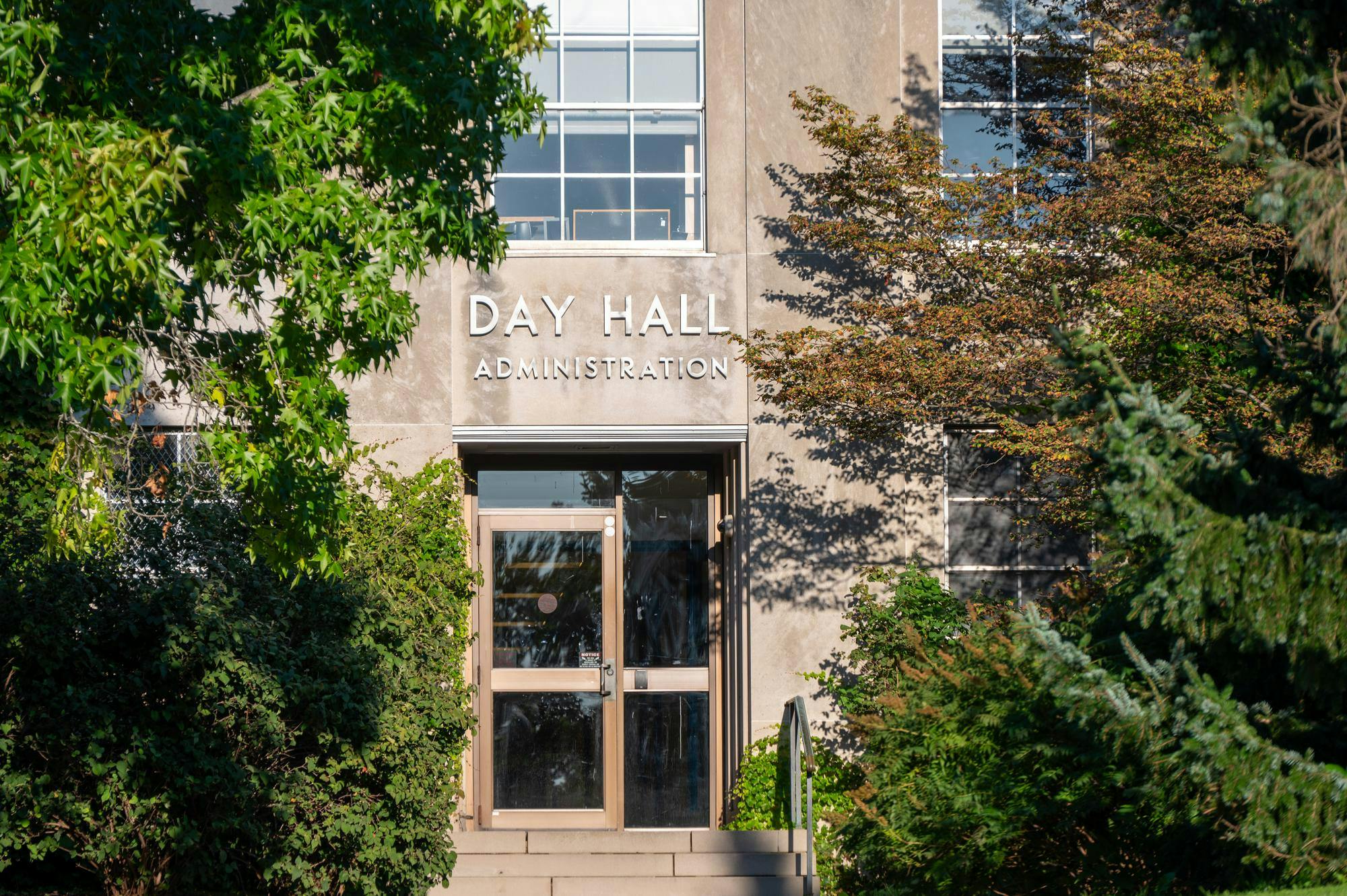
A federal judge ruled on Jan. 12 that an antitrust lawsuit filed four years ago against Cornell and 16 other elite colleges and universities must proceed to trial. The lawsuit alleges that the schools conspired to reduce financial aid and favor wealthy students.
The suit also alleges that Cornell, through a now-defunct organization of 30 elite universities known as the 568 Presidents’ Group, conspired to reduce financial aid in violation of the Sherman Antitrust Act. The 1890 act prohibits monopolies by restricting collusion that might limit competition.
Specifically, the plaintiffs argue that Cornell and other universities worked together to ensure that financial aid pricing was similar between institutions. Because similar pricing of aid across universities was less than what the aid would have been without collaboration, the plaintiffs argue, the 538 Presidents Group ultimately favored wealthy students by increasing the overall cost of attendance.
The 568 Presidents’ Group was named after Section 568 of the Improving America’s Schools Act of 1994. The section was an exemption to the Sherman Antitrust Act that allowed need-blind institutions to collaborate on financial aid principles to ensure financial aid was similar among universities. The group disbanded in 2022 after its namesake section expired and amid the filing of this suit alleging misuse.
However, the plaintiffs, a group of alumni from the 17 elite universities, allege that the universities listed in the suit are not protected under Section 568 because they did not behave in a way that was truly need-blind.
Judge Matthew Kennelly of Illinois ruled there was sufficient evidence for juries to “reasonably find” the universities illegally coordinated to proceed with a trial and rejected the universities’ arguments to end the case before a trial.
For a jury to find coordination, they would have to decide that universities worked together as a cartel, with the express purpose of eliminating competition on financial aid.
“We have compelling evidence that these elite schools perpetrated a twenty-year conspiracy to harm their own students by colluding in violation of the antitrust laws to reduce financial aid,” Eric Cramer, a lawyer for the plaintiffs, said in a statement after the decision was released.
A University spokesperson declined to comment on the suit.
Many universities, including Yale, Duke and Columbia, have already agreed to settlements over allegations of financial aid misconduct, with total amounts currently reaching nearly $320 million. Cornell has not yet reached any settlements over the issue.
This suit differs from another filed against Cornell which was dismissed by a different Illinois federal judge in September. That suit instead alleged coordination of financial aid practices through the College Board’s College Service Scholarship Program.
After Judge Kennelly’s ruling, universities, including Cornell, are likely to face discovery, a process where plaintiffs and defendants must exchange information and evidence. Universities may have to reveal their financial aid practices in more detail, similar to Harvard’s examination of race in admissions in a 2023 Supreme Court case which ruled affirmative action unconstitutional.
An exact trial date and when the discovery process will begin have yet to be announced.

Atticus Johnson is a member of the Class of 2028 in the College of Arts and Sciences. He is a news editor for the 144th Editorial Board and can be reached at ajohnson@cornellsun.com.


