


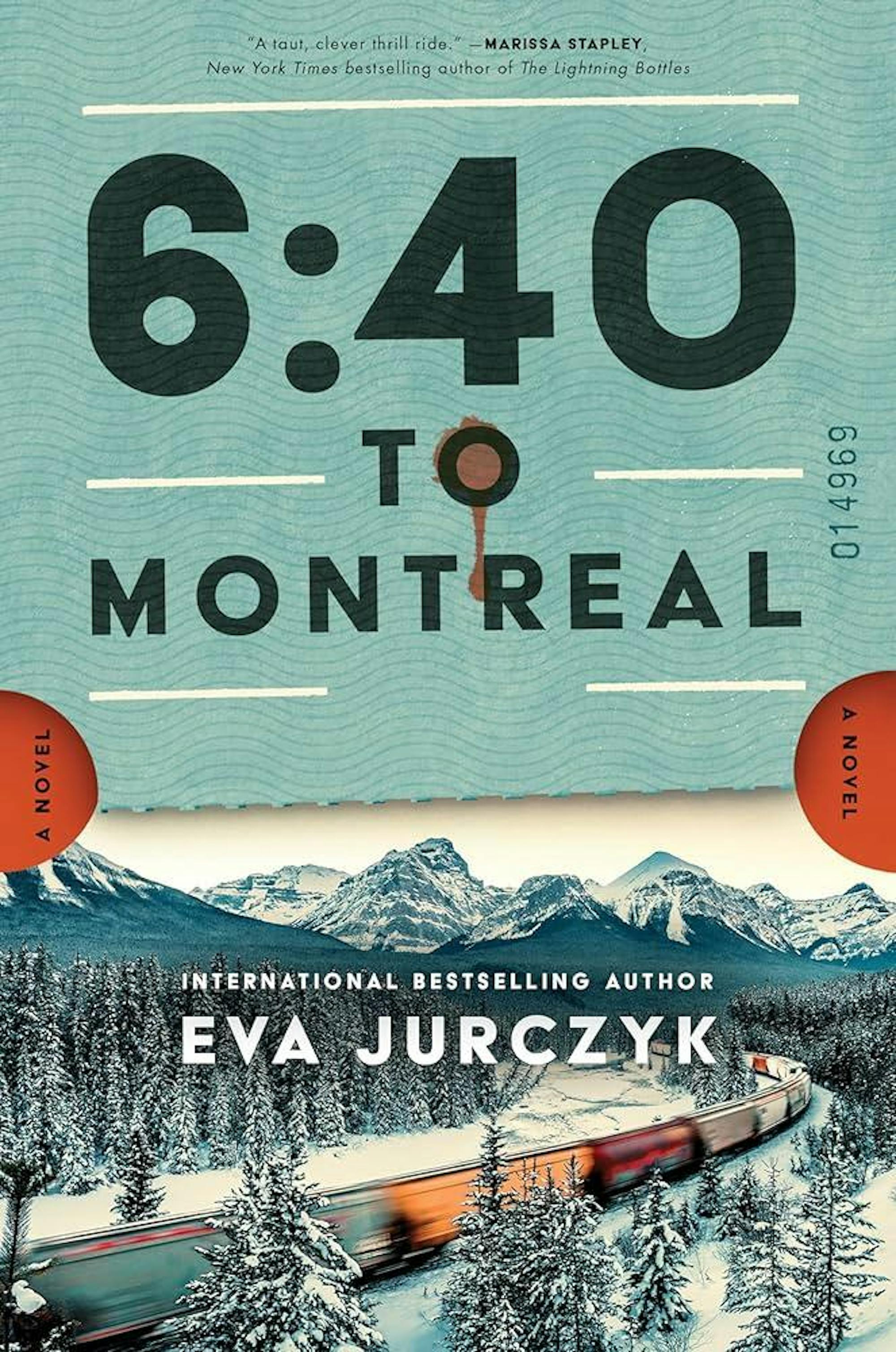
Spoiler Warning: The article contains details from the plot of 6:40 to Montreal.
I am, by no means, a spontaneous reader. When I go into a bookstore, I am a woman on a mission, already set on the book with which I will be leaving. However, once in a while, I’ll spontaneously grab a book and discover that it greatly exceeds my expectations. So, when I walked into Barnes & Noble late last semester and saw 6:40 to Montreal, a new Agatha Christie-type thriller, on the small table dedicated to the bookstore’s monthly picks, I decided to venture outside of my comfort zone.
Eva Jurczyk’s 6:40 to Montreal details the story of a writer on a train that breaks down during a snowstorm. A fellow passenger’s quiet death in his seat throws the rest of the cabin into turmoil, accusations and murder. The story takes place over the course of one day (with the exception of the final chapter), following the writer, Agatha, and a friend-turned-enemy, Cyanne, who believes Agatha’s bestselling novel was written about her, as well as five other passengers.
Agatha, the narrator of the story, is a woman whose creativity seems to be limited to her one-hit-wonder novel. Even then, Cyanne believes the novel plagiarized her life. Agatha’s cancer diagnosis left her feeling utterly hopeless and depressed, which spiraled into her inability to care for her young son or love her sweet husband. She is an intensely unlikeable narrator, but that seems to be the point.
On the other hand, I don’t understand why Cyanne was made to be such an unlikeable character. Although she had certainly done bad things in her past, the basis for the audience’s dislike for her is supposed to be her “crazy” claims that Agatha’s book was about her. Despite this, Agatha later implies that Cyanne’s claims actually are true, completely ruining the foundation for Cyanne’s character. While this could be written off as a way to develop Agatha’s mentally ill personality, it still felt like the author went into 6:40 to Montreal with one vision for Cyanne only to change it 100 pages later.
From the beginning of the book, I was drawn into the narrator’s voice. Her tendency toward introspection rather than dialogue was captivating and intensely literary. I enjoy a good character-focused novel, so I was excited by how much detail Jurczyk put into each character. My intrigue, however, soon faded. The initial murder was strange and impersonal, leaving no clear immediate threat to the passengers. The following incidents stemmed from the passengers’ distrust towards one another after the initial murder, bearing little to no relation to the first perpetrator.
Nearly 300 pages into the book, I still couldn’t figure out who committed the initial murder (or why). There was no obvious reason why any of the train’s passengers would be culprits, but given the isolated setting of the story, there didn’t seem to be any other suspects. Jurczyk threw in random information throughout the story to ensure the audience couldn’t rule out any character (except for the college student who spent most of the novel deathly ill and immobile). I appreciated that this mystery was intentionally difficult to solve, unlike many other predictable thriller novels, but this also led to many loose ends in the plot.
In the last few chapters, Jurczyk threw in a plot twist — the murderer, despite seeming to have little importance to the story, was Agatha’s husband, eager to give his wife some excitement in an attempt to cure her existential depression. This plot point, though it was the main reveal, felt massively underdeveloped. One of the big “clues” that helped Agatha solve the mystery left me with more questions than answers. That being said, I thought that Agatha’s slightly euphoric reaction to realizing her husband was a murderer (and that one passenger’s death would allow her husband to escape suspicion) nicely tied into the reveal that Agatha’s book really was about Cyanne. Jurczyk did well in slowly developing a psychopathic character.
In the end, the book’s main redeeming quality was the author’s voice — the prose felt elevated in the same way Sally Rooney’s novels do — just without any of the other main hallmarks of a good novel. The voice lent well to developing the characters, even if the plot wasn’t as well thought out. I likely will not go back to Jurczyk’s other books, and I struggle to understand why Barnes & Noble specifically promoted 6:40 to Montreal. If the premise interests you, I’d recommend sticking to the book’s inspiration, Agatha Christie’s tried-and-true train murder mystery Murder on the Orient Express.
Katherine Winton is a freshman in the College of Arts and Sciences. She can be reached at kwinton@cornellsun.com.

Katherine Winton is a member of the Class of 2029 in the College of Arts and Sciences. She is a staff writer for the Arts & Culture department and can be reached at kwinton@cornellsun.com.


