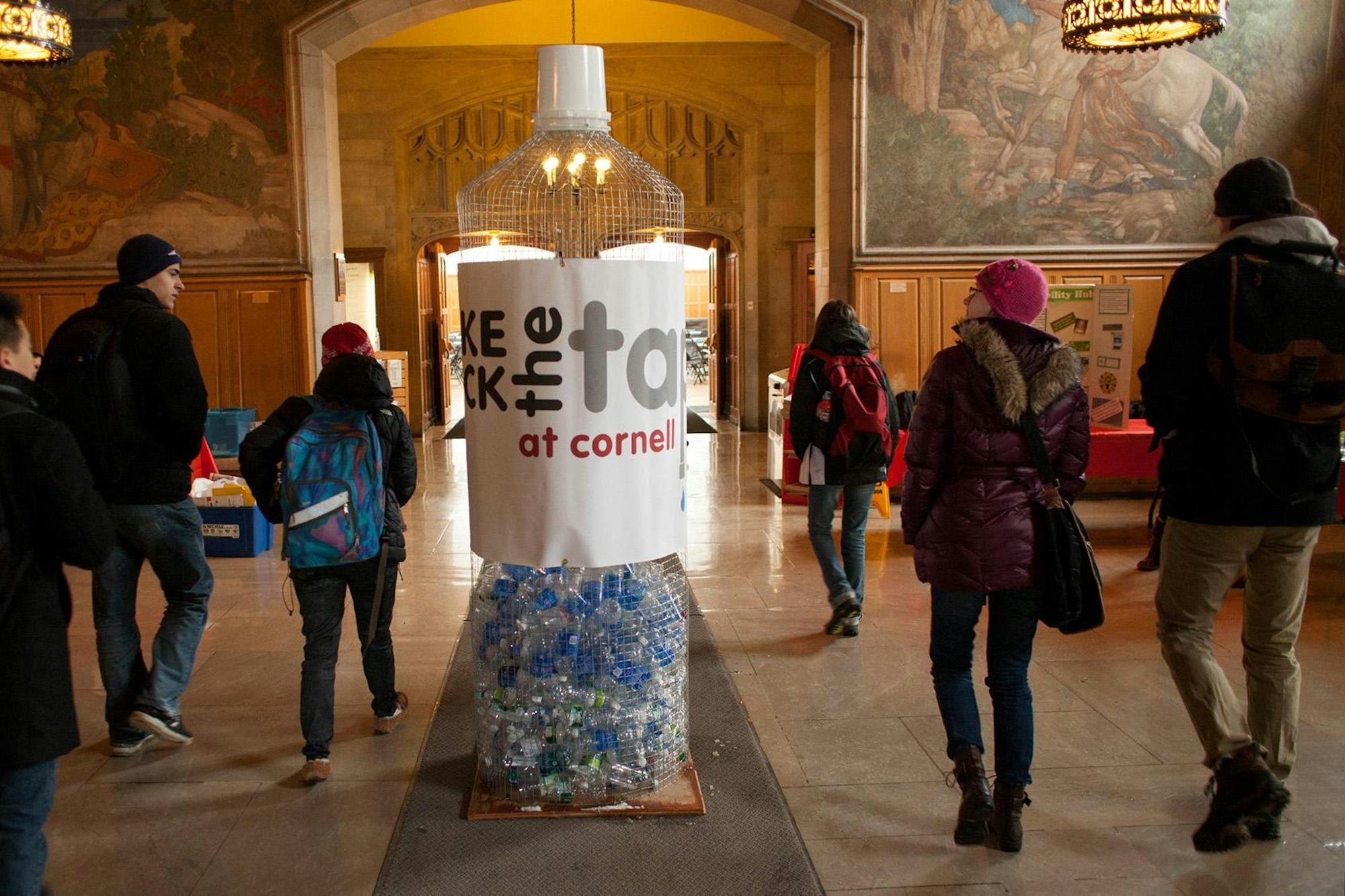
Take Back the Tap is a student-led initiative at Cornell University that was first established in the early 2000s when the Student Assembly passed Resolution 35 called “Taking Back the Tap.”
The campaign began as part of a movement to promote water sustainability on campus that encourages students to reduce their use of single-use plastic water bottles. The organization focused on spreading awareness about the safety of tap water on campus, especially from water fountains, and ensured that water cleanliness reports from the University remained accessible to the public.
Several years ago, the organization was more involved in implementing sustainability measures, but the campaign’s activity unfortunately declined after the original leaders graduated. Some of their achievements included supplying reusable water bottles to incoming students and adding a Take Back the Tap section in a climate education module of the new student orientation.
In recent years, Take Back the Tap has been revitalized by Kamila Muraharisetti ’28 who was inspired to become involved with sustainability efforts after taking Prof. Caroline Levine’s, literatures in English, Communicating Climate Change freshman writing seminar as well as Levine’s upper-level course on climate communication.
In her courses, Levine introduces students to the environmental costs of bottled water, among other climate concerns. The course also provides opportunities for students to work on sustainability projects and outreach within the Cornell community and beyond.
“I think it's really important to understand what's going on with buying bottled water, which is to say it's a real scam,” Levine said. It is usually taken from public water systems and then filtered and put into bottles. Those plastic bottles have a very high carbon footprint because plastics are made out of petroleum products. They generally can't be recycled.”
She also acknowledged the racial and socioeconomic injustice involved with the plastic water bottle concern. In low-income communities where it may be unsafe to drink tap water, reliance on plastic water bottles is reasonable. For example, during the Flint, Michigan water crisis.
Using bottled water is an easy and often accessible alternative when drinking water becomes contaminated. But long term reliance on this solution distracts from efforts to improve water quality in low income communities, furthering the gap between equal access to clean water.
This issue is exacerbated when plastic water bottle use becomes normalized in communities where water is safe and drinkable, like on many U.S. college campuses.
While teaching these courses, Levine observed a lack of student awareness regarding the safety of Cornell’s tap water as well as the consequences of plastic water bottle use.
“What I discovered three years ago when teaching this course is that none, I think zero of my environment and sustainability majors knew that the water that came from the taps at Cornell was clean, and not only clean, but better quality than what's in plastic water bottles,” Levine said.
In a class assignment, Levine asked students to conduct interviews with other students around campus to inquire about their water use.
It came to her attention that the majority of students did not believe that tap water was safe, so through her classes she prioritized the importance of bringing the Take Back the Tap initiative to Cornell’s campus.
In doing so, her former student Muraharisetti and others have worked together to spread awareness through the creation of infographics and stickers, tabling events and visits to Cornell classes.
One prominent goal of the organization is to create a variety of stickers using Canva, which display their organization’s name “Take Back the Tap” along with designs that relate to water sustainability to spark curiosity and raise awareness about the campaign.
Levine mentioned that “[Muraharisetti] is encouraging Cornell students to put [stickers] on their water bottles, laptops or the back of their phones, so that other people will ask them about ‘Take Back the Tap.’”
Recently Muraharisetti has also visited freshman writing seminars where she discusses the goals of Take Back the Tap, introduces first-year students to the campaign’s importance and invites them to join the initiative.
Muraharisetti described future goals of the organization that include placing even more stickers and posters around campus and beginning a student ambassador program. She places emphasis on encouraging more first year students to join, in order for the initiative to have a lasting impact.
Muraharisetti said “We are trying to start a Student Ambassadors Program that would help get more people to spread the message. We want people to take stickers and put them on their water bottles, but I think our ultimate goal is to spread awareness that Cornell's tap water is safe, it meets EPA standards and it’s obviously better for the environment.”
Both Levine and Muraharisetti have noticed some improvement at The University where metal water bottles and paper cartons are distributed at events instead of plastic water bottles or cups.
Regardless, many Cornell University students still rely on single-use plastic bottles, and it is Take Back the Tap’s Mission to educate the Cornell community about the quality of tap water and discourage the use of bottled water.
“We are supposed to be the greenest Ivy,” said Levine. “Let's fight for clean water to come out of the tap instead of making people buy plastic water bottles. Let’s change the system so that people can have access to the greener options rather than feeling guilty.”