

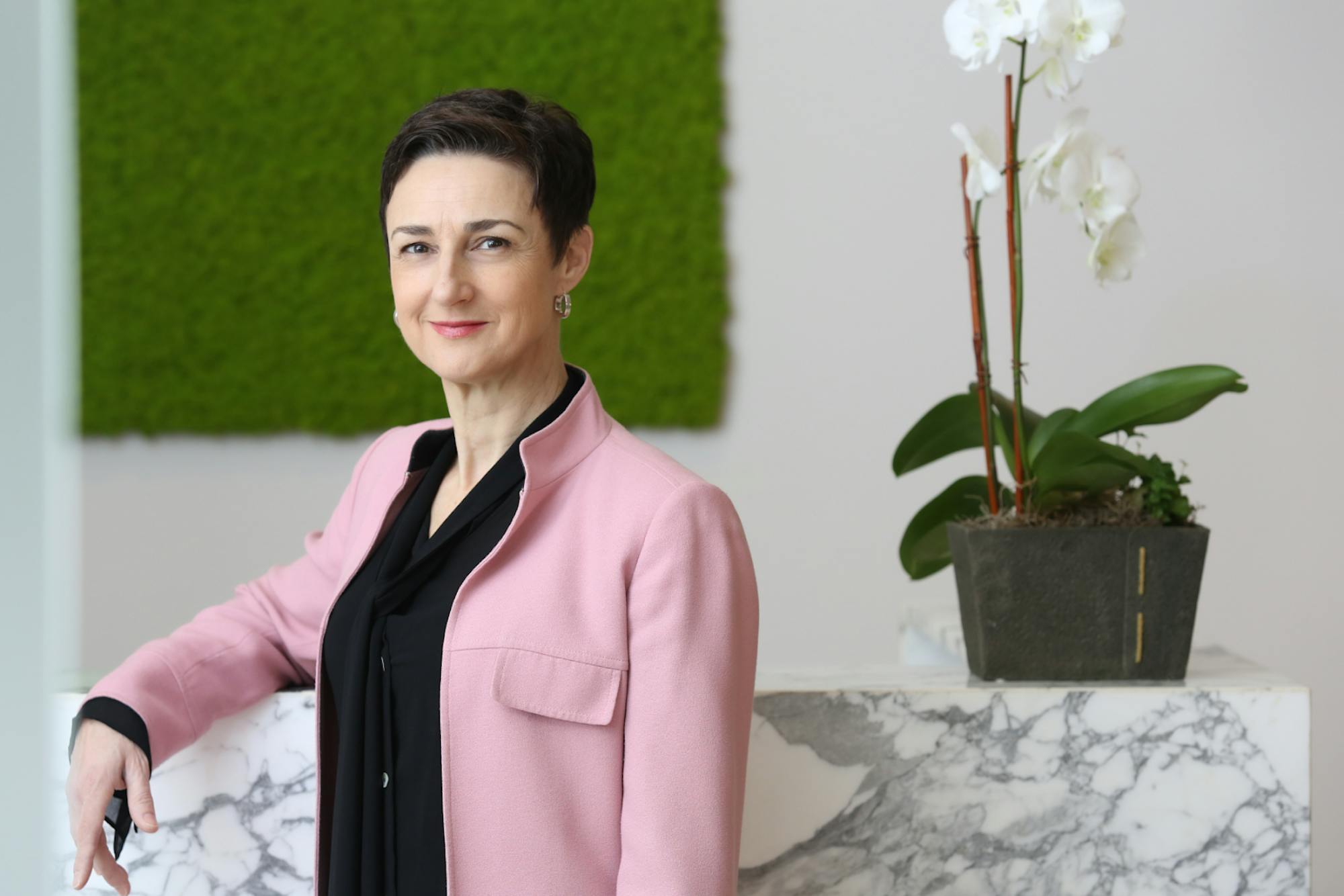
Melainie Rogers, founder and CEO of the New York City-based eating disorder treatment center BALANCE, will meet with Cornell Health professionals — including nutritionists, physicians, psychiatrists and social workers — to discuss eating disorder prevention and care among college students on Dec. 3.
The event, which is not open to students, is meant for BALANCE to share updates and insights on the evolving landscape of eating disorder treatment.
Rogers, a registered dietitian and certified eating disorder specialist, founded BALANCE 16 years ago after noticing a major gap in services.
“At the time, there was only one outpatient eating disorder treatment center in New York City,” she said. “We were grossly underserved.”
BALANCE now provides multiple levels of outpatient care, from individual therapy to day programs. Its interdisciplinary team includes dietitians, psychiatrists and therapists, addressing what Rogers calls the “psychobio” and “psychosocial” nature of eating disorders — or how eating disorders stem from human psychology, biology and societies.
This holistic model, Rogers explained, is important because many of her clients “never have just an eating disorder.” Alongside their eating disorders, her patients often come in with general anxiety disorder, depression, attention-deficit/hyperactivity disorder or obsessive compulsive disorder.
Roger’s emphasis on holistic care and early intervention reflects concerns raised by student leaders of Cornell’s chapter of the National Association of Anorexia Nervosa and Associated Disorders. President Samantha Zeltser ’27 and Vice-President Aurora DeSanto ’27 launched the chapter this year after noticing limited spaces at Cornell specifically dedicated to eating disorder awareness.
ANAD, a national nonprofit, provides free support groups, helplines and referrals for those struggling with or affected by eating disorders. Zeltser, who previously volunteered on ANAD’s helpline, said the Cornell chapter hopes to create “a community where students feel safe to come talk about what they're struggling with, raise awareness and take away the stigma behind eating disorders.”
According to Rogers, twenty-five percent of college students suffer from an eating disorder. She nodded to the prevalence of body image distress and diet culture on college campuses, encouraging students to eat consistently, as well as prioritize regular meals and simple planning, such as keeping snacks on hand.
“Diet culture really gets us thinking and comparing and feeling less than,” Rogers said. “Because dieting and desiring to be thinner are so prevalent, it’s normalized, but it’s not normal.”
Zeltser and DeSanto shared the ways they have experienced diet culture on campus.
“With going out, people will say, ‘I’m not gonna eat so I can drink,’” Zeltser said. “It’s really toxic … and I think it’s really common on college campuses.” The pair also noted that stress, overscheduling and normalized meal-skipping can also unintentionally reinforce disordered habits.
Cornell’s high-pressure environment can exacerbate these issues, Zeltser said.
“I got here last year completely fine and had a relapse because of how stressed I was,” Zeltser said. DeSanto echoed this, adding that newfound independence intensifies pressures. “When you get to college, it’s this newfound freedom, you’re on your own … and no one is watching what you’re eating.
Rogers also noted that awareness and prevention efforts should focus on body image rather than eating disorders themselves.
“If you can reduce body image distress and increase body image acceptance and respect, people are less inclined to diet and try to change their body shape,” Rogers said. “That’s the gateway behavior to developing an eating disorder.”
Zeltser further emphasized that misconceptions around eating disorders persist, especially the idea that eating disorders look one specific way. “People think of anorexia, but there’s so much more,” Zeltser said, referencing orthorexia — an unhealthy obsession with eating “clean” — which she noted is increasingly common and often worsened by diet culture.
Rogers also called attention to growing rates of eating disorders among men and LGBTQ+ students — groups historically overlooked in discussions of body image. She noted that the LGBT community has the highest rates of eating disorders, at more than 35 percent of individuals reporting disorders.
Both Rogers and the ANAD student leaders encouraged compassionate, nonjudgmental support for friends who may be struggling. Rogers emphasized avoiding “diet talk” and instead offering gentle companionship: “Shall we go pick up groceries? Do you want to cook together?”
DeSanto noted that even small behavioral shifts can help: joining a friend for a meal, reducing exercise pressure or simply showing up.
“Changing your actions around your friends can help a lot without having to explicitly say something,” she said.
For students considering seeking help, Zeltser offered reassurance: “It probably feels like a weight on your chest right now, but it gets a lot better when you reach out. You have so much support.”
Though the event is not open to the public, Rogers encouraged students to reach out for help if thoughts about food, weight or exercise consume their day. Rogers encourages students to ask themselves, “How much of your day do you spend thinking about food? If it's getting up to 40-50 percent, that tells us something's wrong.”
For students seeking resources, Cornell Health offers the Collaborative Health and Eating Program, which provides counseling and support for disordered eating and related concerns.

Mary Caitlin Cronin is a member of the Class of 2028 in the College of Agriculture and Life Sciences. She is a news editor for the 144th Editorial Board and can be reached at mcronin@cornellsun.com.


