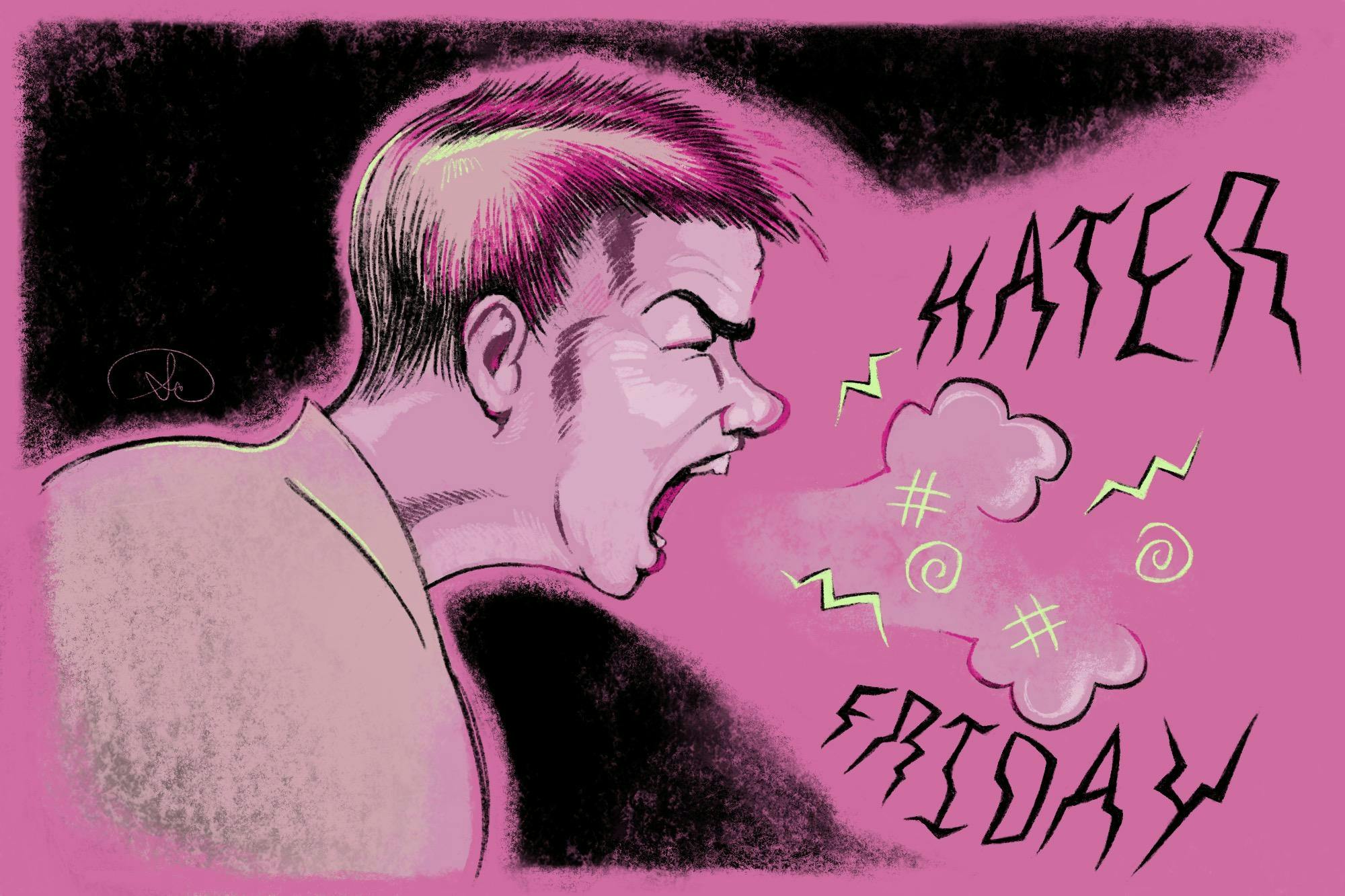
These days, everyone’s a critic. Whether it’s a recently released music album, the new season of a television show or somebody’s Instagram post from ten seconds ago, we already know every little thing we would have done better. Notably, this impassioned demolition disappears when conducting analysis for a class and during peer reviews, replaced instead by idolization and affirmation. But, both approaches, the impassioned rant and the withdrawal of negativity, actually ignore the purpose of criticism. Whether we’re judging the work of the past, present or future, any deconstruction should be done with the intent of improving the art.
It’s certainly true that not all art is good art. Criticism itself centers around the idea that every piece of art has something to critique, which makes sense considering that we fallible humans are the ones making the art in the first place. We’re imperfect so it follows that our art is as well. However, criticism can be taken too far when the intent shifts from improvement to hate. I get it, it’s fun to hate on things and often art deserves the hate that it gets. But just as not all art is good art, those with problems are not all bad.
There are certainly projects where the negative aspects heavily outweigh the positive ones, but at the end of the day every project has a feature that, if not redeeming, lends it some value. To not acknowledge this value is to say that the art has absolutely nothing to contribute, that it had no reason for existing. This kind of tirade obliterates art, effectively leaving behind only the preexisting canon to rebuild upon. On the other hand, if criticism highlights positive traits alongside negative ones, there becomes a definitive starting point about which revisions can revolve, accelerating the process of progress. Reviews don’t need to rave, but rants reduce improvement.
Conversely and somewhat contradictorily, analysis and peer review seem to be constantly reigned in by the restrictive philosophy of “if you don’t have anything nice to say, don’t say anything at all.” As childish as this may sound, this cliché reflects the narrow-minded focus of analysis and the sensitive focus of the peer review.
Analysis is so concerned with proving a point that every element of a composition miraculously contributes, at least in small part, to the seamless whole. When conducting analysis, in searching for consistency we unearth meaning and forge connections where there may have been none to begin with. Due to the impossibility of knowing an artist’s full intent, this is a natural part of analysis, however this approach provides a sharp contrast to the faithless and heartless execution of reviews.
When analysis is assigned in classes, this problem is actually exacerbated by the presence of an expert on the work in question. When a professor is present, expectation is added to the objective of having a cohesive conclusion. This pressure is not so much a concern with the “right” answer or a professor’s open-mindedness but the knowledge that there will be another perspective backed by a career of experience and a thoroughly crafted take on the art.
In the end, when we analyze, we’re so concerned with creating a conclusion that analysis stops being a tool with which we determine what works and also what doesn’t in a piece. Once analysis serves to prove a point instead of refining our idea of effective art, it can no longer be used to improve the art of ourselves or others.
The same issue arises in the so-called “constructive criticism” of peer reviews, which is all the more disappointing because improvement is the express purpose of such a review. Too often, reviewers become reliant on the creator’s explanation. With complete access to the creator and their intent, full explanations allow the artist’s intent to take full control. However, learning this intent is important only as long as the knowledge informs criticism and does not justify it away. If something doesn’t convey what the creator intends, then it should be criticized; the constructive nature of reviews must stem from criticism.
To say that flaws are what make art truer to human nature may be poetic, but, in terms of critical examination, it is ridiculous. Flaws are inevitable issues, not additional features that must be accepted in a final piece but never settled for in drafts. Criticism is not a tearing down but an identification of these issues that enables the more effective portions of the art to expand into the space of these shortcomings. To leave behind errors is to only do half the work of criticism and yield only a partial benefit in improvement. By identifying both what works and what doesn’t, the creator, in concert with any criticist, can better build upon their pre-existing strengths to convey what their initial renditions may fail to capture.
When reviewing work, create an opinion that engages with both the art’s triumphs and its pitfalls, however few either may be. Art is a joint experience between the artist and the consumer, which means that good art arises when both sides work in concert. In the end, the art that comes to you is beyond the artist’s control and subject to the meaning you assign to it. So, when you next take a piece of art into your hands, give a little faith, hate on what doesn’t quite click and approach the work with both a critical eye and the intent to improve.
Wyatt Tamamoto is a freshman in the College of Arts and Sciences. He can be reached at wkt22@cornell.edu.
‘Hater Friday’ runs on Fridays and centers around critiquing media or culture.
Wyatt Tamamoto is a member of the Class of 2029 in the College of Arts and Sciences. He is a contributor for the Arts & Culture department and can be reached at wkt22@cornell.edu.