

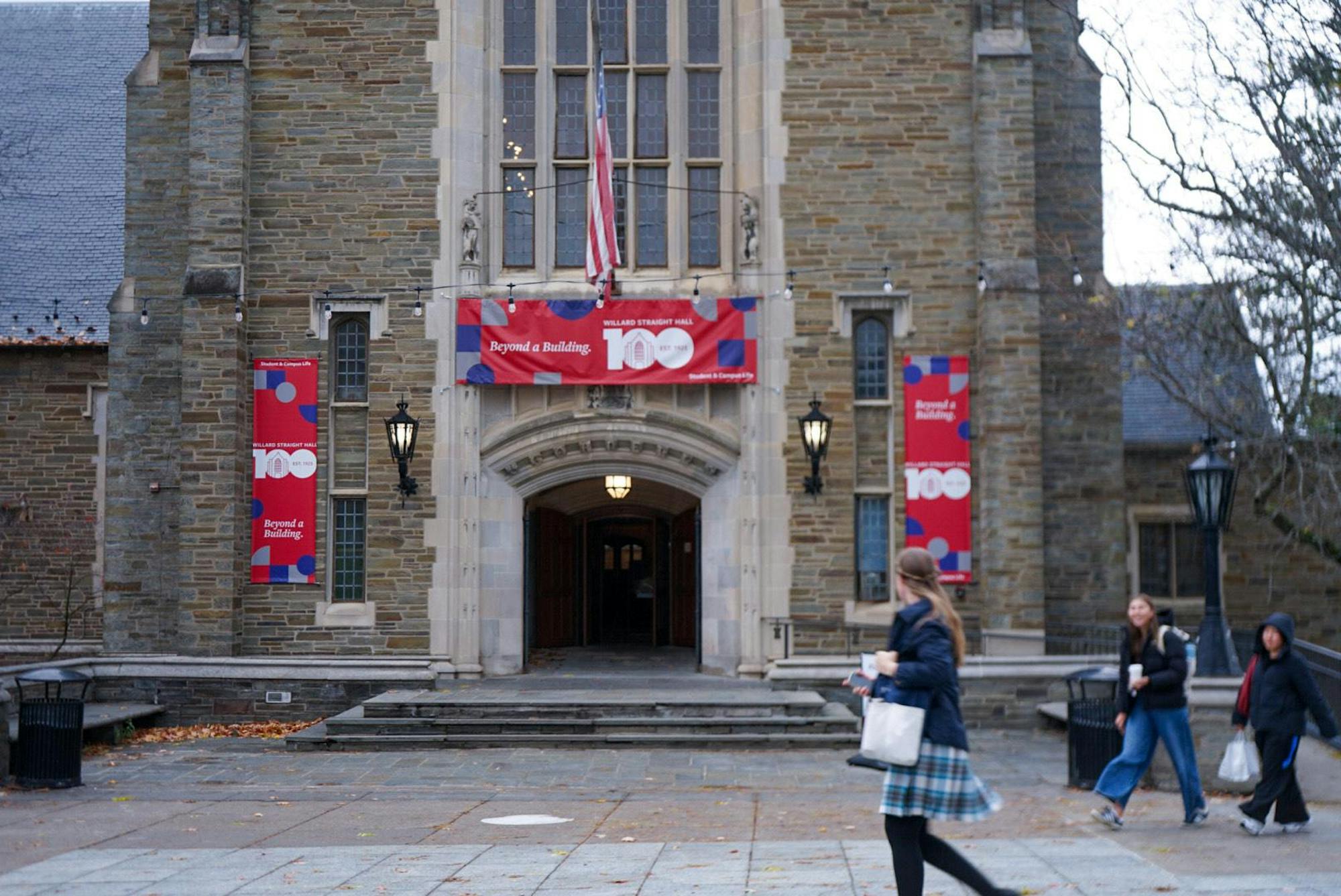
Willard Straight Hall, one of the first student unions in North America, has had a rich 100-year history evolving from the earliest dances, recitals and art exhibitions to the momentous protests that reshaped campus life.
On Friday, Cornell will celebrate the 100th anniversary of the Straight with an event titled "Centennial Celebration: 100 Years of Willard Straight Hall.” The event will feature historical displays and archival materials, student performances and other activities for students, faculty, staff and alumni.
The Sun recounted the Straight’s history as a home to everything from dances and recitals to armed takeovers and the ongoing negotiation between tradition and progress on campus.
Opening on Nov. 18, 1925, Willard Straight Hall was donated by Dorothy Whitney Straight Elmhirst, widow of Cornell 1901 graduate Willard Dickerman Straight, who died in World War I. At the time, Willard Straight was intended to be a place where students could gather, study and form community.
John Hunter Detmold ’43, co-chairman of the Willard Straight Browsing Library Reading Hour Committee, noted that the building made life easier for students during finals, which included “dancing coffee, tea, and cookies free to all at the Straight,” according to a History of Willard Straight video.
Throughout the years, WSH has evolved to include some of Cornell’s most historic events, including the Willard Straight Takeover of 1969.
One Takeover Triggers Campus Reforms
WSH’s history is not only about creating community, but has also been a site of activism. In April 1969, students occupied the building, protesting racial inequality on campus and across the country. Tom Jones ’66, who participated in the takeover, explained that students chose to occupy the Straight because it was “the symbolic ‘heart’ of Cornell” and that they wanted to ensure that their “actions and demands could not be ignored,” in an email statement to The Sun.
Jones also described the tense standoff during the takeover with Delta Upsilon fraternity members, who, according to him, snuck into WSH and confronted the protesters, arguing that they had “no right to occupy” the Straight.
“This was a statement that the days of blacks being intimidated by white vigilantes were over,” Jones wrote in an email statement to The Sun. “That’s how WSH became the site of the only armed building occupation in Cornell history.”
Ed Whitfield ’70, a former leader of the Cornell Afro-American society, which is now the Cornell Black Students United, helped to organize the occupation. He previously told The Sun that, weeks leading up to the takeover, there had been deeply troubling incidents targeting black students.
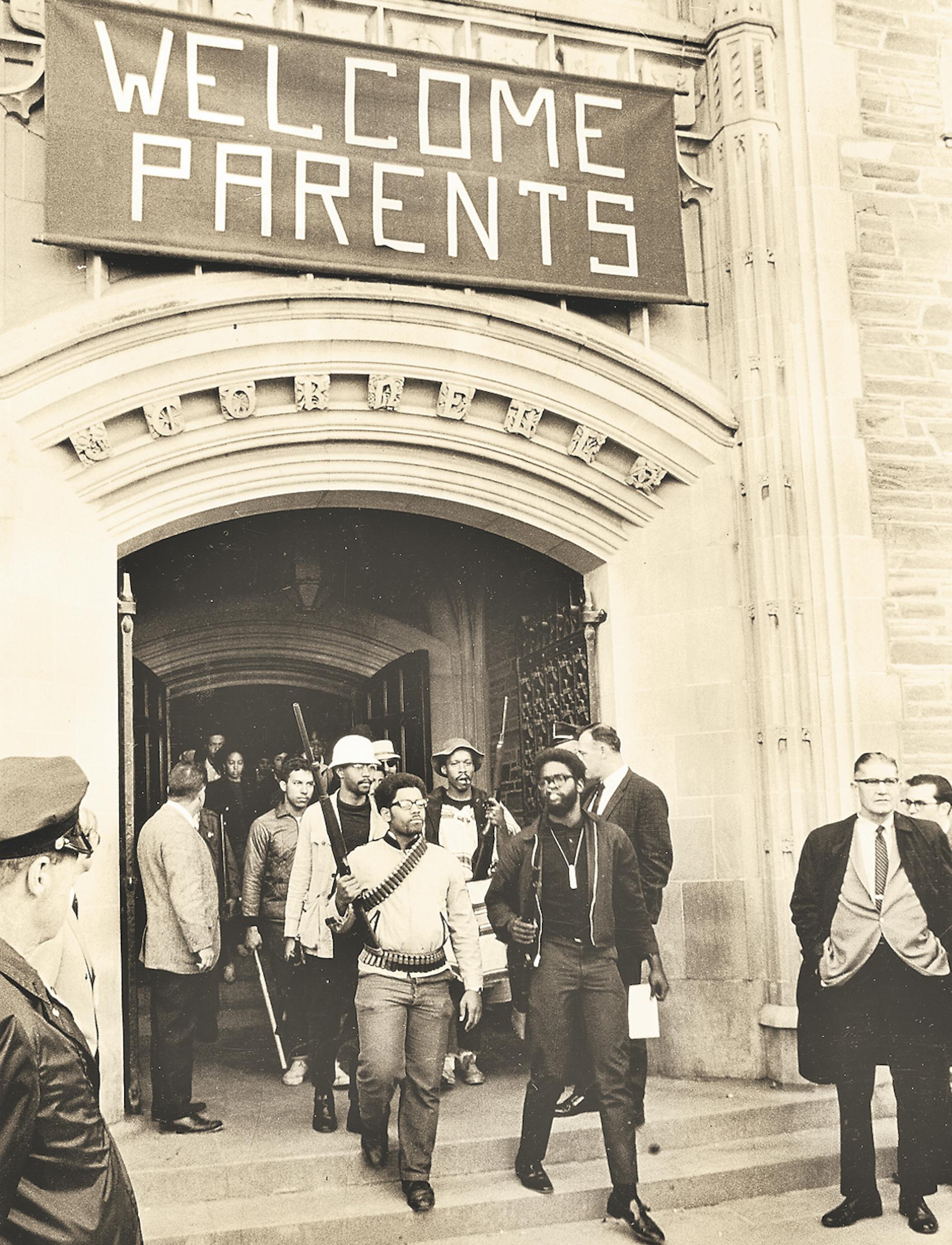
Eric Evans '69 and Edward Whitfield '70 walk out of Willard Straight Hall after having occupied the building on April 19 and 20, 1969. (Brian W. Gray/Sun File Photo)
In one incident, a cross was burned outside the Wari House, a cooperative for black women, an act that Whitfield said felt reminiscent of Ku Klux Klan tactics. He also reflected on the takeover and described that it was a “principal expression of defiance.”
He told The Sun the initial plan was not to bring firearms. The weapons were introduced only after white fraternity members forced their way into the building.
Rumors of the fraternity planning to return with guns prompted the students involved in the occupation to defend themselves.
Following negotiations with administrators, the students, as Jones recalled, walked out in a military formation bearing their weapons. The scene was captured by Associated Press photographer Steve Starr and became the cover of Newsweek, later winning the Pulitzer Prize for Breaking News Photography.
The protest had lasting effects, prompting the creation of Cornell’s shared government system — a structural reform that endures today. Additionally, the Africana Studies & Research Center, John Henrik Clarke Africana library and the Ujamaa Residential College were all established following the protest.
However, Whitfield described the creation of these buildings as “bribes,” arguing that while academic structures were put in place, they did not necessarily resolve the deeper threats that black students faced.
For many participants, the 1969 occupation was as much about visibility and voice as about material reforms. Oral histories from Whitfield and other participants reveal that the protest cultivated a sense of collective agency among black students, influencing Cornell’s activist culture for decades to come.
The legacy of the 1969 takeover went on to inspire future student movements, setting an example for how Cornellians could demand institutional change in the following years.
Willard Straight Hall Today
Today, Willard Straight Hall continues to serve as a vibrant hub for student life, activism and community.
Bennet Askenazi ’29, who often studies in Willard Straight, described the building as a gorgeous and calm place, emphasizing that it is important for current students to understand the history behind the Straight. As part of its centennial celebration, Cornell has organized a yearlong series of events that highlight WSH’s multifaceted role.
According to the Cornell Chronicle, these include historical displays, student art projects, story-sharing evenings and performances — all designed to invite both alumni and current students into a cross-generational dialogue about the building’s meaning.
Jenny Loeffelman, assistant vice president for Student and Campus Life and co-chair of the Willard Straight 100th Committee, explained the broader vision for the anniversary.
“As we prepare to mark the 100th anniversary of Willard Straight Hall, our planning committee of students and staff is excited to bring the campus and broader Cornell community together for a celebration that honors both the building’s past and its enduring role in student life,” she wrote in a statement to The Sun.
The goal behind these celebrations, according to Loeffelman, is to commemorate the Straight’s “remarkable history” and the leadership, expression and community that have occurred there through “art exhibitions, storytelling projects, and events that invite alumni and current students alike to reflect on its legacy.”
The event will also include student performances, artwork and trivia events along with nostalgic WSH foods including Straight Cookies and customizable popcorn.
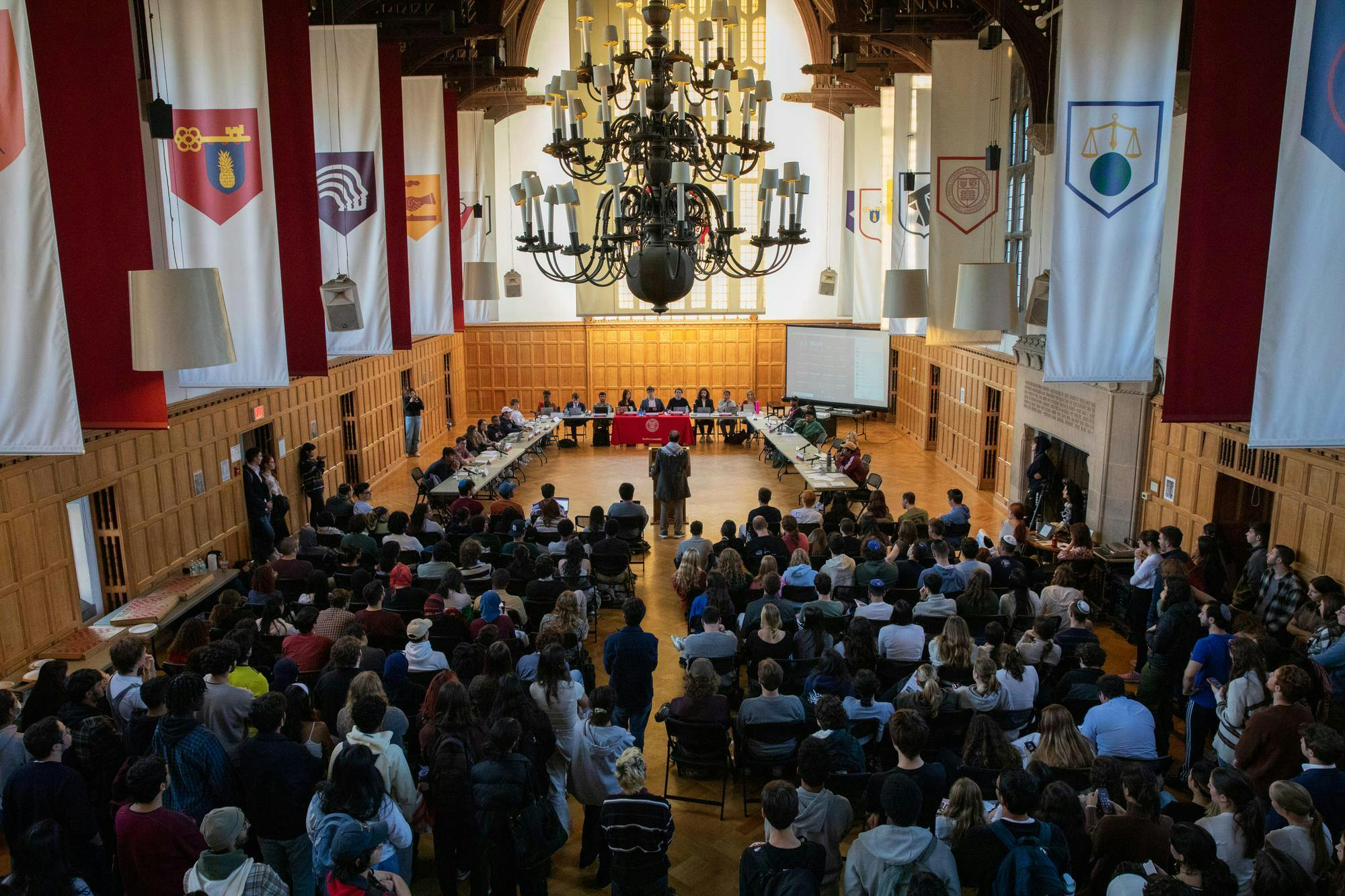
Beyond commemorative events, Straight holds Okenshields, Cornell's central campus dining hall and continues to host Student Assembly meetings. In October 2023, for instance, nearly two hundred students packed into the Memorial Room to debate a resolution related to the Israel–Hamas war, with many more participating via Zoom.
Additionally, the area around Straight, Ho Plaza, remains a focal point for protest and assembly. In April, nearly 250 faculty and students rallied on Ho Plaza for a national “Hands Off Higher Ed” protest, which was part of a coordinated nationwide effort defending academic freedom.
At the same time, Straight has hosted more sustained and internal activism. In December 2023, the Cornell Coalition for Mutual Liberation staged a “mock trial” for President Martha Pollack outside Day Hall, and then relocated to occupy the lobby of Straight Hall.
During COVID-19, the building played a crucial role as one of Cornell’s busiest surveillance testing sites.
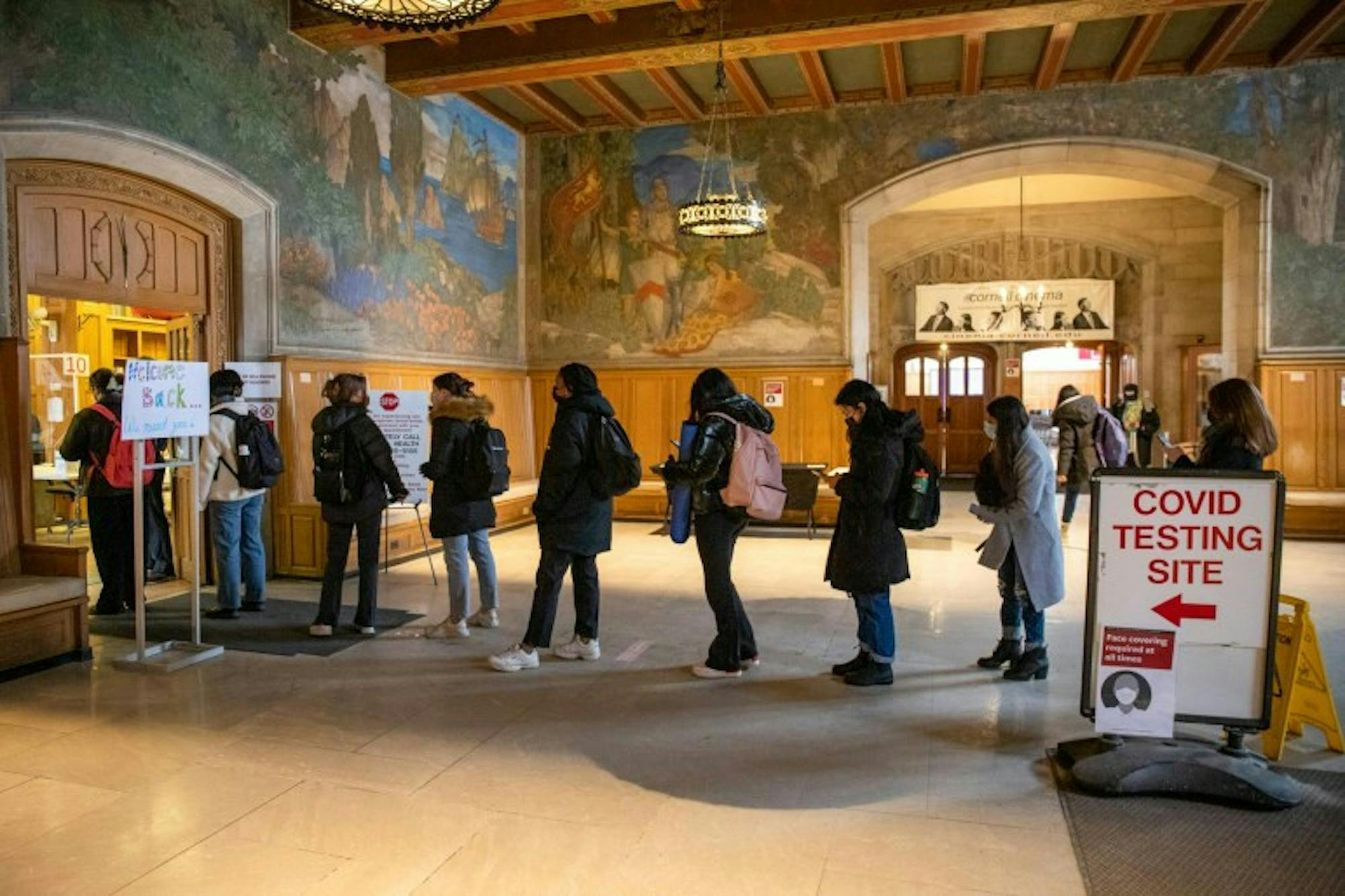
The conversion of communal spaces into testing sites reflected the University’s commitment to health and safety, but it also disrupted the usual flow of student life. Students recalled that the familiar chatter of meetings, the excitement of performances and the hum of study sessions were replaced by long lines and safety protocols.
Even as restrictions eased, returning the hall to its pre-pandemic vibrancy required conscious effort from student organizations and administrators alike.
The Sun described the WSH lobby as “largely dark and empty” compared to its previous bustle, and long-time student union activities had to be reactivated by groups like the Student Union Board.
Still, students and administrators worked to bring back life: Cornell Cinema resumed screening films in Straight and Assembly meetings resumed in the Memorial Room. The reactivation of these traditions reflects a broader desire to restore the Straight’s original mission as a student-governed and student-centered space.
The Straight today more closely resembles its founding vision than ever: it is a place “for use, for pleasure, and … made by [students] through their own adventures of spirit,” as Dorothy Elmhirst intended when she donated for its construction.

Ruthie Behrendt is a member of the Class of 2029 in the College of Arts and Sciences. She is a contributor for the News department and can be reached at rb967@cornell.edu.


