When I was a young boy in elementary school lacking much in the way of taste, I used to complain over and over again whenever my dad would try to introduce my brother and me to artists he followed from more niche genres of the musical realm. Whether it be classical music, older Greek music or punk rock, I could be expected to put up a passionate protest, begging him to change to a playlist with more familiar tracks. A few years back, while trying to broaden my musical horizons, I decided to revisit many of my dad’s favorite artists.
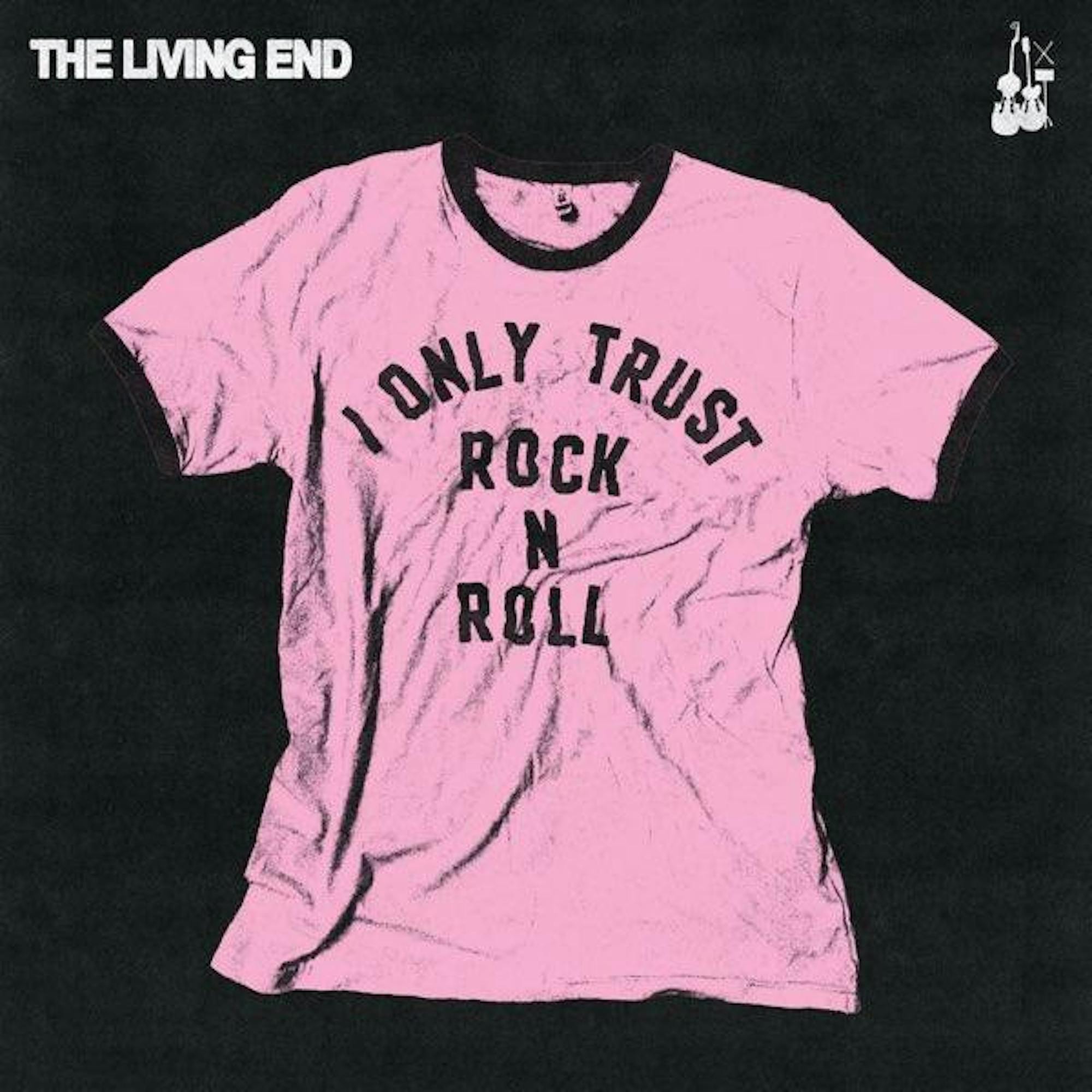
Through this process, I became a fan of The Living End, an Australian punk rock band which I protested against quite fervently as a child. Much of their work has masterfully blended the loudness and energy of punk music with rockabilly-esque guitar tones, drum rhythms and instrumentation. They executed this balance most brilliantly in their debut album, eponymously titled The Living End (1999), which features standout tracks like “Prisoner of Society,” “Second Solution,” “All Torn Down” and “Fly Away.” Since the release of their eighth album, Wunderbar, in 2018, however, the band has gone seven years without a new substantial release. For that reason, the announcement of their newest album, I Only Trust Rock n Roll (2025), came as quite a relief.
The album opens with “Alfie,” a fast-paced track which mainly features simple yet compelling power chords. The bass line delivered by Scott Owen (known for his distinctive use of an upright bass) and Andy Strachan’s drum work complement the relatively simple guitar, helping to elevate the track. A satisfying guitar solo in the final third of the song further helps create a sense of completeness, making the track a perfectly acceptable introduction to the album.
“Roller” builds on this momentum, with a catchy riff by lead vocalist and guitarist Chris Cheney taking the spotlight this time around. His vocals perfectly pattern around the instrumentation in the song, resulting in a track that easily establishes itself as one of the best on the album. A number of refrains and musical phrases throughout the track also add a rockabilly vibe without distracting from the track's heavier rock elements.
“Strange Place” slows things down a bit, but still features a chorus made compelling by an oaky bass line and well-arranged drumming. The song’s bridge and outro guitar work help bring out a greater sense of fullness, but the track ultimately does not live up to the quality heard immediately prior in “Roller.” In “Private Hell,” the first half of the track first appears to pose shortcomings similar to those in “Strange Place,” but impressive guitar and bass work during the middle and ending sections help propel the song into better territory.
The next track, “Rain the Parade,” ultimately fails to leave much of an impression, offering little in the way of a compelling original sound. The track felt somewhat derivative and lacked complexity in its construction and instrumentation. Thankfully, “Don’t Tell Me” picked things up from this relatively low moment, featuring strong guitar, bass and drum parts that worked well together to create a sense of driving energy and power. Cheney’s vocals and lyrics felt more memorable in this track than some of the others, further helping regain listener interest. This harder rock sound continues in “Misery” to great effect, with the guitar and drums most responsible for the overall musical success of the song. However, Cheney’s vocals seem somewhat off at early points in this track, and it is unclear whether some of the more flat notes were deliberate choices or results of the singer’s aging voice. These small moments don’t take away too much from the track’s quality, but present slight missteps that distract from what would otherwise be a track with little to criticize.
“Public Holiday” starts out at a slower energy level, seemingly suggesting that a satisfying drop will come during the chorus. However, the chorus doesn’t fully capitalize on the anticipation built by the march-like quality of the guitar, bass and drum parts, leaving the listener underwhelmed. A change in the song’s drum patterning near the end helps alleviate some of this feeling, but ultimately isn’t enough to lift the song out of mediocrity.
Nearing the end of the album, “Camera” helps reignite energy and anticipation by featuring a more unique guitar tone throughout the chorus and allowing Strachan’s drumming to fully shine through. The song’s bridge further complements these aspects and helps build to a powerful final chorus that feels earned. An intricate guitar riff works wonders throughout “Gypsy Blood,” putting the technical skill of Cheney on full display. The bass and drums help fill out the song without distracting from the riff, allowing Cheney’s vocals and guitar work to truly captivate the audience. Alongside “Roller,” this track embodies the best of the album: powerful, catchy instrumentation without clutter.
Finally, “I Only Trust Rock n Roll” delivers a satisfying end to the album, capturing enough power to keep listeners engaged without providing so much that the album’s end feels abrupt. The guitar and bass work on display once again work wonders, especially during Cheney’s guitar solo which sees itself greatly complimented by Owen’s bass performance. The song’s lyrics, however, leave something to be desired. They lack much substance or subtlety, and are distractingly bland if followed too closely.
Overall, I Only Trust Rock n Roll delivers a number of catchy tracks that I would say are easily worthy of earning a spot on the playlists of rock fans. However, a number of uninspired, unmemorable tracks prevent the album from really standing out in The Living End’s discography or the world of rock as a whole. Though I’m glad to see the band release a new set of songs to experience for the first time, I hope their future work expands on the highlights of this album and cuts out the fluff.
Matthew Rentezelas is a sophomore in the College of Arts and Sciences. He can be reached at mmr255@cornell.edu.
Matthew Rentezelas is a member of the Class of 2028 in the College of Arts and Sciences. He is an assistant arts editor for the 144th Editorial Board and can be reached at mrentezelas@cornellsun.com.