Got a problem? Is someone pissing you off? Maybe a boss or an old flame? Don’t you just want to get back at them, just a little? Lucky for you, it’s easy to send a hex or spell to those you despise, right over the airwaves, for a small price. All over the small business website Etsy, self-titled witches are displaying their wares of rituals for sale, offering remedies to almost any problem you can think of. It’s not just a curse for an enemy that you can get, MotherJoysMagic advertises a wealth spell, guaranteed to make you rich (on the same day as your purchase!) for $35. WitcheryWaves boasts an $11 protection spell to undo any sort of black magic you may have on your back. And if you’re feeling down on yourself one day, SpellByAlly promotes a $10 “Permanent Beauty Spell,” using a ritual that is particularly hard to break. This small wizardry industry has received a fair amount of attention in the recent months, most notably after Jezebel published a satirical article titled “We Paid Some Etsy Witches to Curse Charlie Kirk” mere days before his untimely passing. If the meaning carries over, these magical spells converse with powers beyond the earthly plane and make deals with the purveyors of life and death. Modern paganism and polytheism often incorporate the worship of pantheons on the fringe, which would mean that these Etsy witches are working with the likes of Athena, Mars or Loki, famously murderous and vengeful deities. Would it be naive to exploit the rules of spacetime for financial gain?
While some may argue that when you cross the border into paying for belief, you cross the border into faux religion. However, the commodification of religious practice is far from a new concept. One of the main motivations for Martin Luther to break away from 16th-century Catholicism was his opposition to indulgences, the practice of selling reprieves of sin. In the modern era, most large belief systems boast an economy tied to them — American Evangelicalism has become a behemoth of for-profit media and learning material, and, unless you’ve taken an explicit vow of poverty, working as a preacher can often be quite a lucrative gig. However, like all things, the internet has served as a vast and unprecedented field for this tradition to continue. If connection to your God can be shown by physical sensation or visions of the metaphysical, how can any of this be translated into a place where nothing is real, existing beyond a screen?
The transition of religion into technology has shown itself in a multitude of ways, one of them being a dilution into simple, straight imagery. Microtrends and aesthetics show its rapid, impatient nature by never becoming a real form of counterculture or lifestyle, simply a moodboard that can be used to make products before the next big thing comes along. Those on the internet may glamorize different religions by sharing images that are seen as “aesthetic” while never delving into the message that religious iconography wishes to spread. The misty darkness of Southern Gothic aesthetics, popularized by artists such as Ethel Cain, are riddled with decrepit chapels and dead-eyed statues. Memes are shared that compare modern Protestant church architecture with historic Catholic cathedrals, often arguing Catholicism’s superiority by claiming its art is simply prettier. Last year, Brandy Melville released T-shirts and sweatshirts supposedly depicting the Passion of Jesus Christ, a quite visceral design of Christ with tears in his eyes and the crown of thorns around his head, a confusing response to product research that supposedly picked up on these religious aesthetics.
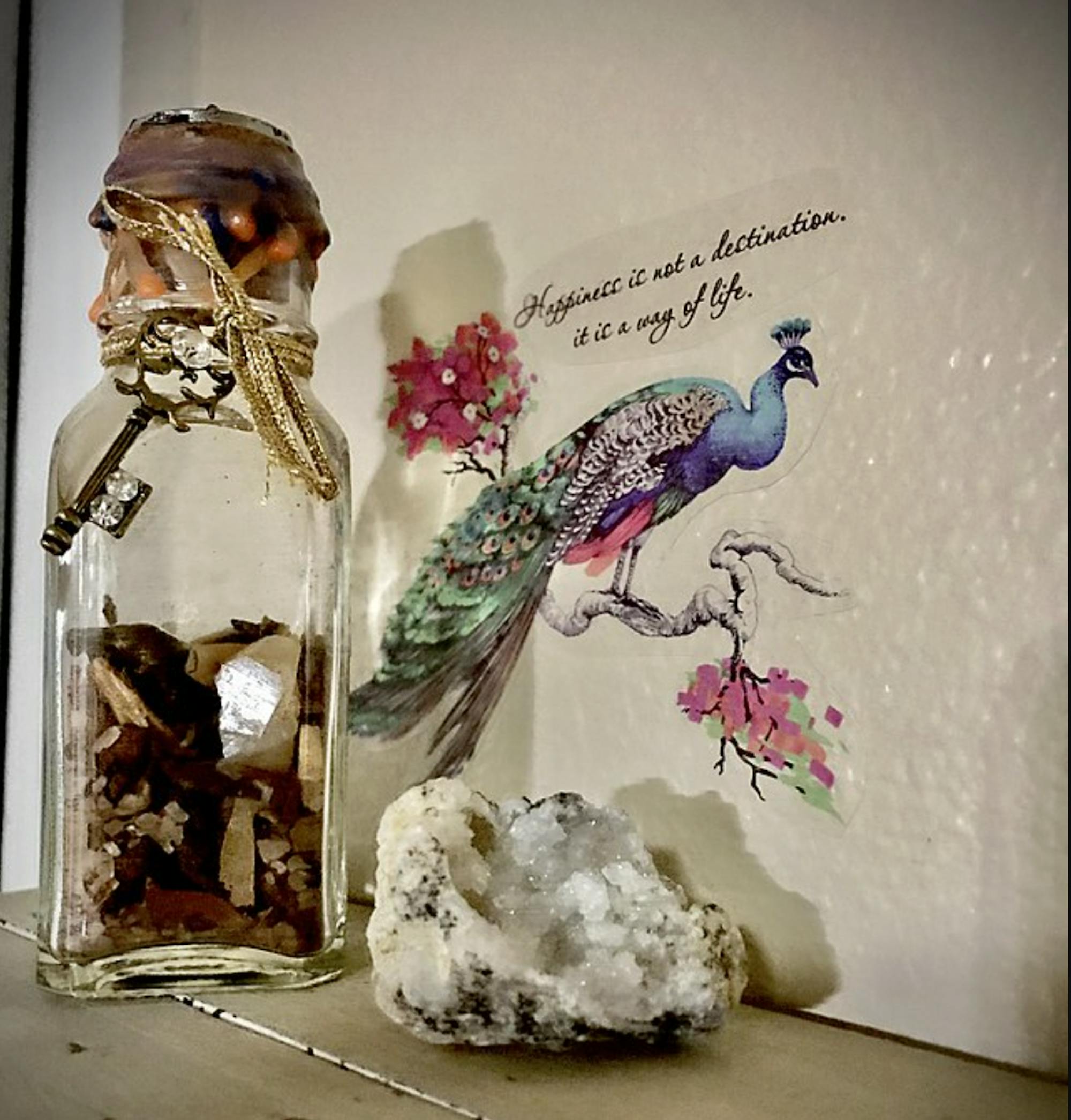
The Etsy witches serve as a continuation of this dilution of spirituality. With your purchase, you usually receive nothing more than a “proof of cast,” a photo of intricately placed ingredients to your ritual — beautiful, but nothing more than a photo. When you can only look at your religion through a screen, that’s where it stops, unless the digital encroaches onto ritual in other ways. People have begun to use artificial intelligence tools in religious spaces, such as conversing with chat bots as if they were Jesus or other saints. Peter Thiel, when interviewed by the New York Times, outlines his plan for the future of database corporation Palantir using ideas of trans-humanism and the synthesis of human and technological form, citing the Bible and Christian thought as backings for his ideas. The digital has slowly started to become our new metaphysical — an alternate plane for existence, once only confined to gods and monsters. Now, we can not only devote differently, but we can move and exist in the same place as our deities. The real question is, are we supposed to?
Caroline Murphy is a sophomore in the College of Arts and Sciences. She can be reached at cqm8@cornell.edu.