I think it is correct to say that musical biopics are being produced in a similar fashion to procedural films, in that there are certain beats that we expect these films to hit and certain storylines that we assume will be carried out. In a legal procedural, these scenes may be lawyers fervently working to research a case, an unorthodox cross-examination and a suspenseful verdict delivery with moral ambiguity. In a musical biopic, we expect that we will get to marvel at how well a popular male actor imitates the relevant musician, that there will probably be a sidelined love interest that may (or may not) have had cultural relevance and of course, the manager. We expect the manager.
The issue with this film formula is that unlike that of the legal procedural or romantic comedies, none of the requisite elements are necessarily entertaining, except for perhaps the imitation, although that seems to lend itself more to a party trick than to a two-hour feature. All this is to say that while these movies keep getting churned out by the machine, they are much less reliably entertaining than other surefire subgenres. As I don’t imagine it is from quality, I must assume the financial success of this genre is propelled by the fame of the musician alone, which is certainly why I, a native New Jerseyan, saw Springsteen: Deliver Me From Nowhere as soon as I possibly could.
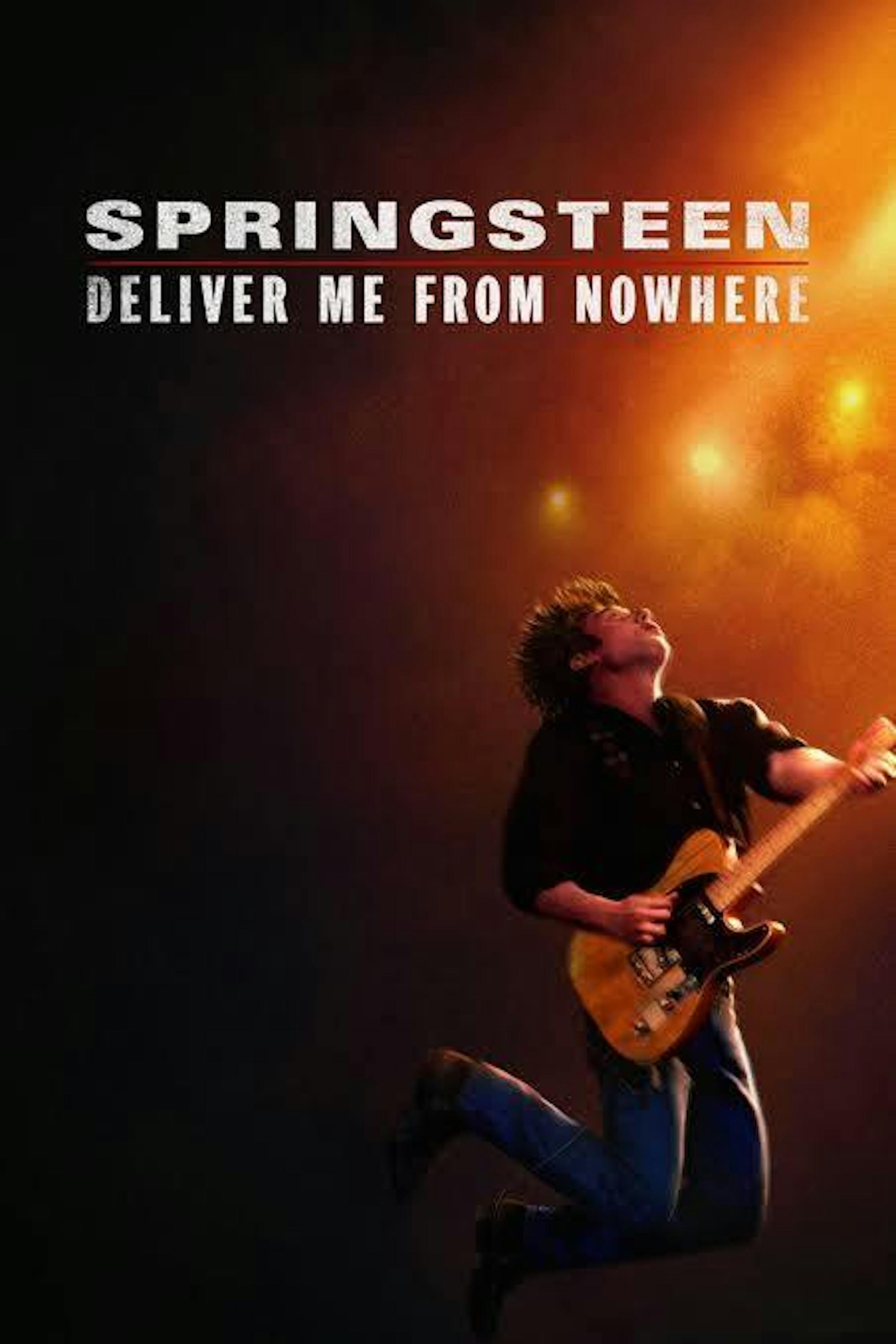
Springsteen: Deliver Me From Nowhere, based on Warren Zane’s book of the same name, largely centers on one year of Springsteen’s life as he writes his 1982 album Nebraska. Springsteen finishes The River tour and holes up in a secluded New Jersey house to work on new material. He purchases some new equipment that will allow him to record without going into the studio, and it is in this house that he writes and records Nebraska and many of the first demos for Born in the U.S.A., which was released a couple of years after the former.
On a professional level, the movie details Springsteen’s artistic integrity, as he refuses to allow the studio to rework Nebraska to be more commercial. However, the movie gives equal weight to the peak of Springsteen’s personal struggles with depression and his relationship with his parents, particularly his father. The movie ends with Springsteen seeking professional help and the release of Nebraska just as he wanted it: no press, no studio recording, no tour.
This is a solid rendition of the musical biopic procedural because it does not give too much importance to the requisite elements, and when they are there, they are done decently well. The sidelined love interest is a particularly tricky element in these films, because while of course the movie is not supposed to be about her, such characters often end up being essentially faceless and nameless. Although Springsteen’s sidelined love interest, Faye, is in fact sidelined, she has a discernible personality and interiority in her relevant scenes. She also has a very convincing New Jersey lilt!
The film does have its share of indulgent moments, basking just a little in Springsteen’s talent. For example, as he rewrites a song to incorporate more of his own experience, he crosses out “She” and “They” and rewrites in very large letters “I” and “You.” I suppose this would have been okay if the letters were not so large. We get it. He’s making the song about him. Generally though, these moments are infrequent, and even most of the concert scenes take place in Asbury Park’s once-quaint Stone Pony, with Springsteen singing back up. This film is not revelatory, but if you derive some pleasure from seeing musical legends portrayed on screen, but are often let down by abysmal filmmaking, Deliver Me from Nowhere is sufficiently entertaining.
The archetypal manager took up reasonable amounts of screentime and importance. The necessary “Look at how well Jeremy Allen White can imitate Bruce Springsteen!” scenes also landed quite well. As the opening notes of “Born in the U.S.A.” filled the recording studio with White-as-Springsteen standing in the middle, my heart pattered with trepidation. I, like many, know this song note for note, voice crack for voice crack. If this was bad, the suspension of disbelief would crumble. Luckily, it was a pretty good Springsteen imitation, although such moments were enjoyable solely because they were not the focal point of the film.
I walked away from the film thinking much more about how we deal with our childhoods than I did thinking about how good Jeremy Allen White is at being Bruce Springsteen. His most memorable moments of the film were ones of emotion rather than imitation. White told People magazine that “hopefully if there's enough truth in this music, whether it sounds exactly like Bruce or not, people will connect with it.” This approach reflects in his entire performance: more about being truthful than about being Bruce Springsteen.
Chloe Asack is a senior in the College of Arts and Sciences. She can be reached at casack@cornellsun.com.

Chloe Asack is a member of the Class of 2026 in the College of Arts and Sciences. She is a staff writer for the Arts & Culture department and can be reached at casack@cornellsun.com.