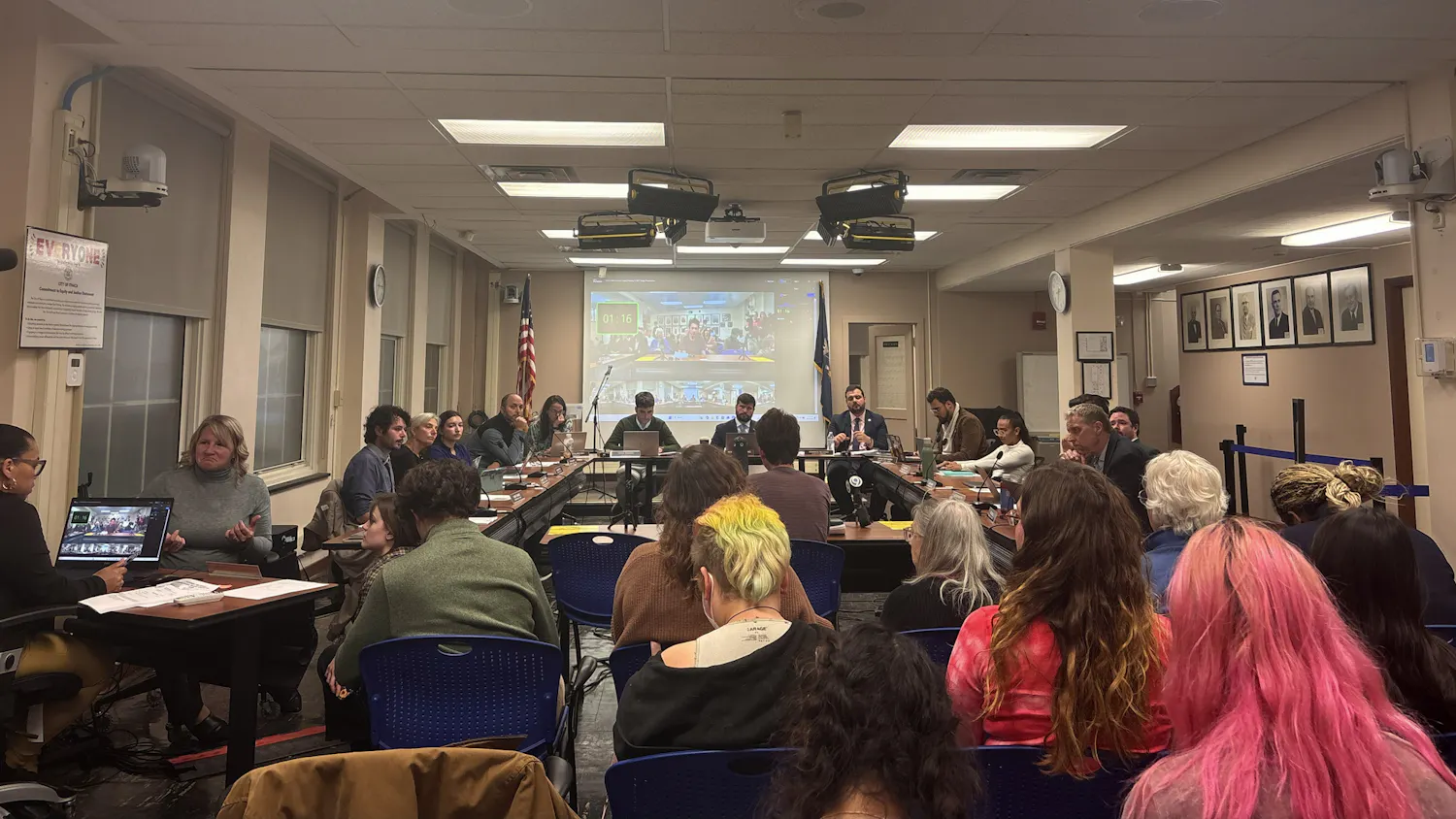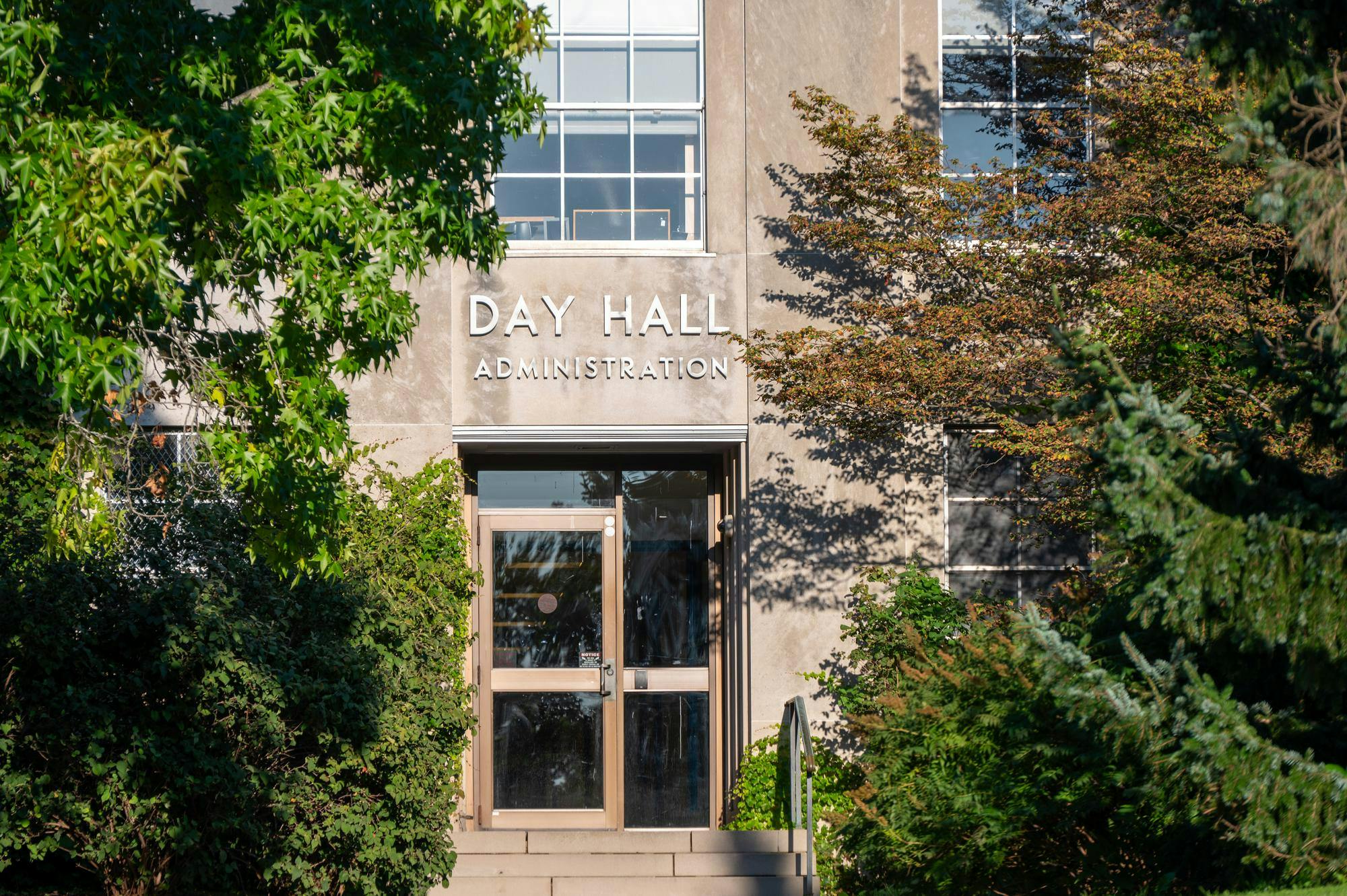
A draft report of the University's Presidential Task Force on Institutional Voice was released Wednesday in an email to the Cornell community sent by task force co-chairs Deputy Provost and Prof. Avery August, immunology, and Dean of Cornell Law School Jens Ohlin. The report made recommendations to limit the content of what Cornell should speak on and distinguish individual opinions from that of the University.
The task force was formed last spring to evaluate “how and when the University should speak institutionally on matters of politics, ideology, current affairs, and world events,” according to a March 11 statement from President Michael Kotlikoff and other administrators.
The task force’s report comes as Cornell and universities across the country face scrutiny over their policies and content. Cornell has been reportedly in settlement talks with the federal government in an attempt to restore hundreds of millions of dollars of research funding that was frozen over pending antisemitism investigations.
The task force’s draft report recommends the University should show “institutional restraint,” stating that “it is not the place of the university or its leaders to speak about matters not germane to Cornell’s mission.”
Even when a topic did fall “squarely within the core mission of the university,” the task force maintained that Cornell was not required to comment. However, the report added that the University has the right to protect its interests.
“The university is entitled to protect its interests; neutrality with regard to itself is logically incoherent,” the report wrote.
“Institutional voice” describes any communication on behalf of the University, including official statements, announcements of policies or events and speeches from the University’s president and provost.
In the past, the University has expressed viewpoints on a wide range of topics in University statements and has often weighed in on events of national importance. Under former President Martha Pollack, University statements condemned the Oct. 7 attacks in Israel, commented on the Supreme Court's decisions overturning Affirmative Action and abortion rights, addressed the war in Ukraine and expressed sorrow and sympathy over the police killing of George Floyd.
As one of his first presidential actions, Kotlikoff announced in August 2024 that the president and provost would refrain from commenting on national or global events that do not directly impact the University. Since then, no University statements have been made on a national event unless it directly impacted Cornell.
The task force also wrote that the president and provost are the only leadership officials who represent the University, though at times, this status may be delegated to lower leaders.
The report then addressed leaders and groups at different levels throughout the University.
College deans, who do not represent the University according to the report, were told to be careful when speaking publicly, especially with "sensitive matters of political concern.”
The task force explained that for some a Dean’s public statements and their scholarly contributions are not easily distinguishable. The report stated that “deans should exercise restraint in their communications to avoid such confusion.”
At the department level, the task force warned that “statements by academic departments on matters unconnected to the department’s educational mission may crowd out the voices of individual members of the community.”
It stated that departments or other subunits in the University should avoid imposing a "majoritarian perspective” and outlined a process that would require departments to vote on all matters and inform University leadership before publication.
A footnote in this section added that while the report did not touch on student groups, they should also consider similar recommendations.
In Wednesday’s email, August and Ohlin wrote that the report will be discussed with University shared governance bodies in the coming weeks. They also welcomed comments and feedback through email (tfiv@cornell.edu) or through an anonymous feedback link, which will accept responses until Nov. 14.
“There are many reasons why discretion, rather than speech, may be strategically preferable for the institution and its academic values,” the report wrote.
Benjamin Leynse is a member of the Class of 2027 in the College of Arts and Sciences. He is a multimedia editor for the 144th Editorial Board and was a news editor for the 143rd Editorial Board. He can be reached at bleynse@cornellsun.com.